
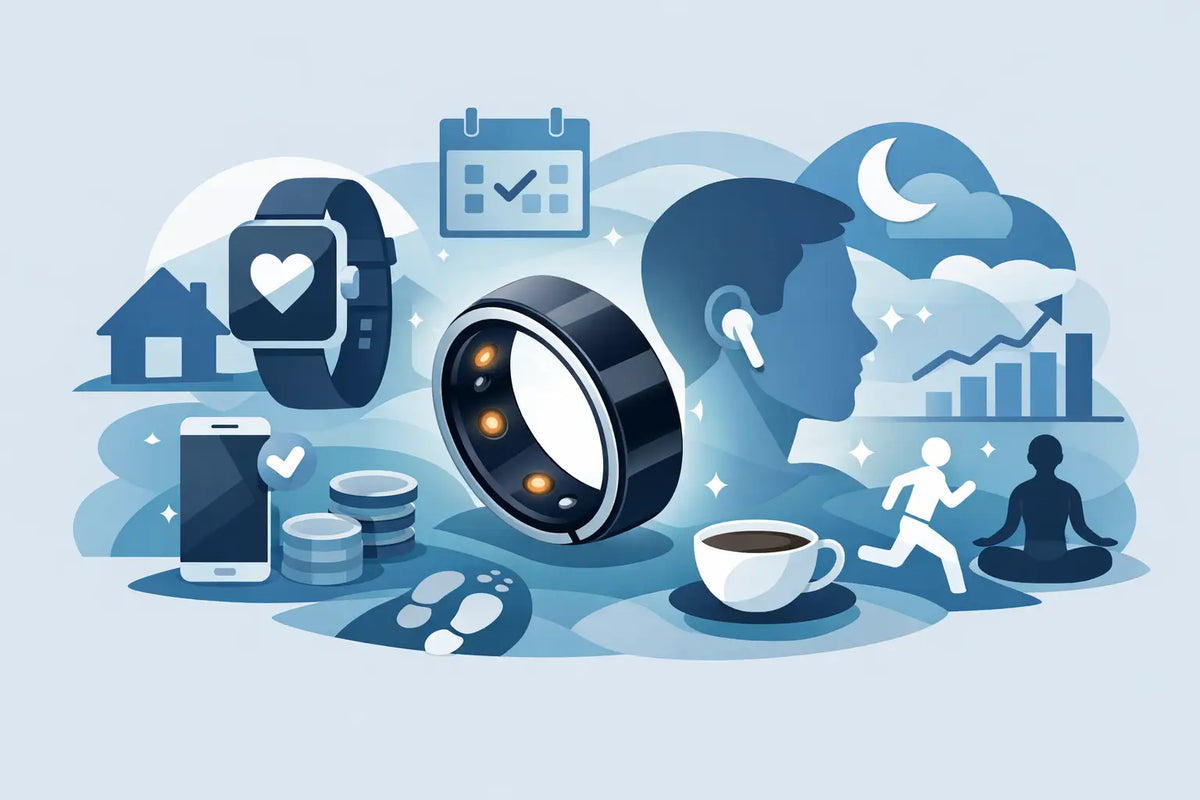
A smartwatch can do a lot, but it isn't right for every moment. At night, it can be uncomfortable for some people to wear on their wrist, and at the office, it can quickly feel like a small display waiting to be checked. This is where 7 reasons for smart rings come in: they bring health data to a place where it can be collected discreetly—on your finger. No constant notifications, no sporty look—just a design that blends seamlessly into everyday life.
A smart ring is no miracle cure and cannot replace a medical diagnosis. However, it can help you identify patterns: Why do you wake up feeling exhausted in the morning? On which days is your body more active? When does your daily routine need a conscious break? If you no longer want to rely on your intuition to answer these questions, a smart ring can be an elegant companion.
7 reasons to choose a smart ring for everyday life
1. You understand your sleep better
Sleep is about more than the number on your alarm clock. What matters is how soundly you sleep, how regular your nights are, and whether your body gets enough time to recover. A smart ring discreetly monitors you at night, turning a vague feeling into concrete insights into sleep duration, sleep quality, and recovery phases.
This can be particularly valuable if you don't feel properly rested in the morning despite what seems like a long night's sleep. Perhaps your bedtime shifts more on weekends than you realize. Maybe restless nights follow late meals, alcohol, or long evenings in front of a screen. The data won't provide a ready-made solution, but it will give you a clearer starting point for building better habits.
Unlike a glowing wrist, a ring remains comfortably understated. For many, that is exactly the difference: sleep tracking only works in the long term if the wearable isn't perceived as an intrusive object at night.
2. You wear health data, not a piece of technology
For most people, a ring is already part of their everyday attire. It won't stand out at a meeting, in a restaurant, or with a simple outfit. Instead of wearing another display, you can choose an accessory that looks modern while collecting useful information.
This is no superficial advantage. Wearables are only helpful if you wear them regularly. If a smartwatch ends up in a drawer after a few days because it doesn't match your style or is distracting at work, no meaningful trends will emerge. A smart ring focuses on a form that feels less like technology and more like a personal style choice.
Whether classic, minimalist, or a bit more eye-catching, the right color and size turn the tracker into a piece of jewelry with added value. This makes it a compelling alternative for people who don't want to wear a watch or want to keep their favorite one.
3. You recognize activity beyond exercise
Good health isn't just built during intense workouts. Walking to the train station, taking a stroll during your lunch break, or taking the stairs instead of the elevator all count. A smart ring helps you see the activity that might otherwise go unnoticed in the daily grind—or identify where it is missing.
This makes activity more tangible without making every day feel like a fitness program. If you realize that long hours at the office regularly lead to too little activity, small changes can make a big difference: a short walk outside, taking calls while walking, or making a walk after work a regular habit.
The key is to have the right expectations: if you expect highly specific sports metrics for interval training, navigation, or live displays while running, a sports watch is often the better choice. The great advantage of a smart ring is not that it accompanies every second of your workout on a display. It shows you the big picture of your daily activity.
4. You learn to take recovery seriously
Many people plan their tasks, but not their recovery. A packed calendar feels productive until concentration, energy, and motivation begin to wane. A smart ring can make recovery metrics and physical signals visible over several days. This makes it clearer when the balance between exertion and rest is no longer right.
This is particularly helpful for professionals who have little time to catch their breath between work, exercise, family, and social commitments. Instead of relying solely on willpower, you can better consider how you feel each day. On an energetic day, an after-work workout might be just right. On a weaker day, a quiet evening is the better choice.
The data is not meant to dictate how you live. It is a guide, not a judgment. Overinterpreting every measurement can quickly create unnecessary pressure. Tracking makes sense when it leads you toward a more mindful, relaxed routine.
5. You see trends instead of isolated snapshots
A poor night's sleep after one unusual night tells you very little. It becomes interesting when you recognize developments over weeks. The ring continuously collects data and helps you identify recurring patterns: Do you feel better when you maintain regular sleep times? What happens to your activity during stressful project phases? Does your recovery change when you switch off earlier in the evening?
This long-term perspective is exactly what sets a smart ring apart from a one-off self-assessment. You don't need to understand every value perfectly. Often, simple observations are enough to make targeted changes to your behavior. When you see that even small changes make a difference, you are more likely to stick with them.
The Fitorb™ Smart Ring Pro is designed for exactly this kind of discreet support: health and lifestyle tracking that doesn't constantly demand your attention, but provides relevant insights when you want to use them.
6. You reduce screen time on your wrist
Smartwatches are practical, but they can also become a constant source of interruption. Every vibration, message, and glance at the display draws your attention away from the moment. A smart ring takes a different approach: it collects data in the background. You decide when to check the app.
For many, this is a more pleasant form of technology. You can stay more present during conversations, meals, or work without giving up insights into sleep, activity, and recovery. The ring doesn't offer less—it makes tracking more discreet.
Of course, this depends on your priorities. If you want to read messages directly on your wrist, take calls, or monitor metrics live during exercise, a smartwatch remains a practical choice. If you want fewer distractions and more discreet support, the ring plays to its strengths.
7. You make healthier routines easier
The best health goals are rarely spectacular. Going to bed earlier, getting more steps every day, taking breaks, and taking your body more seriously: these small decisions add up over time. A smart ring doesn't remind you with a wagging finger. It shows you what is actually happening.
This creates more personal motivation. Instead of chasing a generic goal, you recognize your own connections. Perhaps your most meaningful progress isn't working out harder, but maintaining a regular sleep schedule. Maybe a walk during your lunch break does you more good than another cup of coffee.
Comfort when buying also matters. A ring must fit properly to feel comfortable in everyday life and be worn reliably. Take your time finding the right size. A digital ring-sizing tool, free exchanges for the wrong size, and a trial period can take a lot of the uncertainty out of the decision—especially if it is your first smart ring.
Who is a smart ring really worth it for?
A smart ring is a particularly good fit for you if you want to understand your health better but don't want to wear a conspicuous wearable. It is a strong choice for those looking to optimize their sleep, people with active professional lives, and anyone who doesn't want to trade their favorite watch for a fitness tracker.
It is less suitable if you need a display at all times during exercise or want to equate medical measurements with a doctor's examination. Smart rings provide valuable insights into everyday life, but they cannot replace a professional medical assessment for health concerns.
If you are curious about your own patterns, don't start by trying to perfect every number. Wear the ring consistently, monitor your routines for a few weeks, and then change one thing that truly makes you feel better. That is how data becomes part of an everyday life that feels noticeably better.



Leave a comment
This site is protected by hCaptcha and the hCaptcha Privacy Policy and Terms of Service apply.