
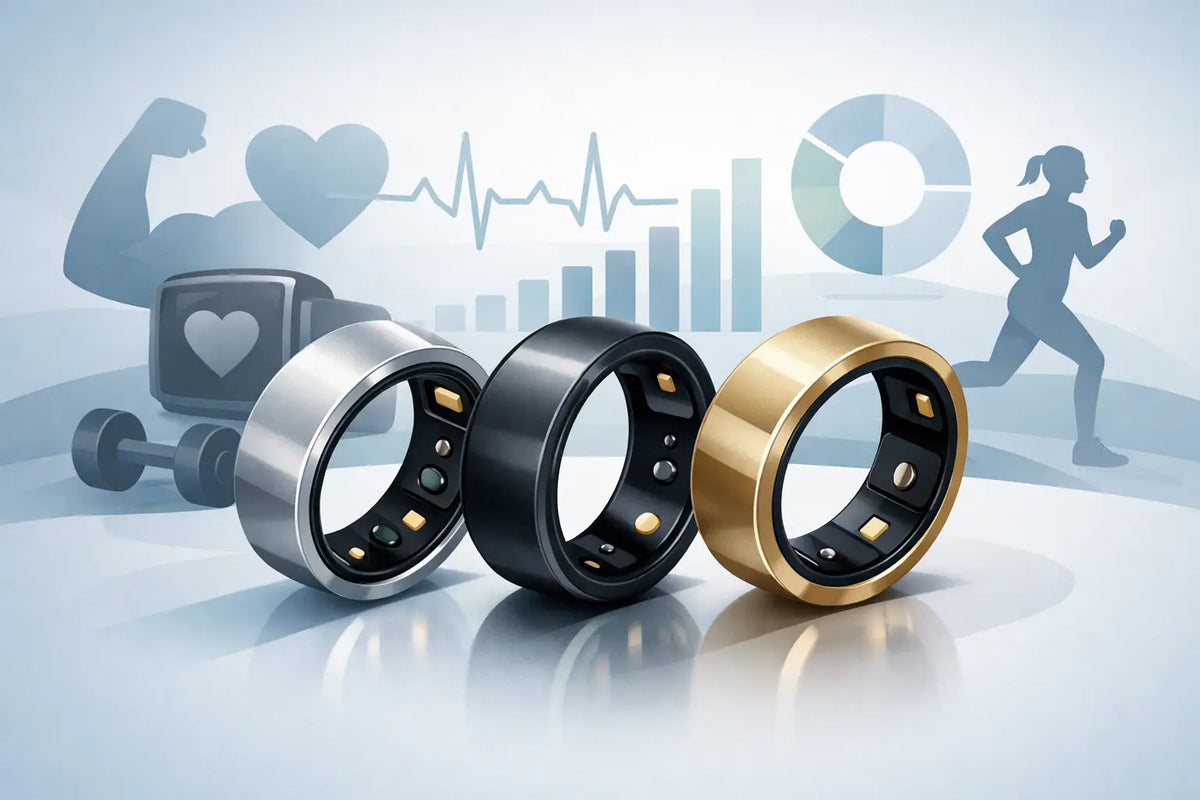
A smartwatch can quickly become a distraction when typing, sleeping, or enjoying an elegant dinner. This is exactly where a fitness tracker ring comparison comes in: a smart ring brings health data directly to your finger without making your wrist feel like a miniature technology hub. But at first glance, rings often look similar. What really matters are the measurements, comfort, and whether the model fits your everyday life.
Fitness tracker ring comparison: What really matters
A fitness ring is not a small replacement for a sports watch. It serves a different purpose. Instead of distracting you during training with a display, notifications, and numerous menus, it focuses on the data generated in the background: sleep, activity, heart rate, and recovery.
For many people, that is precisely the appeal. They want to know why they wake up tired in the morning, whether their daily activity is actually sufficient, or how stress affects their well-being. A ring can make these developments visible without dominating their outfit or everyday life.
When comparing, you should therefore not only look for as many features as possible. Above all, a good fitness ring must fit securely, be comfortable to wear, and process data in a way that provides clear insights. Numbers alone do not change habits. The right interpretation does.
Sleep tracking: The feature that convinces many
Sleep is the area where smart rings can be particularly useful. During the night, a lightweight ring usually causes significantly less disturbance than a watch on the wrist. It accompanies you discreetly and captures patterns you may not notice yourself: falling asleep times, waking phases, sleep duration, and changes in nighttime rest behavior.
It is important to have realistic expectations. No consumer wearable replaces a medical examination or diagnoses sleep disorders. A ring provides trends and guidance. If your sleep quality deteriorates over weeks or noticeable symptoms occur, it is time to see a doctor.
For most users, the long-term perspective is particularly valuable. Perhaps you sleep more restlessly on days when you have coffee late in the afternoon. Perhaps you notice that regular walks or a consistent evening routine improve your recovery. Those who recognize these connections can take more targeted action instead of just guessing.
Not every sleep score has to be perfect
Many apps show a sleep score. This is practical, but it should not become a source of daily pressure. A single low score after a short night is not a problem. Data only becomes meaningful over several days and weeks.
Therefore, pay attention to whether the app not only displays numbers but also clearly explains what they mean. Good presentation helps you recognize patterns without getting lost in the details.
Activity and training: What a ring does well
Fitness rings typically track steps, calorie consumption, active time, and heart rate. This is enough for many people who want to better understand their daily activity. Especially working professionals can quickly see whether a long day at the desk was balanced out by a walk, stairs, or a workout.
For highly specialized training data, a ring is not always the first choice. Runners who want to read every pace live during interval training, or cyclists focused on performance, often benefit from an additional sports watch. A ring usually has no display and does not show values directly during training.
This is not a disadvantage for everyone. Those who want to sustainably integrate activity into their everyday life often do not need another distraction on their wrist. The ring collects the data, and the app later provides an overview. This quiet form of tracking is particularly well suited to people who see health as part of their lifestyle and do not want to measure every activity.
Interpreting heart rate and recovery sensibly
In addition to activity and sleep, many buyers pay attention to heart rate. It can help you better understand your own sense of exertion. An elevated resting heart rate over several days, for example, can be a sign that your body needs rest. Stress, alcohol, lack of sleep, or the onset of a cold can also be reflected in such trends.
What matters is comparing it with your own values, not with those of others. Every body has its own personal normal range. A good ring helps you recognize changes instead of imposing a one-size-fits-all assessment on you.
Also pay attention to the measurement conditions. A ring that is too loose or rotates on the finger may collect data less consistently. That is exactly why the right size is not an afterthought, but the foundation for comfort and meaningful tracking.
Design and comfort: The ring must fit you
The best fitness ring is little use if it ends up in a drawer after three days. Design is not just about colors or a shiny surface. It is about whether you put the ring on in the morning and barely notice it in the evening.
A slim, timeless model can be worn in the office, at the gym, and when going out. Those who already wear rings should pay attention to how a smart ring can be combined with jewelry. Those who do not wear rings otherwise will benefit from a design that is as light and smooth as possible, without uncomfortable edges.
The choice of finger can also make a difference. Many wear the ring on their index, middle, or ring finger. The fit should be firm enough for reliable sensor readings but not tight. Remember that fingers can swell slightly in the heat, during exercise, or in the evening. A size that fits perfectly in the morning may become uncomfortable later.
Size service reduces uncertainty
The most common question before purchase is: What ring size do I need? A digital ring measuring tool or a physical sizing kit takes a lot of pressure off the decision. Ideally, measure at different times of the day and wear the sample size for several hours.
A customer-friendly exchange for the wrong size is also a strong purchasing argument. This way, you do not have to choose between an elegant look and a secure fit. At Fitorb, exactly this support in finding the right size, a free exchange, and a 30-day trial period are part of a purchasing decision that feels less risky.
Battery and app: Invisible excellence is better than complexity
A fitness ring is intended to collect data over days and nights. For this, it needs a battery life that suits your rhythm. If a device needs to be charged constantly, gaps quickly develop in the sleep and activity history. Several days of battery life is therefore significantly more valuable in everyday life than a long list of rare additional features.
Also check how easy it is to charge. A compact charging case or an uncomplicated station makes a difference, especially when traveling. The app is just as important: It should be easy to navigate, explain things clearly in German, and work reliably with your smartphone.
A clear home screen, clearly visible daily values, and understandable trends are often more helpful than complicated diagrams. After all, you do not want to have to read a manual just to find out whether you had a restful night's sleep or whether a little activity break would do you good today.
Comparing prices: Look beyond the purchase price
When comparing fitness tracker rings, it is noticeable that prices vary widely. A higher price can be worth it if the build quality, app experience, battery, and service are convincing. At the same time, expensive does not automatically mean right. What matters is which features you will actually use.
In addition to the ring, also consider potential ongoing costs. Some providers charge a subscription for more detailed analysis. Others bundle their core features without a monthly fee. Read carefully before making a decision. A low introductory price can become more expensive in the long run if important data is only visible with an additional subscription.
Returns, warranty, shipping, and support should also be included in the price comparison. Especially with a product that is worn directly on the body, it is reassuring to get quick help if you have questions and to be able to test the ring in peace.
For whom is a smart ring the right choice?
A fitness ring is particularly well suited for you if you want to better understand sleep and daily recovery, are looking for a discreet alternative to a smartwatch, and want to collect health data without constant display distractions. It is a stylish companion for workdays, travel, yoga, walks, and relaxing evenings.
It is less suitable if you need to see values on a display during training, want to answer many messages on your wrist, or expect very specialized sports metrics. In that case, a sports watch may be the better addition. For many, the combination makes sense: the watch for intense training, the ring for discreet, around-the-clock support.
Do not choose the ring with the longest feature list, but the one you will really want to wear every day. Only when comfort, size, and the app fit your life will measurements turn into habits that benefit you.


Leave a comment
This site is protected by hCaptcha and the hCaptcha Privacy Policy and Terms of Service apply.