
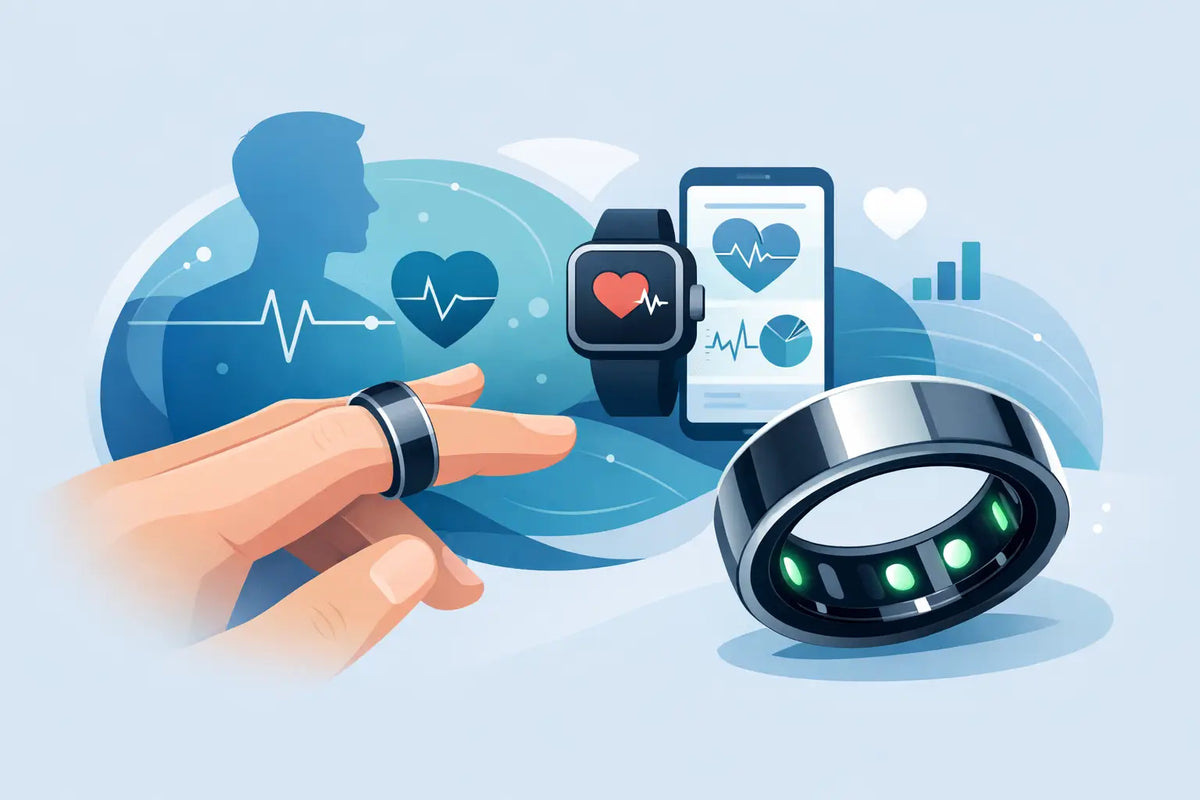
A glance at your wrist, another notification, another device to charge? Many people want to monitor their health more consciously, but don't want to wear a bulky smartwatch. Being able to measure health data in a ring changes exactly that: the most important insights sit discreetly on your finger and accompany you while sleeping, working, training, and relaxing.
A smart ring is not a medical diagnostic device. However, it can make patterns visible that easily go unnoticed in everyday life: restless nights, fluctuating recovery, too little exercise, or stress that builds up over several days. What matters is not a single value, but the overall picture. This turns data into a practical prompt for habits that really feel good.
Why measuring health data in a ring is so practical for everyday life
A ring is where you are, without constantly demanding your attention. Unlike a smartwatch, it fits business outfits, dinners, and workouts without looking like sports equipment. Many wear it around the clock because it is lightweight, discreet, and can be combined with their own style.
The advantage is especially apparent at night. Those who find a watch disruptive while sleeping often leave it on the bedside table. Then the very data that reveals a lot about your own recovery is missing. A well-fitting smart ring usually stays comfortably on the finger and collects information in the background.
This makes health monitoring less of a task and more of an effortless part of your day. You don't have to document every movement or constantly check a display. The app presents the values so that you can see what your body wants to tell you about sleep, activity, and recovery.
What health data a smart ring can collect
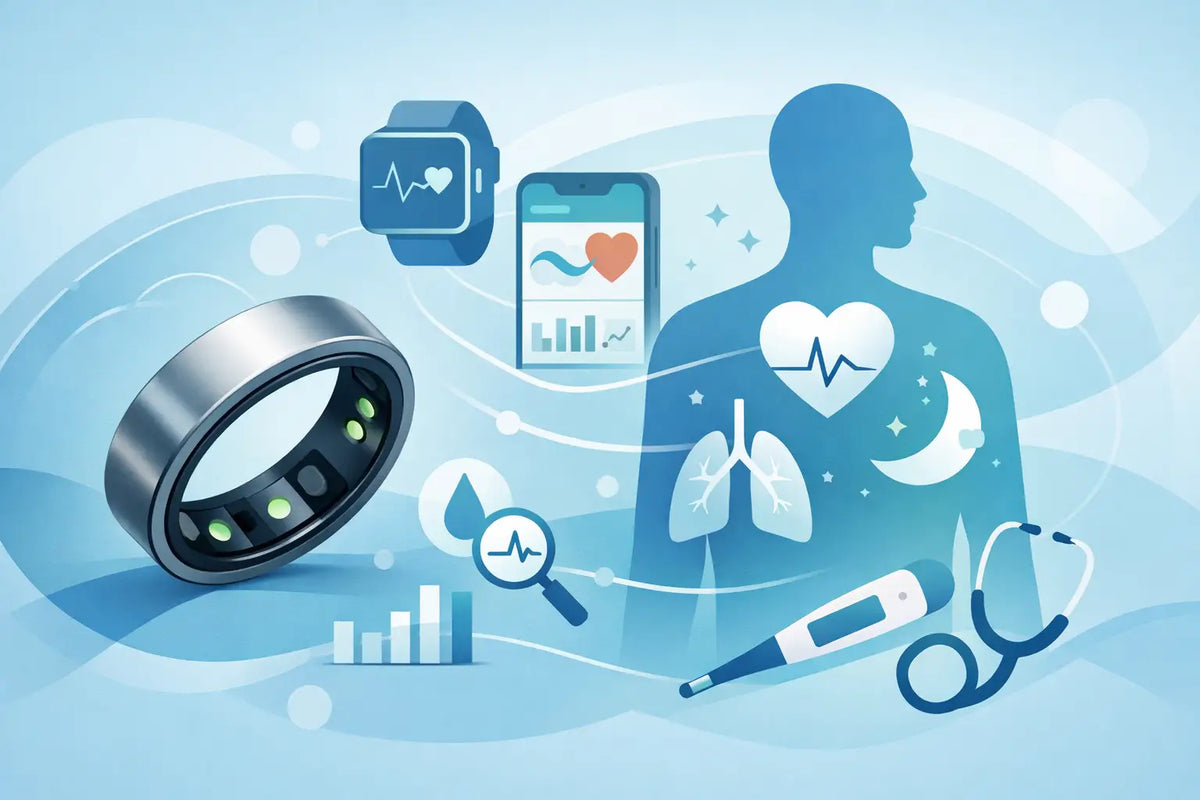
Modern rings use sensors that capture, among other things, movements, heart signals, and temperature changes. This creates easy-to-understand evaluations. Which functions are available depends on the respective model and app. These areas are particularly relevant:
- Sleep: Sleep duration, time to fall asleep, wake phases, and sleep rhythm help you better understand your nights.
- Heart rate: Your resting heart rate shows how your body behaves during quiet phases and whether changes become apparent over several days.
- Heart rate variability: This value is often referred to as HRV and can provide clues about the relationship between stress and recovery.
- Activity: Steps, activity phases, and calorie consumption make visible how active your day actually was.
- Temperature trends and oxygen saturation: Depending on the ring, trends in these values can provide additional guidance, for example in connection with sleep and recovery.
Understanding sleep instead of just counting hours
Seven hours of sleep do not automatically mean seven hours of recovery. Those who lie awake for a long time, wake up often, or go to bed at changing times may still feel tired despite sufficient sleep duration. A smart ring helps you better see the difference between time in bed and actual sleep quality.
This is particularly valuable for professionals with busy schedules. After a short night, the temptation is great to counteract it with even more coffee and a hard workout. The data can instead help you decide more consciously: a calmer workout today, leaving work earlier, or an evening without screens until just before falling asleep.
The right perspective on the numbers remains important. A single bad night is not a problem and no reason for concern. Recurring patterns over weeks become interesting. That is exactly where the benefit lies: you can try small changes and observe what really improves your sleep.
Recovery as a decision aid for your day
Your body does not work according to a calendar, but according to stress and recovery. A recovery value can give you clear guidance on whether you should challenge yourself more today or consciously slow down. This is not a rule. It is an informed decision aid.
Those who exercise regularly know this situation: The plan says interval training, but your legs feel heavy and your head is tired. If sleep, resting heart rate, and HRV all indicate little recovery at the same time, a walk or a light session can be the smarter choice. Conversely, a good recovery trend strengthens the confidence to push yourself more on a fit day.
Even without sports goals, this perspective is helpful. You learn how stress, travel, alcohol, late meals, or long screen times can affect your body. Not to live perfectly, but to develop better routines with less guesswork.
How ring data becomes better habits
Data alone changes nothing. Only the connection with your everyday life makes it valuable. Therefore, do not start with ten new rules, but with a concrete question. Do you want to fall asleep faster? Bring more movement into your workday? Or understand why you don't feel rested in the morning?
If sleep is your topic, test a fixed bedtime for two weeks. If you want to increase your activity, plan a short walk after lunch. Then look not only at a daily value, but at the trend. Small, realistic adjustments last longer than radical restarts.
The fit also plays a bigger role than many expect. A ring should fit securely and comfortably so that it does not disturb you while sleeping and the sensors have reliable contact with the skin. Since finger size can fluctuate slightly depending on the time of day, temperature, or exercise, a careful size determination is worth it. A digital ring measuring tool or a size set significantly reduces the uncertainty before purchase.
Fitorb combines this approach with an elegant smart ring for people who do not see health data as a technology project, but as part of their personal everyday life. Different style variants make it easier to wear the ring not only during sports, but really every day.
What a smart ring can - and cannot do
A smart ring provides helpful trends, but does not replace a medical evaluation. For persistent complaints, noticeable heart symptoms, severe sleep problems, or health concerns, the next step is a medical practice. Consumer wearables are designed to better understand behavior and well-being in everyday life, not to make diagnoses.
Measurements can also be influenced by factors such as a loose fit, cold hands, a lot of movement, or individual physical characteristics. Therefore, compare above all your own values over a longer period, instead of measuring yourself against other people's averages. Your personal starting point is more meaningful than an ideal value from the internet.
Data privacy also deserves attention. Before purchase, check which data the associated app stores, what permissions it requires, and how you can manage your information. Health data is personal. A good product makes usage understandable and gives you control over your data.
A small ring for more conscious days
A smart ring does not have to dominate your everyday life to make a difference. It can quietly show in the background when you are recovering well, which routines are good for you, and where a little more attention would be useful. Do not wear it to optimize every day. Wear it to understand yourself better - and make the next good decision a little easier.


Leave a comment
This site is protected by hCaptcha and the hCaptcha Privacy Policy and Terms of Service apply.