
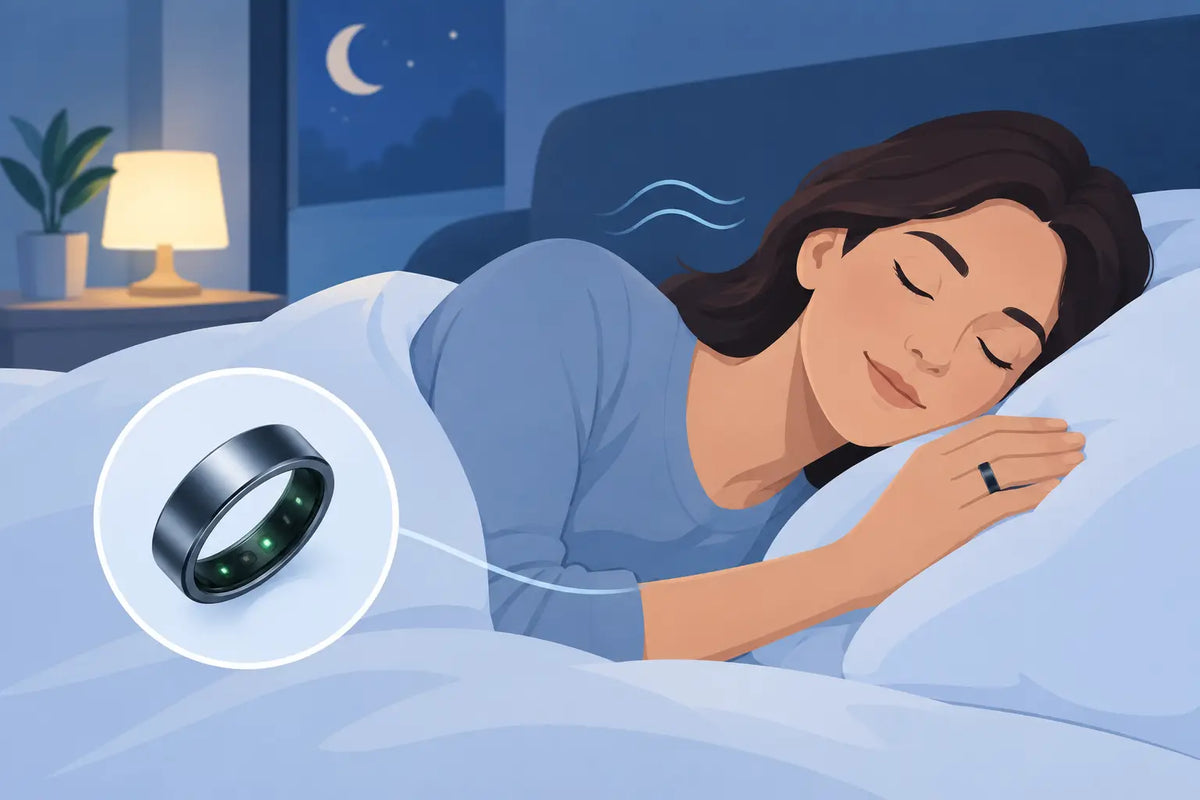
Is a smart ring uncomfortable to wear while sleeping? This question often determines whether a ring ends up in a drawer after a few nights or becomes your favorite health companion. The short answer: Many people barely notice a well-fitting smart ring at night. However, design is not the only deciding factor—size, finger choice, and your personal sensitivity are also crucial.
Anyone who has ever slept with a bulky watch on their wrist knows the problem: pressure marks, an uncomfortable feeling when turning over, or the urge to take off the wearable in the middle of the night. A slim smart ring can be a much more discreet alternative. It measures discreetly on the finger without a glowing display or a band resting on the skin.
Is a smart ring uncomfortable to wear while sleeping? It depends on the fit
The most common reason for discomfort is not the technology in the ring, but the wrong size. A smart ring should fit securely without digging in. It should not constantly spin when you wash your hands or go about your daily routine, but it should also not be so tight that you struggle to get it off in the morning.
This is particularly relevant at night. Hands and fingers can easily swell during sleep—for example, due to heat, fluid retention, or your sleeping position. A ring that feels just comfortable enough in the evening may feel too tight in the morning. Therefore, do not choose a size that already causes pressure during the day.
A simple test: You should be able to slide the ring over the finger joint with slight resistance. After that, it should sit securely without leaving deep marks or causing throbbing or tingling. If you are torn between two sizes, it helps to check the fit at different times of day. Fingers are often fuller in the evening than in the morning.
The right finger makes a difference
Many people wear a smart ring on their index, middle, or ring finger. Which finger is ideal depends on the shape of your hand and your personal comfort. For nighttime wear, the most important thing is that the ring does not press when you make a fist, prop yourself up, or turn over in bed.
If you are a side sleeper and like to place your hands under your head or pillow, a ring may feel more noticeable at first than for people who sleep on their backs. This does not mean that a smart ring is unsuitable for you. Often, it is enough to change fingers or get used to the new sensation over a few nights.
Why a smart ring is often more comfortable at night than a smartwatch
Sleep tracking only makes sense if you actually wear the device. This is exactly where a smart ring has its advantage: It is small, lightweight, and does not have the typical watch feel on the wrist. No wide band, no bulky casing, no bright display that distracts you when you wake up.
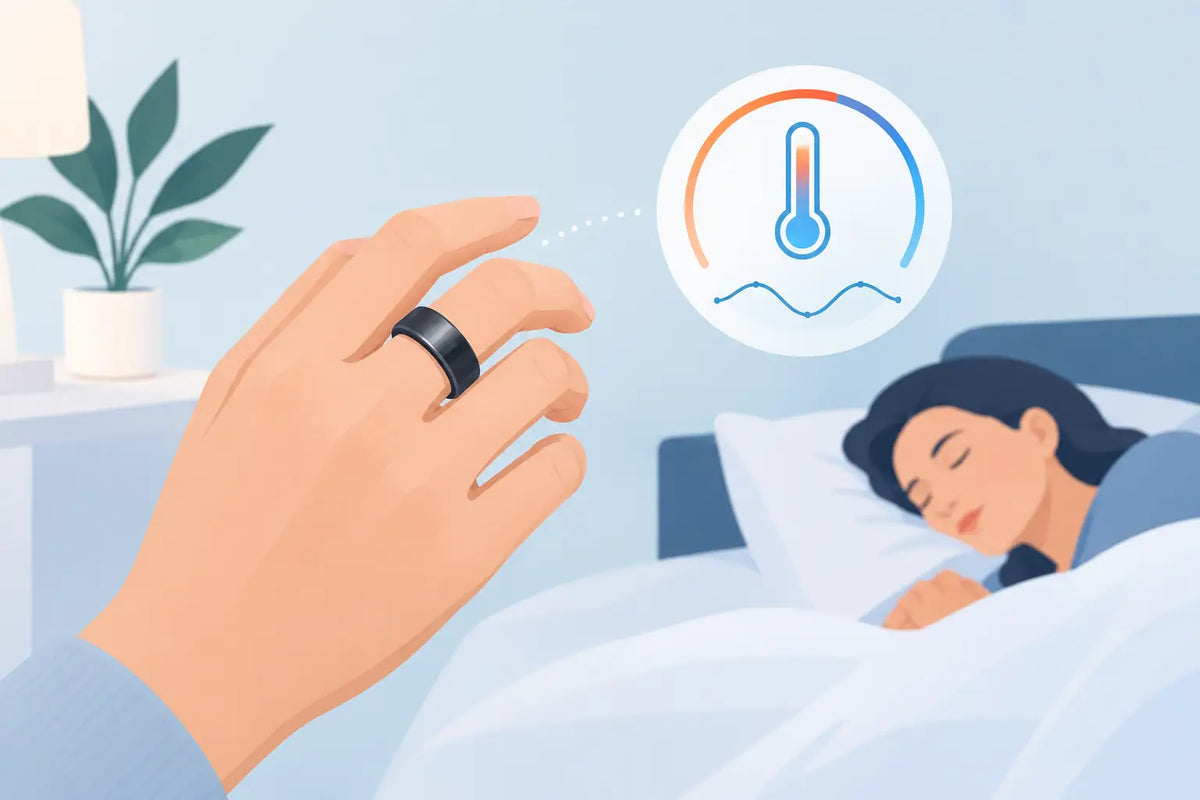
Sensors on the finger can also capture close-to-body metrics while you sleep. Depending on the model, sleep duration, sleep stages, heart rate, temperature trends, movement, and recovery metrics are recorded. This data is not intended to replace a medical diagnosis. However, it can help reveal patterns: Do you sleep more restlessly after eating late? Does stress change your resting heart rate? Do you really feel less rested after a short night's sleep?
The big difference is in everyday life. A smartwatch is often taken off before bed because it gets in the way when typing, showering, or lying down. A discreetly designed ring is more likely to stay on your finger. And only data from nights when you actually wear it can give you a more reliable picture of your habits.
The first few nights are for getting used to it, not for judging
Even a perfectly fitting ring can feel unusual on the first few nights. This is normal. Our bodies are particularly aware of new objects when we fall asleep—much like with a new mattress, a different pillow, or a watch you suddenly start wearing again.
Therefore, do not give yourself just one night. First, wear the ring for a few hours in the evening while sitting on the sofa or reading. This allows your hand to get used to the sensation before you sleep with it. After a few days, many people completely forget they are wearing the ring.
If you wake up at night and consciously feel the ring, first check the fit. Does it spin around a lot? Does it press in one spot? Is your finger swollen in the morning? A small adjustment in size or finger choice often solves the problem faster than giving up entirely.
Material and finish determine skin comfort
In addition to size, the material matters. A smooth, high-quality finish without sharp edges feels significantly more comfortable on the skin. The inside should also be kept clean, as residue from cream, soap, or sweat can irritate the skin—especially if the ring is worn for many hours at a time.
Take the ring off regularly to clean it, and dry your finger and the ring thoroughly. If you have sensitive skin or contact allergies, pay particular attention to skin-friendly materials and take a break if you develop redness. Persistent pain, numbness, or significant swelling are not signs that you should simply push through it. In those cases, the ring does not fit properly or should not be worn any further.
How to wear your smart ring comfortably at night
Comfort comes from small, practical decisions. Test the ring not only while standing, but also while lying down and with your hand closed. Avoid applying very rich hand cream right before bed if it makes the ring feel slippery. And if your hands swell more on warm days, it may be a good idea to choose a different suitable finger for nighttime wear.
Also, manage your expectations. A smart ring is not meant to perfect your night, but to make your sleep habits easier to understand. If you immediately check the watch after every metric or let a single poor rating unsettle you, you can easily create additional pressure. What matters are trends over several weeks, not a single night.
The Fitorb Smart Ring Pro is designed precisely for people who want to discreetly integrate sleep and health data into their daily lives—without the heavy feel of a watch on the wrist. A careful size determination is key to making technology feel less like technology and more like a natural part of your routine.
When a smart ring can actually be uncomfortable while sleeping
There are situations in which a smart ring is not the best choice for the night. If you currently have a finger injury, suffer from severe swelling, or regularly notice numbness in your hands at night, you should not apply any additional pressure. The same applies to skin irritation: let it heal first before testing again.
Some people simply do not like the feeling of jewelry while sleeping. This is not a matter of getting used to it or discipline, but a personal preference. In this case, it helps to wear the ring during the day first to track activity and recovery data. This way, you can use many of its features without compromising your sleep comfort.
For most others, the answer to whether a smart ring is uncomfortable while sleeping is encouragingly clear: Not if the size, material, and finger choice are right. The best ring at night is the one you forget—and in the morning, it still gives you a clear picture of how restful your night really was.


Leave a comment
This site is protected by hCaptcha and the hCaptcha Privacy Policy and Terms of Service apply.