

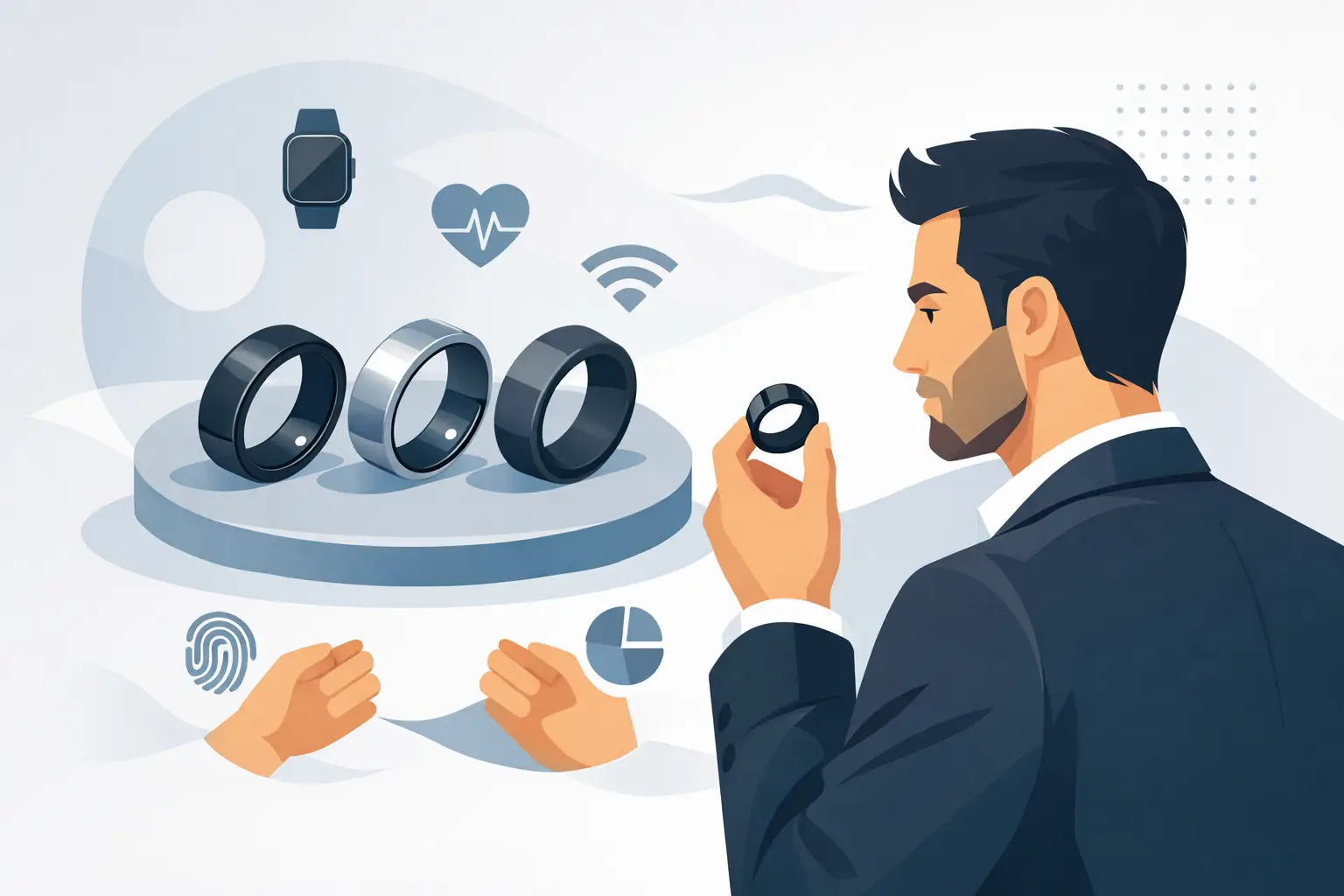
Anyone who wants to track their health often faces a minor everyday problem: a smartwatch constantly reminds you that you are wearing technology. This is exactly where the topic of a health ring tracker becomes exciting. A smart ring sits discreetly on your finger, measures relevant metrics in the background, and is more suitable for the office, dinner, and the gym than a bulky wearable on your wrist.
The real question, therefore, is not just whether a ring can collect data. The more interesting question is: Does it make health monitoring easier, more consistent, and thus truly more useful? For many people, this is exactly the point at which smart rings become more appealing than traditional trackers.
What makes a health ring tracker attractive
A ring is closer to everyday life than many other wearables. It is less noticeable, often causes less interference when typing than a large watch, and is more likely to be worn at night. This may sound like a minor point, but it is crucial. Health data is only useful if it is collected regularly.
The advantage is particularly clear with sleep tracking. Many people take off their watch at night because it presses against them, glows, or is simply uncomfortable. A lightweight, well-fitting ring is more likely to be worn through the night. This results in fewer data gaps and a more useful overall picture. Anyone who wants to improve sleep quality, identify stress patterns, or better assess their recovery will benefit above all from this consistency.
Design is another factor. Health technology does not have to look like it belongs in a gym or a clinic. For many buyers, it is important that a wearable looks modern, minimalist, and stylish. A smart ring meets exactly this need: health on your finger without compromising your look.
Health ring tracker: Which data is really relevant?
Not every number is automatically useful. In everyday life, the metrics that count most are those that are presented in an understandable way and lead to better decisions. A good health ring tracker therefore focuses on data that you can actually use.
This usually includes sleep data, heart rate, activity patterns, and recovery phases. Some models also track temperature trends or signs of exertion and stress. The real added value, however, lies not in the measurement itself, but in how the data is interpreted. Anyone who sees that poor sleep is regularly linked to late meals, alcohol, or a lack of exercise can make targeted changes to their habits.
When it comes to activity, less is often more. Many people do not need a tracker that overwhelms them with features. They want to know whether they are exercising enough, how active their day really was, and whether their body is signaling a need for recovery or exertion. This is exactly where a ring works particularly well: quietly, accurately, and without constant distraction.
However, it is important to maintain a realistic perspective. A smart ring is not a substitute for a medical diagnosis. It can make patterns visible, show trends, and complement your own physical awareness with data. Anyone with medical concerns should not rely solely on wearable data. Nevertheless, for health-conscious people who want to better understand their everyday lives, the benefits are enormous.
Who benefits most from a smart ring
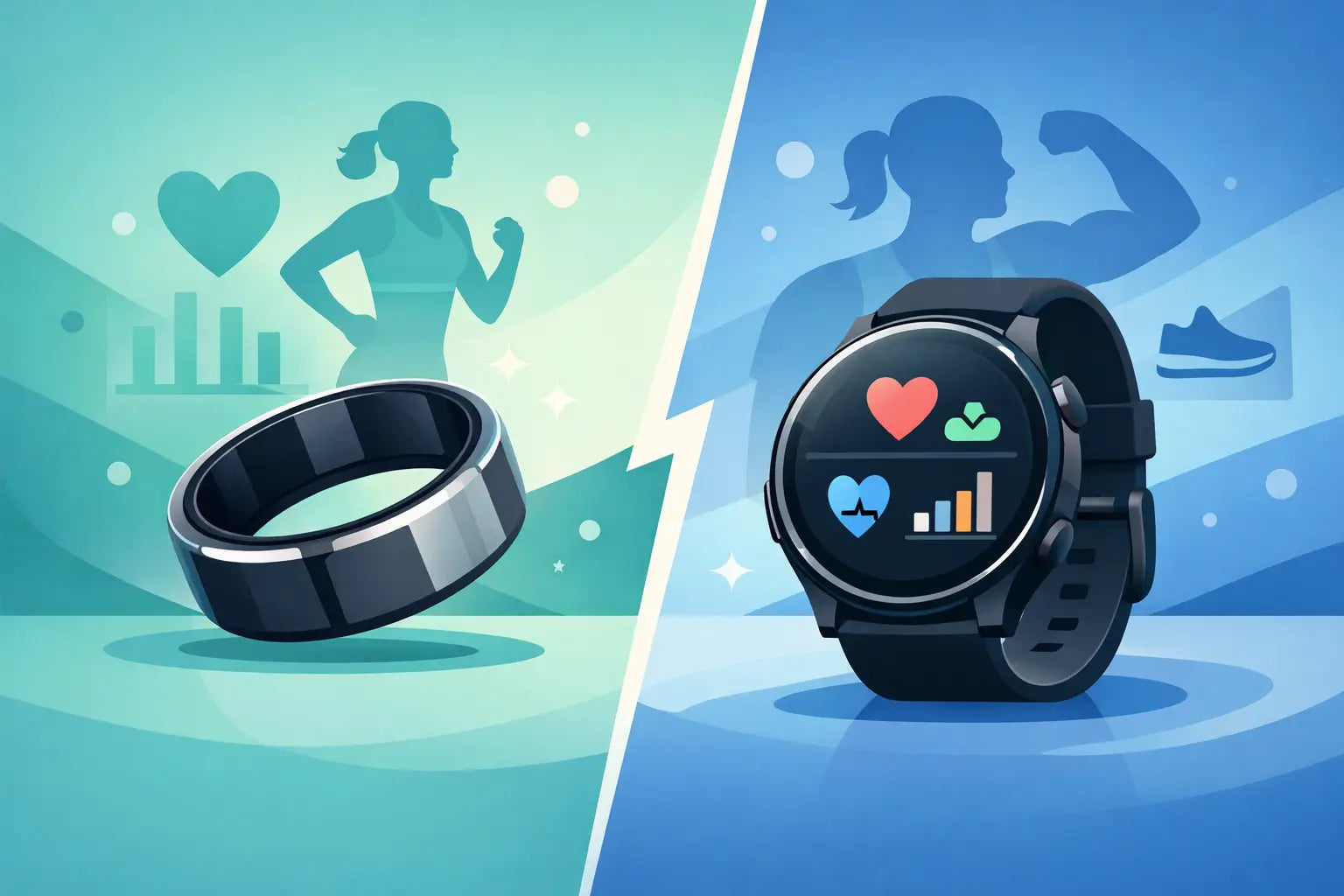
A ring is not automatically the best choice for everyone. Anyone who wants a large display, live views, or notifications directly on their wrist during a workout may be happier with a smartwatch. On the other hand, anyone who wants to track discreetly will often find the ring to be the more elegant solution.
A smart ring is particularly useful for professionals who want to keep an eye on their health without being reduced to a technical gadget during a meeting. It is also well suited to people who want to optimize their sleep, prefer a minimalist setup, or find watches disruptive in everyday life.
It is also interesting for anyone who likes to make data-driven changes to their habits. If you want to know whether your energy level really is linked to the amount of sleep you get or how a stressful workday affects your recovery, a ring often provides exactly the right insights. Not overwhelming, but focused.
Where the limitations lie
As attractive as the concept of a health ring tracker may be, this format is not without its limitations. As with any wearable, the quality of the measurements depends on the fit, the sensors, and how it is used in everyday life. A poorly fitting ring can distort the data. That is why the right size is not a minor detail, but the foundation for reliable tracking.
Expectations should also be realistic. A smart ring is not a miracle solution for better sleep or improved fitness. It shows correlations, patterns, and changes. Improvement only happens when you respond to these insights. Collecting data without making any changes will not make you any healthier, even with a ring.
Another point is how the device is used. Some people like to check their metrics every day. Others unnecessarily put themselves under pressure. Then guidance can quickly turn into obsession. The better approach is usually to take a relaxed look at trends rather than at every single deviation. Health is not a daily metric, but a long-term trend.
Why a ring is often worn more than other trackers in everyday life
The best tracker is not the one with the most features, but the one you actually wear. This is exactly where smart rings excel. They are discreet, lightweight, and fit more easily into different situations. Whether at the office, on the go, while sleeping, or at dinner, a ring usually just stays on.
This has a direct impact on how long it is used. Many wearables end up in a drawer after the initial enthusiasm wears off because they are too noticeable, too heavy, or too intrusive. A ring lowers this barrier. Anyone who uses a health product every day without resistance automatically collects more useful data and thus gains a clearer picture of their own well-being.
There is also a psychological advantage: a ring often feels less like an obligation. It does not constantly remind you of something with a large display, but works in the background. For many, this is more pleasant. Health does not become another to-do item, but something that quietly accompanies you.
What to look for in a health ring tracker
When choosing a smart ring, it is worth taking a close look at three things: comfort, data clarity, and purchasing confidence. No matter how elegant a ring may look, you will wear it less often if it does not fit well. And if the app presents data in a complicated way, its practical usefulness will quickly be lost.
A simple purchasing process is just as important. Especially with rings, uncertainty about sizing is one of the most common reasons why potential buyers hesitate. Therefore, providers that offer a ring-sizing tool, easy size exchanges, and a fair trial period are particularly helpful. This takes the pressure off the decision and makes getting started much more relaxed.
Customer service also plays a bigger role than many people think. Anyone who buys a technical product does not want to have to search for help for a long time when questions about sizing, use, or setup arise. Clear support, easy accessibility, and transparent terms build trust—and that is especially important with a health product.
A model like the Fitorb Smart Ring Pro fits exactly this approach: stylish, suitable for everyday life, and designed for people who want to track their health discreetly without compromising on design and comfort. The combination of smart data usage, easy sizing, and low-risk purchasing is what makes the difference in real everyday life.
Health ring tracker in real life, not just on the spec sheet
Many wearables look impressive on the spec sheet. In everyday life, however, other questions matter. Do you wear the ring every night? Does it suit your style? Do you understand the data without having to read a lot? Do you feel motivated rather than monitored? This is exactly where interesting technology is distinguished from truly useful technology.
A good smart ring helps you better understand your body. You may discover that your sleep quality improves on active days. You may realize that late screen time negatively affects your recovery. Or you may notice that a seemingly normal everyday routine creates more stress than you thought. Such insights are valuable because they are concrete.
Ultimately, it is not about perfectly controlling every bodily function. It is about making smarter decisions with less effort. If a ring can do exactly that—discreetly, elegantly, and conveniently—it will quickly become something you would not want to be without.
The best form of health monitoring is one that adapts to your life, not the other way around.

Leave a comment
This site is protected by hCaptcha and the hCaptcha Privacy Policy and Terms of Service apply.