

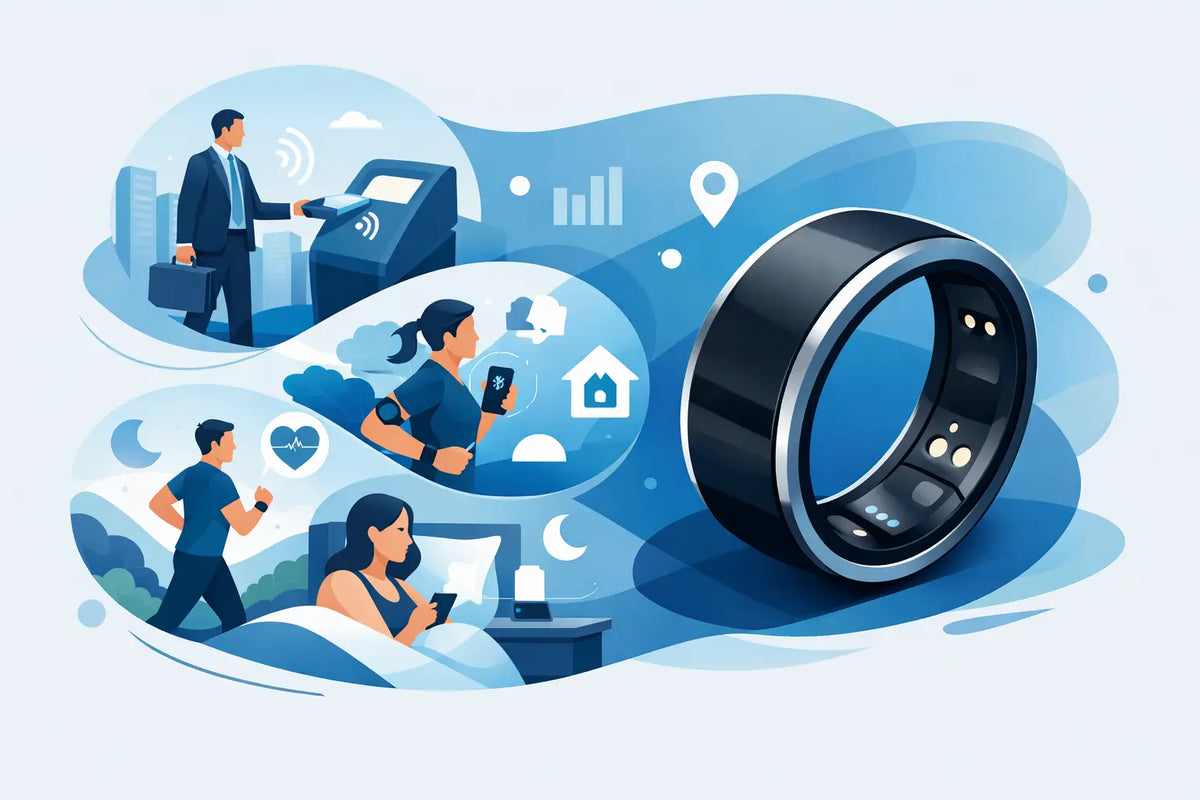
Checking the clock in a meeting, a glowing display at dinner, or a tracker on your wrist that doesn't match your outfit: health data can be useful, but it doesn't always need to be visible. A smart ring for discreet health tracking moves this functionality to a place that feels natural—your finger. It accompanies you while you sleep, work, exercise, and relax, without turning your style into a tech statement.
For many people, that is exactly the key difference from a smartwatch. Not another screen demanding attention, but a subtle ring that captures relevant patterns in the background. This turns data from an additional stress factor into a practical foundation for making more conscious decisions in everyday life.
Why a smart ring is a good fit for discreet health tracking
A smart ring is small, lightweight, and often barely distinguishable from a classic jewelry ring at first glance. This makes it particularly attractive for anyone who wants to keep an eye on their health but doesn't want to wear a watch—whether at work, while sleeping, or simply for aesthetic reasons.
While a smartwatch often focuses on notifications, apps, and a display, a ring focuses on the essentials: the continuous tracking of selected health and activity metrics. You wear it, the sensors collect data, and you check the app when you actually want to know how your body responded to sleep, exercise, or exertion.
This calm is a real advantage. If you already spend your day between appointments, messages, and screens, you don't necessarily need another device that vibrates or lights up. A smart ring, on the other hand, can discreetly run in the background and still provide valuable insights.
What data a smart ring makes visible in everyday life
The benefit of a smart ring lies not in a single number. What matters is the interplay of several metrics over days and weeks. Only then can you see whether a short night's sleep was really an exception, whether intense training days are affecting your recovery, or whether your daily activity falls short of what you intended.
Typical features include sleep analysis, heart rate monitoring, activity tracking, steps, calorie expenditure, and recovery metrics. Depending on the model, metrics such as respiratory rate, blood oxygen saturation, or skin temperature trends can also be tracked and presented in the app. The data is not intended to overwhelm you with technical jargon, but to answer a simple question: What helps you feel better in everyday life?
Better understand sleep instead of just counting hours
Eight hours in bed does not automatically mean eight hours of restful sleep. Perhaps you woke up several times, went to sleep very late, or were tired the next morning despite a long night. A smart ring can bring together sleep duration, time to fall asleep, wake periods, and sleep stages in an easy-to-understand overview.
This is particularly helpful if you want to change your habits. For example, you can observe how late meals, alcohol, an intense evening workout, or excessive screen time affect your night. Not every night has to be perfect. But recurring patterns give you a better foundation to make targeted adjustments.
Movement without constantly checking the display
Not every activity is a workout. The walk to the gym, a walk during your lunch break, taking the stairs at the office, or an active hour with your family also count. A smart ring makes this movement visible without you having to look at a display while doing it.
Those who exercise deliberately can use the metrics to better balance exertion and recovery. Those who want to build a more active everyday life get an honest snapshot of their own routine. Both are valuable—as long as the data serves as a guide and not as daily pressure to perform.
Recognize recovery before your battery runs out
Many people only realize late that they are not taking enough breaks. A low recovery score, an unusually high resting heart rate, or a change in heart rate variability can be signs that your body needs more recovery.
Such metrics are not a diagnosis and do not replace medical advice. However, they can help you look more closely: Do I need a hard workout today, or would a walk make more sense? Should I go to bed earlier? Have I taken enough breaks in recent days? A good tracker does not provide ready-made judgments, but makes connections easier to understand.
Discreet wear means wearing it more often and for longer
The best health data is not created by a perfect measurement on a single day, but through consistency. This is exactly where a ring plays to its strengths. If it fits well, matches your style, and does not interfere with sleep, it is more likely to stay on your finger. And only a wearable you actually wear can show meaningful long-term trends.
Therefore, health tracking does not have to look like sports equipment in terms of design. Simple colors, a minimalist shape, and various style options ensure that a smart ring can match a business look, casual wear, and evening attire. This is no minor detail. Those who feel comfortable with a wearable will not take it off after two weeks.
Comfort is also crucial when sleeping. A watch can press against the wrist, interfere with typing, or feel foreign at night. A slim ring is much less noticeable to many people. However, this depends on personal habits, ring size, and design. Those who have never worn a ring may need a few days to get used to it.
What really matters when buying
A good smart ring should not only promise many metrics. It must fit your everyday life. Therefore, pay attention first to the right size, because a ring that is too loose or too tight compromises comfort and can make measurements less reliable. A digital ring-sizing tool or a sizing kit removes a lot of uncertainty from the decision.
Battery life also deserves attention. Several days of battery life are practical because the ring can be worn at night and while traveling. An easy-to-navigate app is equally important: data is only helpful if it clearly explains what it means and what trends are developing.
Also check whether the ring is compatible with your smartphone and whether it suits the situations in which you want to wear it. For sports, showering, and traveling, durability and easy charging are relevant. For everyday life, the wearing experience, design, and a ring profile that does not get caught on clothing or bags are especially important.
If you are torn between two sizes, a retailer with free exchanges is particularly useful. At Fitorb, the digital ring-sizing tool, the 30-day trial period, and the free exchange if the size is wrong reduce this risk. Because a smart ring only delivers its full benefits when it fits reliably and you enjoy wearing it every day.
For whom a smart ring is the better choice
A smart ring is ideal for people who want to discreetly collect health data and do not need a conspicuous display on their wrist. Professionals benefit from an understated companion in the office. Those looking to optimize their sleep get insights without wearing a watch at night. Style-conscious people can use tracking without having to plan their outfit around a technical device.
However, there are also cases where a smartwatch is a better fit. If you want to see live data during a workout, reply to messages directly, control music, or navigate from your wrist, a watch is usually more functional. A ring is deliberately the calmer choice: less distraction, more focus on long-term health, sleep, and recovery.
Data as a prompt, not an evaluation
Health tracking works best when it gives you room to act. A poor sleep score should not dictate your entire morning. However, it can be a reason to plan the next evening differently. Low activity is not a failure, but perhaps a reminder to take a short walk in the fresh air.
Give yourself two to three weeks before drawing conclusions from individual numbers. Do not compare your body to someone else's ideal metrics, but observe your personal progress. If you notice that you feel more rested after regular bedtimes or that you unwind better after walks, the data has fulfilled its most important purpose: it helps you find habits that feel good and fit permanently into your life.


Leave a comment
This site is protected by hCaptcha and the hCaptcha Privacy Policy and Terms of Service apply.