
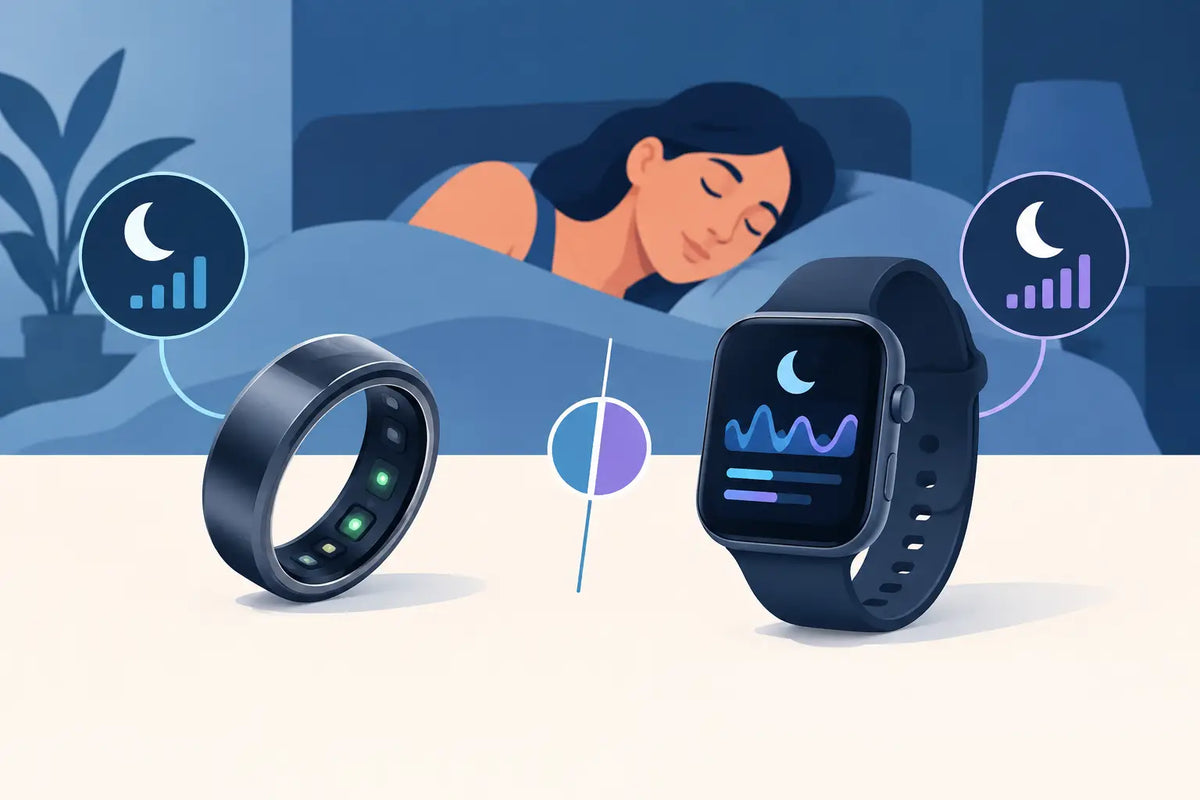
A tracker that presses against your wrist at night will quickly end up in a drawer. That is why the smart ring versus sleep tracker debate is not just about metrics. The real question is which wearable you will actually want to wear every night and every day. Only data collected regularly can help you identify sleep patterns and make more conscious changes to your habits.
A smart ring offers discreet health monitoring right on your finger. A traditional sleep tracker is usually worn on the wrist, often as a smartwatch or fitness band. Both can track sleep, movement, and sometimes other health metrics. In everyday life, however, they differ significantly in terms of comfort, distraction, and style.
Smart Ring Versus Sleep Tracker: The Difference in Everyday Life
A sleep tracker worn on the wrist often features a display, notifications, and numerous sports functions. This can be practical if you want to check metrics immediately during a workout, see messages, or control music. At night, however, this very presence can be disruptive: the casing is noticeable, the band can dig in, and a glowing display is more likely to remind you of your next work appointment than of rest.
A smart ring takes a different approach. It focuses on what many people really need: tracking health and activity without cluttering everyday life with technology. No large display on the wrist, no constant interruptions, no sporty look that seems out of place with a business outfit or at dinner. You can view the results clearly in the app later, when you have time for them.
This is a major advantage, especially for people who already wear a traditional watch or deliberately do not want a smartwatch. The ring can look like a high-quality accessory while still providing the data you need to get a better sense of your recovery.
Sleep Comfort Determines the Best Data
The most precise feature is of little use if the wearable is lying on your nightstand at night. That is why comfort is often more important than a particularly long list of features when comparing options.
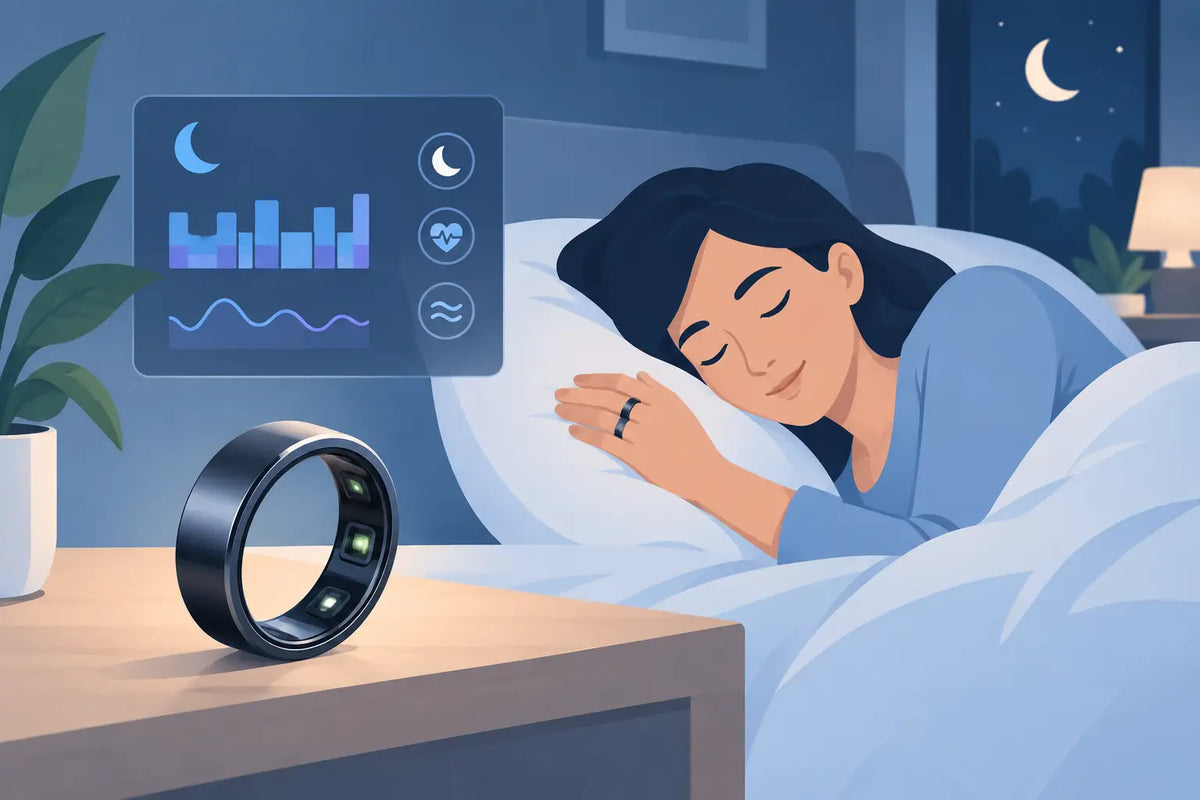
A ring fits snugly but inconspicuously on the finger. Many users barely notice it after a short adjustment period. This is especially comfortable for side sleepers or anyone who finds wristbands and watches disruptive in bed. A discreet ring also stays comfortably in place while showering, at the office, or relaxing on the sofa.
A sleep tracker worn on the wrist can also be comfortable, especially if it is a lightweight fitness band. However, some people are sensitive to a band worn on their skin for many hours. In addition, if you often take off your watch during the day to charge it, you are more likely to forget to put it back on before going to bed.
The right comparison, therefore, is not: Which device has more features? Rather: Which device will I wear reliably enough to build a true picture of my routine from individual nights?
What Sleep Data Do the Ring and Tracker Provide?
Both smart rings and modern sleep trackers can typically estimate sleep duration, sleep and wake times, and sleep stages. Depending on the model, metrics such as heart rate, heart rate variability, respiratory rate, skin temperature, or a daily recovery score may also be included. This data can provide clues about how your body responds to stress, late meals, exercise, alcohol, or irregular bedtimes.
The crucial point: No consumer wearable can replace a medical examination or reliably diagnose sleep disorders. Its strength lies in making trends visible. For example, if you regularly see a lower recovery score after short nights or notice that your rest periods on the weekend start significantly later, you will have a concrete reason to question your habits.
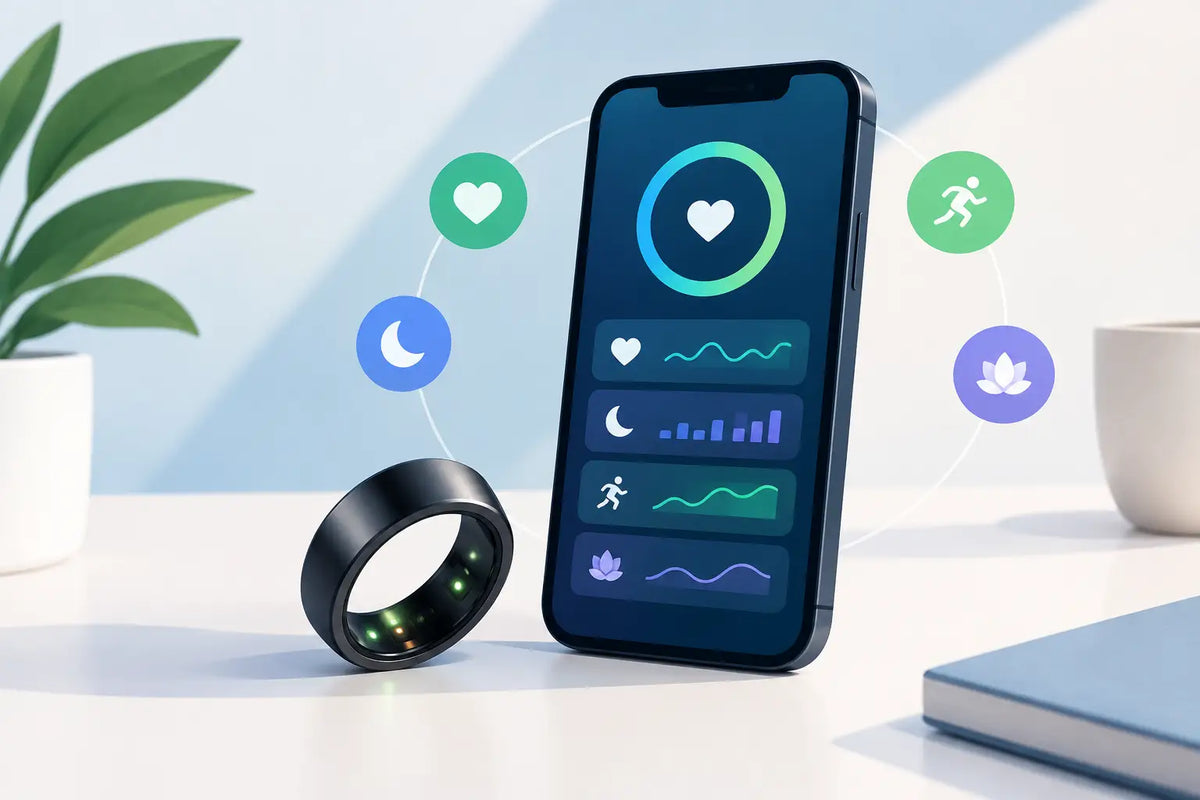
A smart ring is particularly well suited for this type of use. The tracking happens in the background while you focus on your everyday life. Instead of looking at a display at night, you can calmly check how your night went in the morning.
Understanding Data Instead of Collecting Numbers
Many wearables provide more metrics than you can practically use. If you study ten charts every morning, you will quickly lose track. It is better to focus on a few questions: How long did I sleep? Was my recovery better or worse compared to previous days? What routine might have made the difference?
A good sleep tracker or smart ring therefore translates metrics into understandable trends. This turns technology from another to-do into a tool for small, realistic changes. Perhaps you will put your smartphone away earlier, postpone a late workout, or pay closer attention to consistent bedtimes. Often, it is these steps, not the perfect number, that make a long-term difference.
Smart Ring or Sleep Tracker: Which Is Right for Whom?
A traditional tracker is a strong choice if you want to actively check a display during exercise. Runners, cyclists, and people who need training data directly on their wrist benefit from this immediate feedback. Those who want to bundle as many smartwatch features as possible in one device will also usually find a wider selection there.
A smart ring is a better fit if sleep, recovery, and discreet activity tracking are the focus. It is designed for people who want to understand their health without their wrist feeling like a small control center. In a professional setting, a ring often looks more elegant and less technical than a large watch.
Your style also matters. A wearable does not have to look like it belongs in a gym to be useful. A ring in a color that matches your jewelry, watch, or wardrobe is more likely to become part of your everyday life. That is an often underestimated advantage: when technology looks good, you are more likely to keep it on.
Realistically Compare Battery Life, Operation, and Distraction
When it comes to sleep tracking, the battery life listed on the spec sheet is not the only thing that matters. What is relevant is whether charging fits your routine. A device you can charge during a break, in the shower, or at your desk is easier to use in everyday life. Schedule a regular charging time so that your nighttime measurements are not missed.
Operation also involves a choice between personal preference and practical needs. A smartwatch is interactive: you tap, read, and respond directly on your wrist. This is practical, but it can also create new distractions. A smart ring deliberately remains understated. It tracks while you live your life, leaving you to decide when to view your data.
For many, this is the more pleasant form of health monitoring. The technology accompanies you rather than demanding your attention. Those who already switch between a laptop, smartphone, and notifications all day often find this difference a real relief.
What to Look for Before Buying
Before you decide, do not look only at features. Check whether the ring or tracker is compatible with your smartphone and whether the app is easy to understand. A clear presentation of your sleep and activity data is more useful than an overloaded app with countless metrics.
With a smart ring, size is particularly important. The ring should fit securely without cutting in or rotating uncomfortably. Since finger size and circumference can change throughout the day, careful sizing is worthwhile. A digital ring-sizing tool and the option for easy size exchanges can eliminate much of the uncertainty involved in the decision.
Also pay attention to the material, water resistance, charging routine, and the features you actually want to use. If your main goal is to sleep better, you do not need a device that replicates every conceivable smartwatch feature. If you want to control intense workouts in real time, you should consider whether a ring alone meets your expectations.
When Health Fits Elegantly into Everyday Life
The Fitorb Smart Ring Pro embodies the idea of collecting health data where it does not get in the way: right on your finger. It combines sleep and activity analysis with a discreet design that does not push itself into the spotlight like a piece of technology. For choosing the right size, a digital sizing tool, free exchanges for the wrong size, and a 30-day money-back guarantee provide additional peace of mind.
In the end, the best decision is the one that fits your life. Do not choose a wearable based on the longest feature list, but rather for the moments when you will wear it: at night in bed, in the morning with your first cup of coffee, in meetings, and on your way home. When health monitoring feels effortless, tracking becomes a habit after just a few days—one that truly shows you something.

Leave a comment
This site is protected by hCaptcha and the hCaptcha Privacy Policy and Terms of Service apply.