
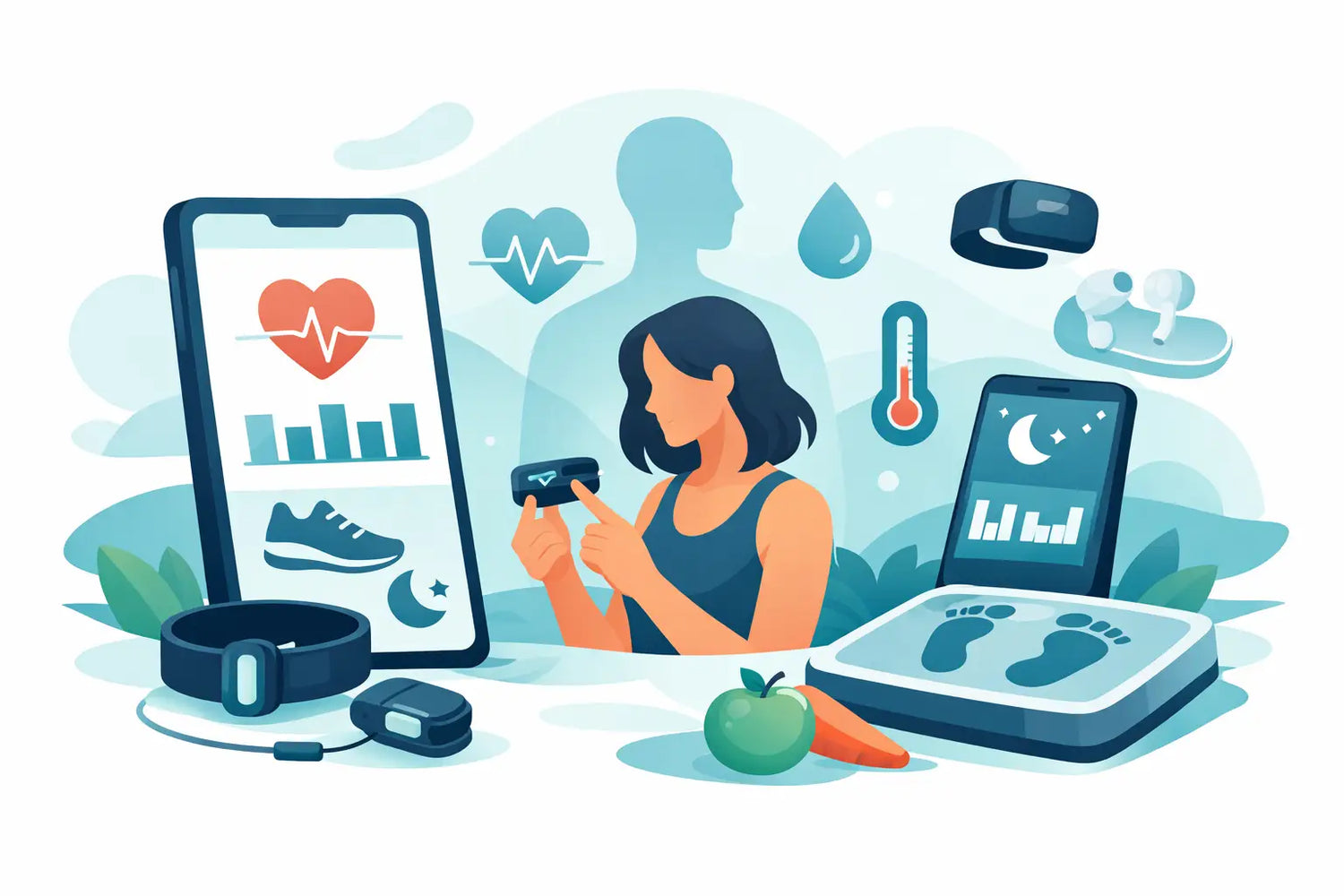
Anyone who wants to understand their sleep quality, keep an eye on their heart rate, and better assess their daily activity often first looks to a watch on their wrist. This is exactly where many people compromise. Health tracking without a smartwatch is no longer a niche solution, but for many people, it is a significantly more pleasant choice—less conspicuous, more stylish, and often more consistent in everyday life.
The point is simple: The best tracking solution is not the one with the most features on paper, but the one you actually wear every day. If a smartwatch is uncomfortable at night, looks too sporty in the office, or simply feels out of place with your style, even good data won't be very useful. Discreet alternatives fill exactly this gap.
Why health tracking without a smartwatch is so popular right now
Many people like the idea behind wearables, but not the feeling of wearing them. A watch is visible, often relatively large, and constantly reminds you that technology is attached to your body. For some, that is practical. For others, it feels like a foreign object—whether sleeping, in meetings, going out, or simply in everyday life.
Then there is a point that is rarely discussed openly: Not everyone wants to collect health data using a device that also looks like screen time. Anyone who wants to live more consciously is often looking for less visual distraction, not more. A solution without a display feels calmer. It measures in the background instead of constantly demanding your attention.
Aesthetic expectations have also changed. Health and lifestyle are now intertwined. Anyone who values design does not want to wear technology that dominates every outfit. That is exactly why more compact, elegant forms are becoming increasingly relevant.
Which alternatives to a smartwatch are really worth it
Not every alternative is automatically better. What matters is what you want to measure and how discreetly it needs to work in everyday life.
Smart Ring instead of a watch
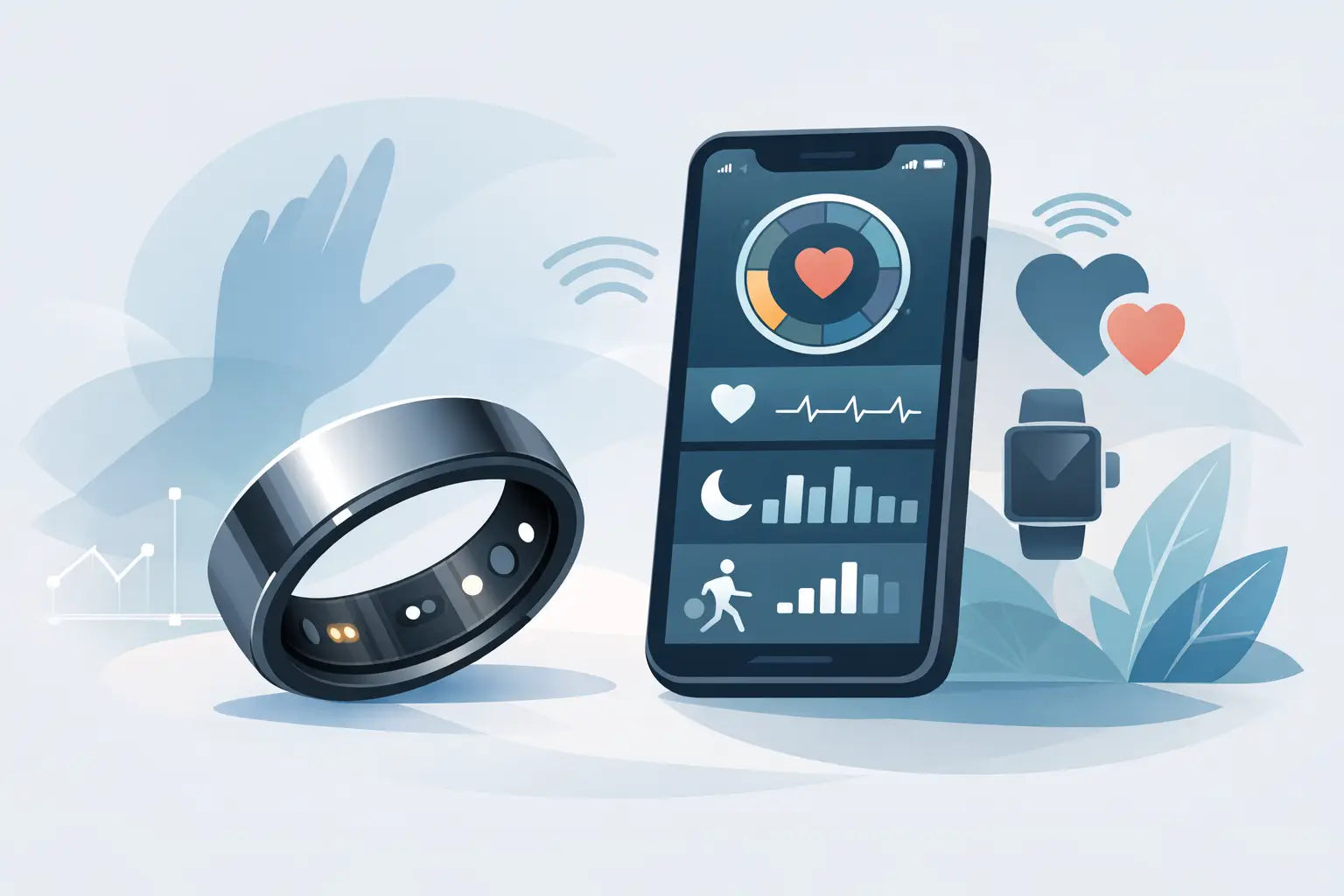
For many, a smart ring is the most obvious answer to health tracking without a smartwatch. It sits directly on the finger, is lightweight and discreet, and does not interfere as much as a device on the wrist does, whether at work or while sleeping. This is a real advantage, especially for people who want to seriously monitor their sleep data. What does not annoy you at night can stay on your body overnight—and only then can reliable data be collected.
It is also practical for everyday life. A ring fits in the office, at a restaurant, in the gym, and with more formal looks. It does not look like a training device, but like a functional accessory. This exact combination of technology and style makes it attractive to many.
Fitness trackers without a large display
There are also narrower tracker bands that are less conspicuous than traditional smartwatches. They can be useful if the focus is clearly on activity, steps, and basic health metrics. The downside is often the same as with watches: they still sit visibly on the wrist. Anyone who wants to avoid exactly that will only gain limited benefits here.
Manual tracking via an app
Apps without an additional wearable also play a role, for example for tracking habits, mood, nutrition, or sleep logs. This can be useful for reflection and behavior change. However, it is usually not enough on its own for continuous measurements such as heart rate, nighttime recovery, or activity patterns. Manual entry is helpful, but not particularly convenient.
What good health tracking without a smartwatch should achieve
Anyone looking for an alternative should not only consider the form factor, but also the actual benefits. Good wearables do not have to be loud, but they should be precise and easy to use.
The most important thing is the combination of comfort and consistency. A device that looks elegant but is constantly taken off loses its value. Every night counts when it comes to sleep tracking. Every day counts for activity tracking. That is why comfort is not a luxury, but the foundation of meaningful data.
Then there are the metrics. Not everyone needs every number. For many, sleep analysis, heart rate, activity levels, and recovery metrics are the most interesting areas. This data helps identify patterns: Am I really sleeping well? Am I getting enough rest? Am I moving enough? Do I react physically more strongly to stressful periods than I thought?
The app is just as important. If measurements are collected but presented in a way that is difficult to understand, no real added value is created. Good health technology makes data relevant to everyday life. It does not just show graphs, but also helps you better understand your habits.
Who benefits most from discreet tracking
The short answer: anyone who wants to use data without constantly showing off technology. In practice, however, there are typical situations in which health tracking without a smartwatch is particularly useful.
Professionals often benefit from a solution that does not stand out in the workplace. Anyone who spends a lot of time at a laptop, has client meetings, or prefers a simple style rarely wants a sporty display on their arm. A discreet tracker fits better into this overall picture.
Those who optimize their sleep usually quickly notice how much difference the wearing experience makes. A watch can press against the wrist at night, light up, or simply be uncomfortable. A more compact alternative is easier to keep on—and that is exactly what makes sleep analysis reliable.
Lifestyle-oriented buyers especially appreciate the combination of functionality and design. Health should fit into everyday life, not work against it. If a wearable looks more like a stylish accessory, the barrier to using it in everyday life is significantly lower.
Then there is the group that simply does not want notifications on their body. That is also perfectly valid. Not everyone wants emails, calls, and app notifications on their wrist. Many want to measure, not constantly react.
The most important differences from a smartwatch
A smartwatch can do more—but that is not always an advantage. Anyone who wants to make calls, read messages, start workouts, and use apps will get a broader package with a watch. Anyone who primarily wants to collect health data often does not need this range of features at all.
Health tracking without a smartwatch is usually more streamlined. This means fewer distractions, fewer visual stimuli, and often a more pleasant wearing experience. The trade-off is therefore not more or less technology, but different technology with a clearer focus.
Of course, there are also limitations. A ring cannot replace a sports watch for serious running training with a live display. Anyone who wants to read data constantly during a workout will probably be happier with a watch. Anyone who wants to measure in the background and analyze the data later is often better served by a discreet solution.
What to look for when buying
The technology is not the only deciding factor, but the overall package. If the size does not fit, even the best product will quickly end up in a drawer. Especially with rings, accurate sizing is therefore essential. A good provider takes this hurdle seriously and makes the selection process as easy as possible.
The feel of the material also matters. If a wearable is worn every day, it must feel high-quality. It must not look like a gadget if it is also intended to function as an accessory. Design is not an extra here, but part of the user experience.
You should also look for service and purchase protection. Trust is especially important when trying a new product category. Free exchanges for the wrong size, a trial period, and easily accessible support significantly reduce the risk. This is more than convenience—it makes getting started completely stress-free.
Anyone looking for an elegant, practical solution will therefore often end up with a smart ring like those from Fitorb. The idea behind it is clear: health data should be available without the product being intrusive. That is exactly what makes the difference in real life.
Health tracking without a smartwatch is not a compromise
The biggest misconception is to see discreet wearables as a stripped-down version. For many users, they are not the smaller solution, but the better one. Not because they draw more attention, but because they require less of it.
Technology works well in everyday life when it feels natural. When you do not have to wonder every morning whether the device matches your outfit. When you do not have to take it off at night because it annoys you. When you receive data without spending all day interacting with a display. That is where real added value is created.
In the end, it is not about whether a smartwatch is good or bad. It is about which form of technology suits your life. Anyone who takes their health seriously while also valuing style, comfort, and peace in everyday life will often find that health tracking without a smartwatch is the more harmonious solution.
The best decision is usually the one you do not regret two weeks later, but still wear naturally months later.

Leave a comment
This site is protected by hCaptcha and the hCaptcha Privacy Policy and Terms of Service apply.