
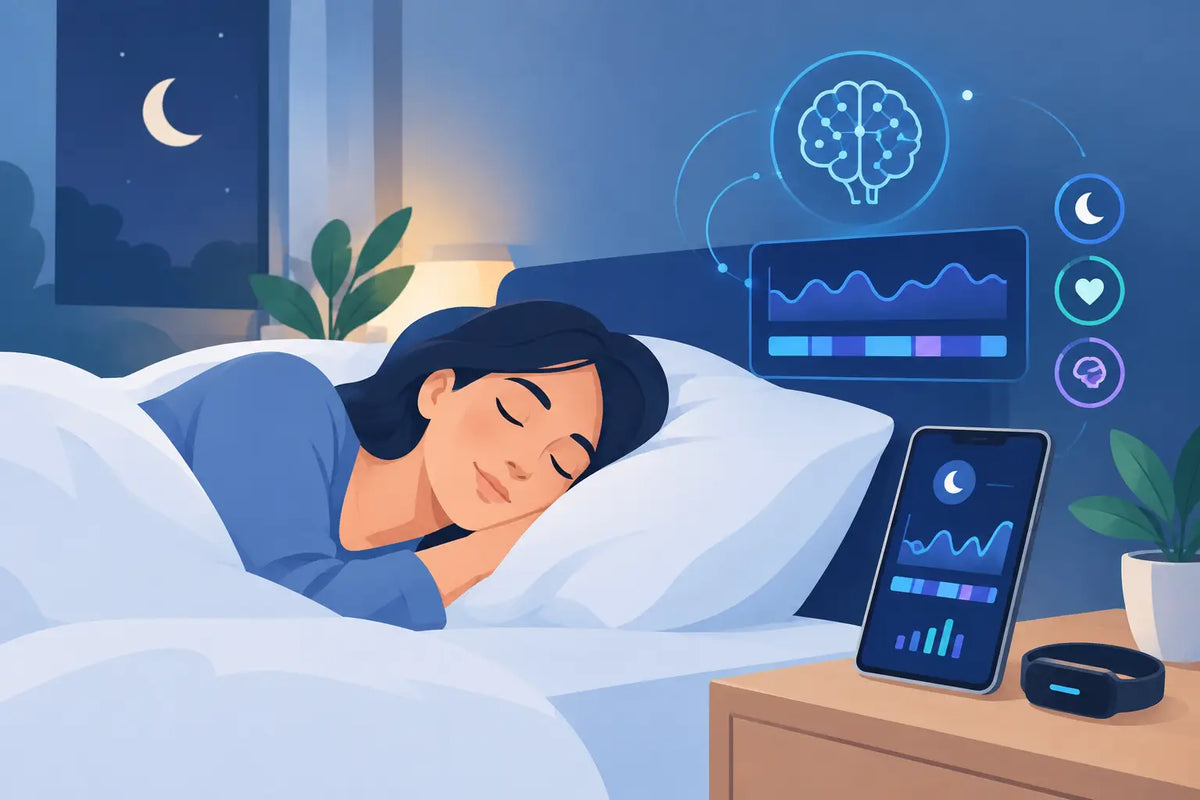
The alarm rings, but you feel as if you’ve barely slept. This is where AI sleep analysis trends come in: instead of even more raw data dictating your morning, you get clear insights into what affected your night—and which small change might actually make a difference. Smart rings are taking center stage here because they sit discreetly on your finger and track sleep metrics without the bulk of a watch on your wrist.
Why AI sleep analysis trends are so relevant right now
Sleep tracking has long been about more than just displaying a number of hours. Many people nominally sleep seven or eight hours and still wake up exhausted. The reason often lies in the interplay between falling asleep, nighttime interruptions, rest periods, movement, and physical recovery. A sensor can measure these signals. Artificial intelligence helps turn many individual data points into a clear picture.
The difference is noticeable: instead of just reading in the morning that your sleep quality was 76 out of 100, modern systems can identify patterns over several nights. Perhaps your sleep rhythm shifts on workdays. Perhaps your recovery drops after eating late, intense exercise, or a glass of wine. AI connects such changes with your personal baseline and makes the data practical for everyday life.
This is particularly appealing to working professionals. No one wants to analyze ten charts before their first cup of coffee. Good sleep analysis therefore translates metrics into simple recommendations: wind down earlier today, reduce stress, or keep your bedtime consistent. The decision remains yours, but it is based on more than just a hunch.
From sleep score to your personal sleep story
The major trend is personalization. A general guideline can be helpful, but it doesn’t automatically suit everyone. Someone who regularly sleeps six hours and feels productive needs a different interpretation than someone whose recovery increases significantly after seven hours. Over time, AI can learn a personal baseline and better interpret deviations.
The goal is not to perfect every night. Occasional short nights are part of life. What matters is the pattern over weeks. If the analysis repeatedly detects late sleep onset, restless periods, or poor nighttime recovery, an isolated number becomes a story. This is exactly what makes wearables more appealing to many people than traditional trackers that merely collect data.
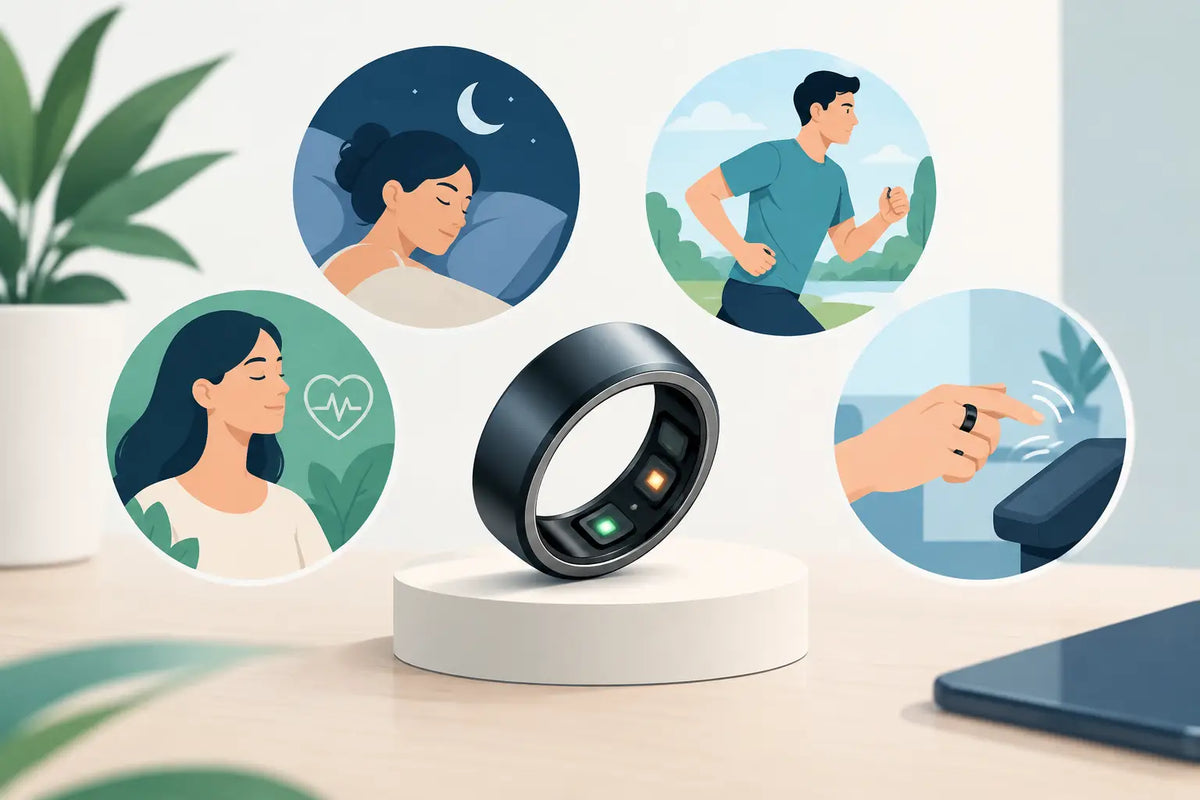
A smart ring is particularly practical for this task. For many people, large displays, notifications, and wide wristbands are disruptive during sleep. A slim ring, on the other hand, can be worn day and night and suits both business attire and sports. The Fitorb™ Smart Ring Pro embodies this approach: health data on your finger without technology constantly taking center stage in everyday life.
This data is being combined more intelligently
Sleep analysis with AI does not rely on a single metric. It considers several signals that together provide a more realistic picture. These include sleep duration, approximate sleep stages, nighttime movement, heart rate, heart rate variability, and sometimes temperature trends.
The analysis becomes particularly valuable when it takes context into account. An elevated heart rate one night is not automatically a warning sign. It can be understandable after a late workout, a celebration, or a stressful period at work. However, if the same trend persists over several nights, the app can make it visible and encourage you to pay closer attention to your recovery.
The best systems do not sound alarmist. They do not say that a number is a diagnosis. They show how your body compares to your usual baseline. This is an important distinction, because a wearable supports healthy habits but does not replace a medical examination.
The most important developments in AI-powered sleep tracking
One of the most exciting developments is dynamic recommendations. In the past, sleep goals often followed the principle of eight hours for everyone. Current AI models can consider when you go to bed, how regularly you sleep, and whether your recovery metrics are changing. This makes the insights more concrete and realistic.
The connection between sleep and daytime activity is also becoming more prominent. Your activity level, exercise intensity, and daytime rest periods provide context for the night. If your activity was high and your recovery was low, a system might suggest a more restful day ahead. Conversely, a stable night can show that your body is well prepared for exercise. This is particularly helpful for people who want to stay fit without pushing themselves to their limits every day.
Another trend is the identification of long-term routines. AI can make recurring connections visible, such as your sleep quality improving on certain days of the week or a reliable evening window benefiting you. Such insights are often more effective than general tips because they fit your life.
The quality of presentation is also becoming increasingly relevant. Complex measurements do not have to look complicated. Good apps focus on a clear daily overview, easy-to-understand language, and trends that can be grasped at a glance. If you understand your data, you are more likely to stick with it. If you are overwhelmed by numbers, you will put the tracker in a drawer after a few weeks.
What a good smart ring should do during sleep
AI can only be as helpful as the data it works with. That is why measurement quality matters just as much as the app. A ring should fit comfortably, because only then will it be worn consistently at night. The right size is not a minor detail: A ring that is too loose can affect measurements, while one that is too tight can disrupt sleep comfort.
You should also look for a battery life that suits your daily life. Sleep tracking is of little use if you have to charge the ring in the evening. A clear app, transparent privacy information, and the ability to view trends over several weeks are also part of a compelling overall package.
Not every metric needs to occupy your mind every day. Many users benefit from checking only the central recovery or sleep metric in the morning and diving deeper into their progress once a week. This keeps tracking a useful tool rather than an additional stress factor.
How to use AI sleep data properly without driving yourself crazy
The downside of precise data is sleep pressure. If you are already worried about getting a bad score in the evening, you are unlikely to sleep any better. Sleep analysis should provide guidance, not create pressure. A single low score is not a judgment on your health, nor is it a reason to write off the entire day.
It is more helpful to take a calm look at trends. Ask yourself: Do I feel less recovered over several days? Is there a recurring habit that could be easily changed? Can I adjust my dinner, screen time, or workout time? Choose one change and give it at least a week.
The limitations of the technology are also part of an honest assessment. Wearables estimate sleep stages based on physical signals; they do not measure brain waves like a sleep lab. Results can be influenced by a poor fit, unusual nights, or individual differences. If symptoms persist, severe snoring, breathing pauses, or pronounced daytime sleepiness occur, seeking medical advice is the right next step.
The trend is toward less technology and more clarity
The future of sleep analysis lies not in more and more numbers, but in better decisions. AI is likely to become more accurate at identifying which factors affect your recovery and will tailor insights even more closely to your rhythm. At the same time, design and comfort remain crucial: the best analysis is only useful if you enjoy wearing the ring.
Therefore, do not start with the desire for the perfect night. Observe your rhythm, discover recurring patterns, and change one habit that truly fits into your daily life. This turns a smart ring from another screen into a discreet companion for nights that feel better in the morning.


Leave a comment
This site is protected by hCaptcha and the hCaptcha Privacy Policy and Terms of Service apply.