
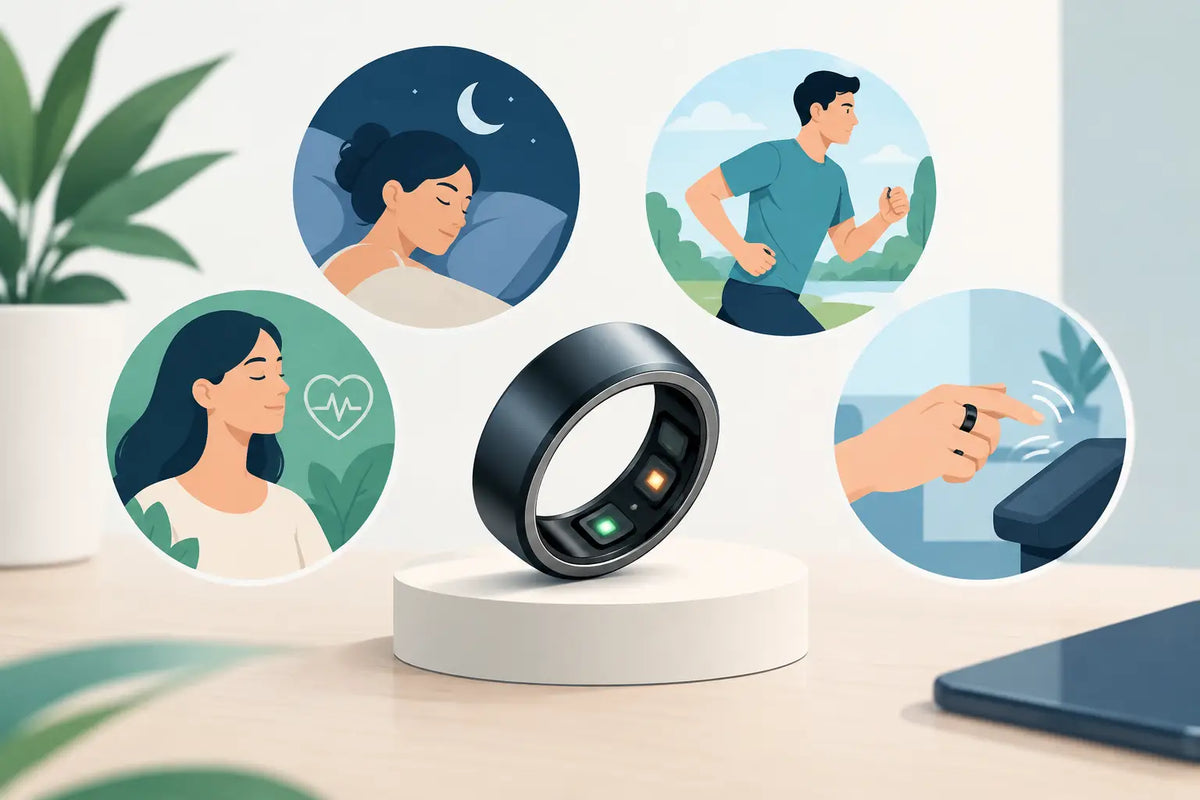
Does looking at your wrist bother you while sleeping, in a meeting, or at an elegant dinner? That is exactly where a smart ring shines: it brings valuable health data to where an accessory is already a natural part of your day—on your finger. No glowing display, no bulky device, and no sudden feeling that your everyday life has become all about technology.
A smart ring is no miracle cure and cannot replace medical advice. But it can do something very practical: it makes patterns visible. How restful is your sleep, really? When is your body under strain? Are you as active in your daily life as you think? For those who want to answer these questions with more than just a gut feeling, a smart ring is an unobtrusive companion for building better habits.
The best reasons for a smart ring at a glance
The decisive advantage of a smart ring is how seamlessly it fits into everyday life. Many people put it on in the morning, forget about it for hours, and only check the app when they want to make sense of their data. This is a different approach from devices that constantly demand your attention.
A high-quality ring combines sleep analysis, activity data, and recovery insights in a small format. This doesn’t just produce numbers, but rather points of reference for making decisions: Perhaps you’ll postpone an intense workout after a short night’s sleep. Perhaps you’ll realize that a late coffee affects your sleep more than you thought. Or maybe you’ll consciously allow yourself more rest after a demanding day at work.
1. Understand sleep better, rather than just counting hours
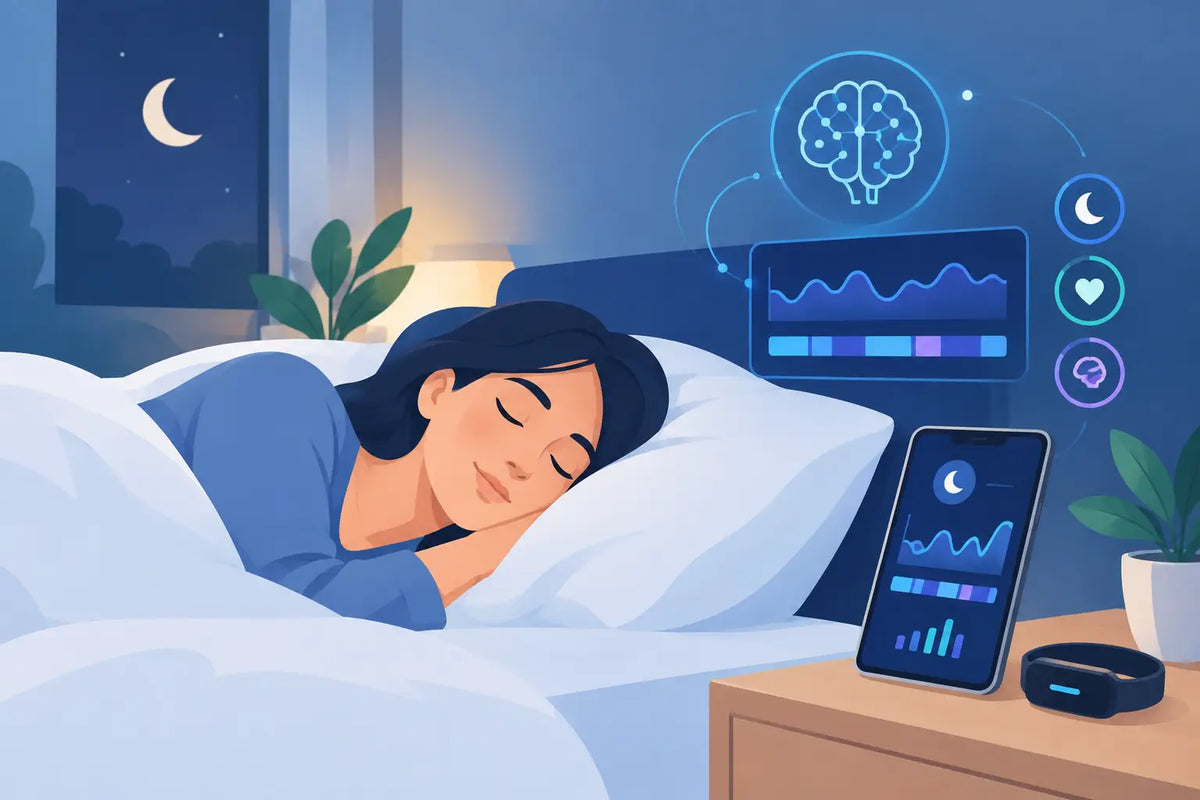
Eight hours in bed does not automatically mean eight hours of rest. Sleep quality is influenced by several factors: how long it takes to fall asleep, periods of wakefulness, sleep patterns, and how restful the night actually was. A smart ring helps you look at these connections over a longer period.
This is particularly valuable because memories can be misleading. After a stressful week, every night can feel the same. Data, on the other hand, can show whether you fall asleep later on certain days, sleep more restlessly, or get less rest. This can help you make small, realistic changes—such as establishing a consistent evening routine, spending less time in front of screens, or finishing work earlier.
For many, sleep is precisely the main reason to wear a ring instead of a smartwatch. It sits unobtrusively on the finger, while a watch in bed can feel disruptive. Comfort determines whether you will continue to use a wearable. And only regular use provides a picture that is truly helpful.
2. See recovery and stress in the right context
A packed calendar, exercise, travel, and too little sleep leave their mark. A smart ring can capture physical signals and provide insights into strain and recovery. This does not replace your own physical awareness, but adds a perspective that is easily lost in the hustle and bustle of everyday life.
The key is to look at trends, not individual days. A low recovery score after a celebration or a short night’s sleep is no cause for concern. However, if a pattern emerges over several days, it is a good reason to adjust your routine. Perhaps a walk is more beneficial today than the planned interval training. Perhaps your body simply needs a more restful night.
This kind of guidance is particularly well suited to people who want to achieve a lot without constantly turning their health into a project. The ring provides information in the background. You decide what to do with it.
3. Track activity without constantly looking at a display
Not every movement needs to start as a workout. Commutes to the office, taking the stairs, a walk during your lunch break, or a walk with the dog all count. A smart ring makes everyday activity visible and can motivate you to incorporate movement more naturally into your day.
The difference lies in the tone: it is not about forcing peak performance every day. Good health data should provide guidance, not pressure. If you recognize a period of inactivity, you can consciously take action. If you are already active, you can see how small decisions add up.
For ambitious athletes, a ring is primarily a supplement. A sports watch with a live display can be useful when running or cycling. But if you want to monitor sleep, recovery, and activity together in a discreet way, a smart ring is particularly beneficial.
Why a smart ring is becoming a smartwatch alternative
A smartwatch can do a lot—display messages, answer calls, and guide you through a workout on its screen. But many people do not want to wear that on their body around the clock. Constant notifications can be distracting, and a large display may not suit every style or occasion.
A smart ring focuses on the essentials: collecting data, showing connections, and remaining discreet. It does not draw attention in a business meeting, suits a dinner, and does not have to be taken off in the morning just because it does not match your outfit. Health tracking becomes less visible, but no less relevant.
This does not mean that the ring is the better choice for everyone. If you want to read your pace, maps, or messages directly during a workout, you will continue to appreciate the display functions of a watch. But if you want less screen time and more discreet health monitoring, a ring is a compelling alternative.
4. A design you can truly wear every day
A wearable can offer as many features as it wants—if it ends up in a drawer, it is of little use. That is why a smart ring scores points with a familiar design. It is jewelry and technology at the same time: minimalist, modern, and suited to a style that does not have to look like it came from a gym.
Different colors and finishes make it easier to choose a ring that suits you. This is no minor detail. If you feel comfortable with your wearable, you will wear it more consistently. And that very consistency ensures that sleep, activity, and recovery scores can be meaningfully compared over weeks.
The format also offers advantages in everyday life. For many, a ring is less noticeable than a device on the wrist when typing, cooking, or on the go. Whether this applies to you depends, of course, on the ring size, your habits, and your personal preferences. That is why it is worth paying attention to the right size before purchasing.
5. Health data becomes practical everyday habits
The best data is of little use if it remains incomprehensible. A good smart ring should therefore not overwhelm you with technical jargon, but provide clear insights. Instead of getting lost in individual measurements, you can focus on questions that improve your everyday life: Was my sleep restful? How active was I this week? When do I need more breaks?
The benefits come in small steps. You do not have to change your entire lifestyle or achieve every score perfectly. Perhaps you go to bed ten minutes earlier in the evening. Perhaps you consciously plan no further commitments after a stressful day. Perhaps you notice that regular exercise has a positive effect on your sleep. Such insights are often more valuable than a short-term record.
What to look for when buying a smart ring
A ring must fit, otherwise an elegant health companion can quickly become something you want to take off. Therefore, measure your size carefully and keep in mind that fingers can swell slightly throughout the day. A digital ring-sizing tool or a sizing kit can eliminate much of the uncertainty involved in the decision.
Also pay attention to which metrics are truly relevant to you. If sleep, activity, and recovery are your priorities, you do not need an overloaded device. What matters is comfort, an easy-to-understand app, and measurements that you can interpret over the long term. Compatibility with your smartphone and a clear approach to your data should also be on your personal checklist.
The service surrounding the purchase is also more than just a bonus. Especially with a ring, the wrong size should not be a risk. At Fitorb, digital sizing, free exchanges for the wrong size, and a 30-day trial period help you integrate the smart ring into your everyday life without unnecessary pressure.
Who benefits most from a smart ring?
A smart ring is well suited to people who want to monitor their health more consciously without constantly looking at a display. Professionals can better assess stress and sleep patterns. Fitness enthusiasts get additional insights into recovery. Style-conscious tech fans get a wearable that does not look like a typical tracker.
It is less suitable for anyone who absolutely needs live data on their wrist during a workout or who never wears a ring. Those who are exclusively looking for medical answers should also not rely on consumer technology. A smart ring supports self-monitoring and healthier routines—it does not provide a diagnosis.
In the end, the best reason for a smart ring is not a single feature. It is the feeling of understanding your body a little better without being reminded of it all day long. When technology becomes so discreet that it fits your style and routine, it has the best chance of making a long-term difference.

Leave a comment
This site is protected by hCaptcha and the hCaptcha Privacy Policy and Terms of Service apply.