
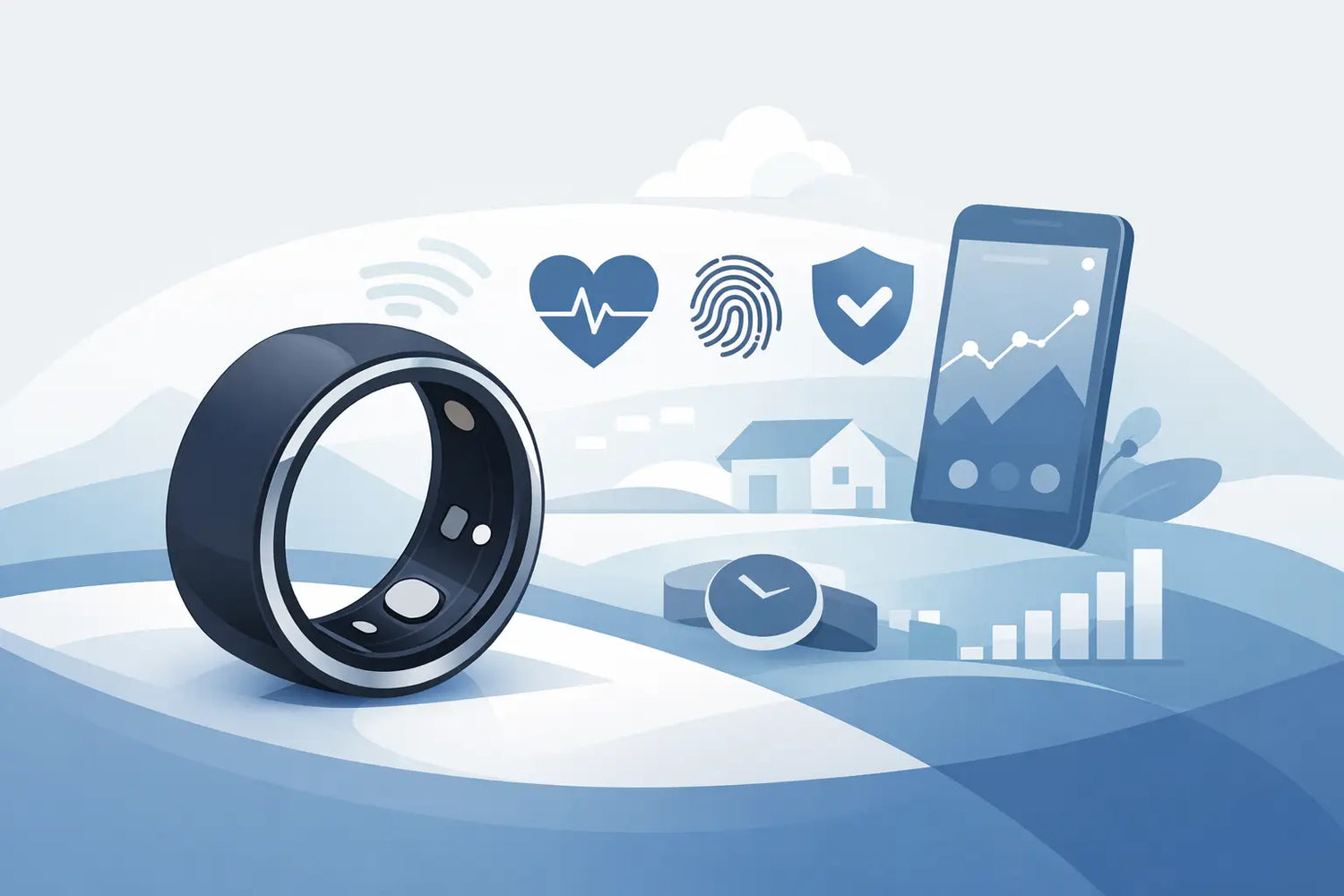
Anyone looking for a smart ring without a subscription usually wants to save money, but it's also about having a clean conscience when buying. Pay once, wear it every day, see your data—without monthly additional costs, without later surprises, and without the feeling that important features will only be unlocked after checkout.
That is exactly why it pays to take a closer look at smart rings. At first glance, many models look similar: sleep tracking, activity, heart rate, app connectivity. But in everyday life, the differences quickly become apparent. And the question is not just whether a ring looks good, but whether it fits into your life in the long term.
Why a smart ring without a subscription is the better choice for many
At first, a subscription often sounds harmless. A few euros a month seem manageable. But over a year or two, this adds up to a significant extra cost. Especially if you are buying the ring precisely because you want to keep an eye on your health in an easy and continuous way.
That is why a smart ring without a subscription is the more relaxed decision for many users. You keep ongoing costs under control and know from the start what to expect. This is particularly attractive to anyone who does not see wearables as a toy, but as a permanent part of their everyday life.
There is also a psychological point that is often underestimated. When you own a product, you want to be able to use it fully. No one likes buying hardware only to find out later that analysis, trends, or detailed views are hidden behind an additional paywall. A ring should help you better understand your habits—not create new hurdles.
What a good smart ring without a subscription should really be able to do
Being subscription-free does not make a ring good. What matters is how much you actually get for the purchase price. A good model does not just provide raw data, but also understandable insights into sleep, movement, and overall strain. The app should be clearly structured and present information in a way that you can actually use it in everyday life.
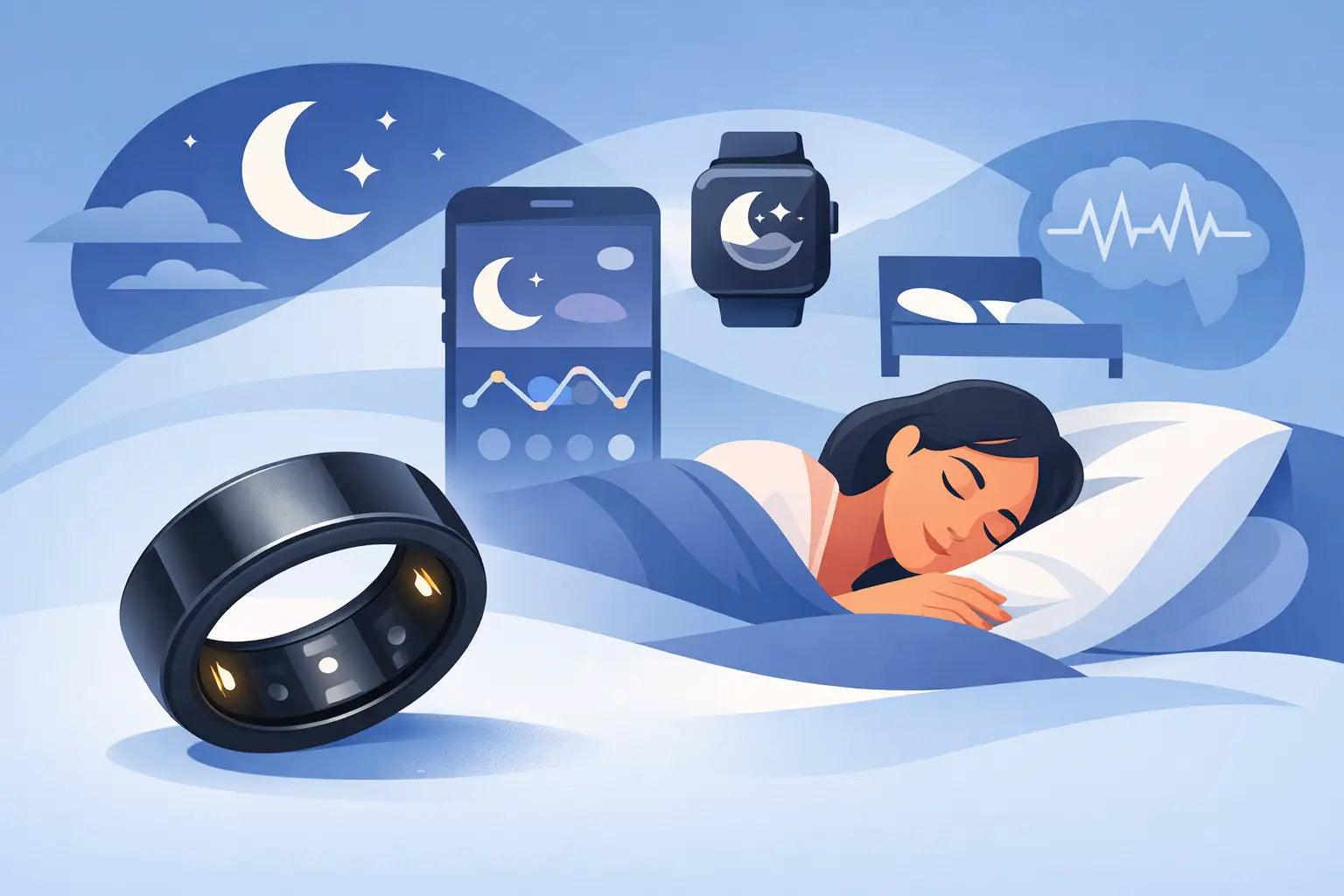
This is particularly relevant for sleep tracking. Many people buy a smart ring because they want to know why they do not wake up feeling rested in the morning, even though they seem to spend enough hours in bed. Good sensors and a clear analysis make the difference here. It is not enough to simply display sleep duration. It only becomes interesting when patterns become visible.
The same applies to activity: more data is not automatically better. A ring does not need to exaggerate every detail. What is more important is that it represents movement, recovery, and daily form in such a way that you can derive meaningful decisions from it. For example, whether an intense workout is more suitable today or whether a quiet day is the better choice.
Design is not an extra, but part of the experience
A smart ring is worn directly on the body—every day, often around the clock. That is why design is not a side issue. If a ring feels bulky, fits poorly, or does not match your style, it will quickly end up in a drawer. Then even the best app will not help.
This is precisely where smart rings have a real advantage over many smartwatches. They are more discreet, lighter, and more comfortable to wear in many situations. In the office, while sleeping, when going out, or during training, a ring often looks more natural than a visible tracker on the wrist.
For many buyers, this is exactly the deciding factor: health data without the product looking like it came from a gym or a technology lab. A good ring blends into everyday life. It does not need to stand out to be useful.
The app also determines the real value
Anyone looking for a smart ring without a subscription should examine the app almost as critically as the ring itself. Because the hardware measures, but the app explains. If the interface is complicated, if values remain incomprehensible, or if important features are hidden, the benefits quickly diminish.
A good app does not need overloaded expert logic. It should clearly show trends, present daily values in an understandable way, and quickly reveal what is improving or worsening. For example, someone monitoring their sleep quality does not want to tap through ten submenus, but see at a glance how the night went.
It is also important that the app motivates rather than stresses in everyday life. Health data should provide guidance, not create pressure. Good wearables support conscious decisions. They turn data into routine, not uncertainty.
Before buying: These questions save frustration later
Many bad purchases are not caused by poor technology, but by wrong expectations. That is why it pays to honestly check a few points before buying. Do you primarily want to understand your sleep? Are you more interested in everyday activity? Or are you looking for an elegant alternative to a smartwatch that remains as inconspicuous as possible?
Also, size plays a bigger role than many think. A smart ring must fit precisely. If it is too loose, it can affect measurements; if it is too tight, it quickly becomes uncomfortable in everyday life. Providers that assist with sizing and offer easy exchanges remove an important hurdle from the purchasing process.
Another point is everyday usability. How often does it need to be charged? How comfortable is the ring to wear at night? How well does it synchronize with the smartphone? Such questions may seem minor, but they determine whether you will use the ring permanently or lose interest after two weeks.
Smart ring without a subscription or a cheaper entry with a catch?
Some buyers automatically assume that a model without a subscription either does less or only seems cheaper at first. This may be true—but it does not have to be. There are certainly devices where the price-performance ratio is convincing precisely because the most important features are already included in the purchase price.
The deciding difference lies in the philosophy behind it. Is the ring sold as a complete product or as an entry into an ongoing payment model? For many people, the first option is clearly more attractive. They want a wearable that is immediately usable and provides lasting added value without being re-evaluated every month.
At the same time: not everyone needs every premium feature. If your goal is to conveniently keep an eye on sleep, movement, and basic health values, a smart ring without a subscription is often exactly the more sensible choice. You pay for the benefits you actually use.
Who a smart ring is particularly worth it for
A smart ring is especially suitable for people who want to use data without organizing their entire lives around technology. If you travel a lot for work, do not want to wear a large watch on your arm in the evening, or prefer something light at night instead of a smartwatch, the format is often surprisingly practical.
The ring is also appealing to style-conscious buyers. It combines functionality with restraint. A product does not need to be loud to be modern. It is precisely this understated form that makes smart rings so attractive to many.
And then there is the comfort factor. A ring accompanies you discreetly throughout the day. It does not constantly remind you that you are wearing a device. This may sound trivial, but it is one of the main reasons many users stick with a ring after switching from a smartwatch.
What really matters with a provider
Not only the product counts, but also the purchasing experience. Especially with wearables, trust is a real factor. Clear information, help with sizing, fast support, and fair return options make the difference between spontaneous curiosity and a confident purchasing decision.
If a provider also focuses on everyday-usable design, ease of use, and understandable benefits, it fits better with what most buyers are actually looking for. No one needs complicated technology promises. What is in demand is a product that is understandable, comfortable, and reliable.
That is exactly why many customers today pay closer attention to service promises surrounding the purchase. Free exchanges for the wrong ring size, a risk-free trial period, and clearly communicated services are not minor details. They show that a product is not just sold, but is also intended to work in everyday life.
One example of this approach is Fitorb: a smart ring as a stylish alternative to a smartwatch, combined with digital sizing assistance, free exchanges, and an easy trial option. For many, this is exactly the point where interest turns into real trust.
A smart ring without a subscription means above all: a clear decision
In the end, it is not about whether a ring offers as many technical buzzwords as possible. It is about whether it fits into your life. A smart ring without a subscription is particularly strong if you value predictability, comfort, and real everyday benefits.
If a ring looks good, fits comfortably, provides understandable data, and does not result in ongoing additional costs, it creates exactly what people want from smart technology: more clarity without more effort. And that is exactly why the best choice is often not the loudest, but the one you enjoy wearing every day.


Leave a comment
This site is protected by hCaptcha and the hCaptcha Privacy Policy and Terms of Service apply.