

If you're tired of wearing a watch on your wrist, sooner or later you'll ask yourself: Can a smart ring count steps accurately enough for the data to be useful in everyday life? The short answer is yes. The better answer is: it depends on how you move, how the ring fits, and what you actually expect from an activity tracker.
Especially if you want to combine health and style, the ring is a much more discreet solution. It accompanies you at the office, on walks, at the gym, and while you sleep at night, without looking like a piece of technology. That's exactly why step counting is often underestimated. Many people think of a smartwatch first when it comes to activity tracking. In practice, however, many people find that a good smart ring provides exactly what they need: a clear picture of their daily activity without being constantly noticeable.
How a smart ring counts steps
A smart ring doesn't count steps by directly detecting every single footfall. It uses motion sensors, primarily an accelerometer, and interprets typical patterns of hand and body movement. From this, it calculates when you are walking, how long you are active, and how many steps you have likely taken.
This may sound less direct than a foot sensor, but it is completely normal in everyday life. Smartwatches and many fitness trackers also use estimates. The difference lies more in where the device is worn. Movements are more subtle on the finger, but also more prone to misinterpretation. If you gesture with your hands, carry bags, or type at your desk for long periods, the software must accurately distinguish between actual movement and other motions.
This is exactly where solid technology separates itself from merely good marketing. A high-quality ring should not simply count everything as a step, but intelligently categorize typical everyday patterns. You shouldn't expect absolute laboratory perfection. For most users, something else matters more: whether the data is consistent enough over days and weeks to identify and improve habits.
Smart ring step counting - how accurate is it?
Accuracy depends on several factors. The most important one is surprisingly simple: the fit. If the ring is too loose, it will shift more easily and the sensors will capture movements less accurately. If it fits snugly against the finger, the data is usually more stable. However, it shouldn't be too tight either, because a wearable should be comfortable to wear in everyday life, not just tolerable.
Then your movement profile comes into play. People who walk a lot, regularly cover distances on foot, and have a fairly natural arm swing often get very useful step data. It becomes more difficult with activities where the hands are not very involved. If you push a stroller, carry shopping bags, or walk on a treadmill with your hands held in front of you, the count may be lower than the number of steps you actually took.
Conversely, there are situations where additional hand movements can easily lead to slightly higher readings. This doesn't happen all the time, but it is part of an honest assessment. If you judge a smart ring solely by whether it captures every single step at the end of the day, you are using the wrong yardstick. A more useful question is: Does the device reliably show you whether you moved more, less, or about the same today? For most health goals, that is exactly what matters.
Why many users still prefer to wear a ring
The biggest advantage is not the step count itself, but how effortlessly it is obtained. A smartwatch constantly reminds you that you are wearing technology. A ring almost disappears into everyday life. This makes a big difference, especially for people who want tracking but don't want bulky displays, charging concerns on their wrist, or a sports watch look in a business setting.
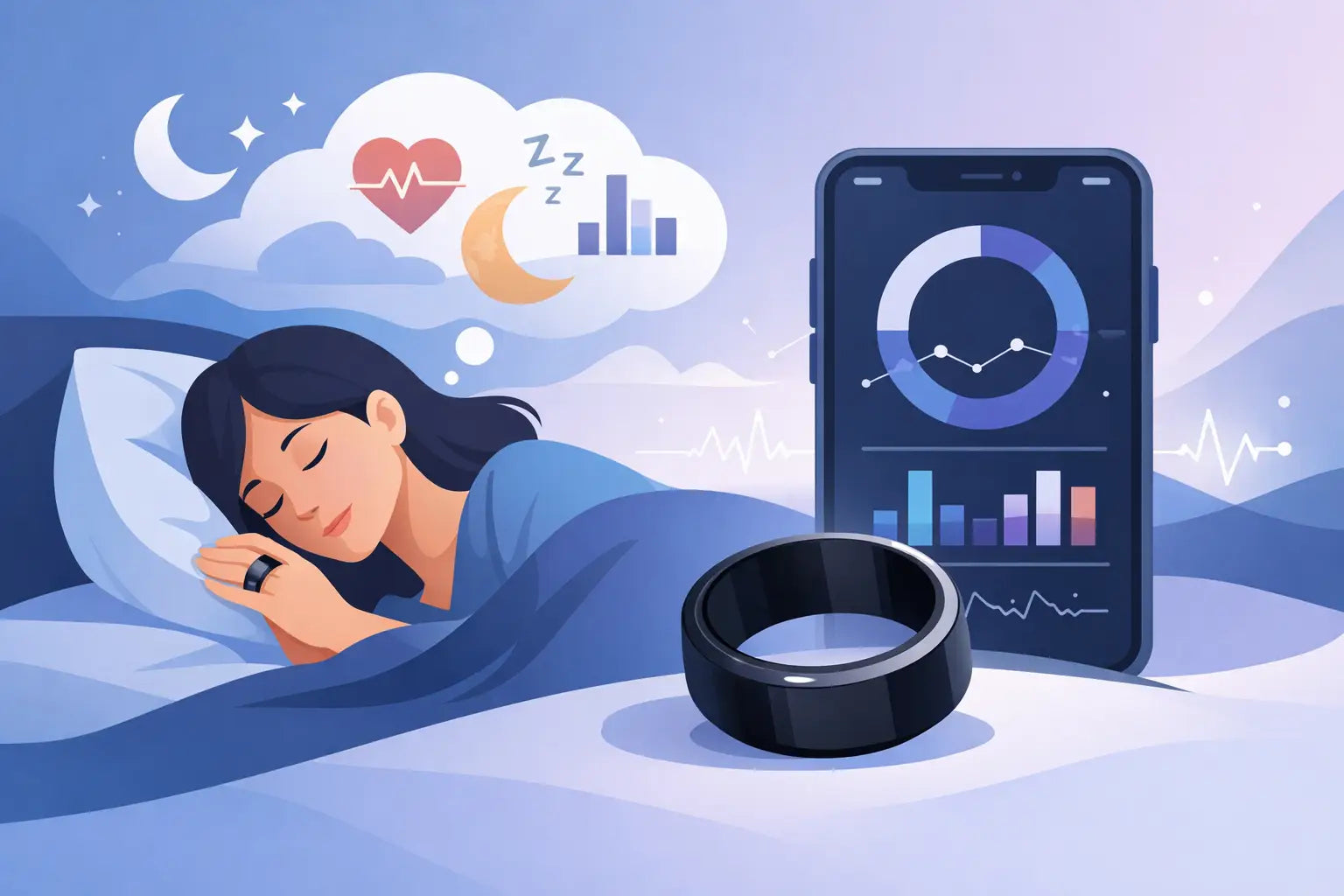
In addition, steps are rarely considered in isolation. Activity tracking only becomes truly interesting when it is combined with sleep, recovery, and daily form. People who sleep poorly often move less. Those who have several active days in a row may need more conscious recovery. A smart ring is particularly effective for this quiet form of self-monitoring. It doesn't impose itself, but it continuously provides data that tells a more complete story than a bare step count.
For many, this is a more pleasant way to live a health-conscious life. Less show, more everyday practicality.
When a ring is a better fit than a smartwatch
If you want to read messages on your wrist, answer calls, or constantly look at a display during a workout, the smartwatch remains the better choice. If, on the other hand, you primarily want to keep an eye on health data, sleep trends, and daily activity, you will often benefit more from a ring.
This is especially true for people who wear jewelry, prefer a simple look, or don't want conspicuous technology at work. A ring is also more comfortable for many people at night. And that is often where the real added value begins: A device you wear reliably day and night provides a more complete picture than one you constantly take off.
Steps are then no longer a single KPI, but part of your personal routine. That makes them more valuable.
What to look for if a smart ring is going to count steps
Design is important, but it isn't everything. If you are wearing a ring for your health, fit should be the top priority. A good size guide will help eliminate uncertainty. Especially with a product that is worn day and night, the right size determines both comfort and data quality.
You should also pay attention to the app. The best sensors are of little use if the analysis doesn't explain anything to you. Good wearables don't just show numbers; they make trends understandable. You should be able to quickly see which days you were active, when you moved less, and how that correlates with sleep or exertion.
Everyday practicality also matters. How often does it need to be charged? How comfortable is the material? Does the design suit you, so that you actually enjoy wearing the ring? A fitness gadget is only useful if it doesn't end up in a drawer after three days.
If you choose a well-rounded package, you will get more out of it than from a long list of individual tech terms. That is exactly the appeal of a well-made smart ring: technology that doesn't push itself into the foreground but works reliably in the background.
What step goals do to motivation
Many people set 10,000 steps as a daily requirement. This can be motivating, but it can also create unnecessary pressure. A smart ring is especially helpful when you use data as a guide rather than a daily test.
A realistic goal depends on your everyday life. Someone who works in an office has different circumstances than someone who travels a lot for work. Simply looking at your normal baseline is helpful. If you usually end up with around 4,500 steps, an initial jump to 6,000 is more sensible than an overly ambitious ideal that disappears after three days.
Step tracking is most effective when it remains achievable. Taking short routes on foot, an evening walk, taking the stairs instead of the elevator—these decisions may seem insignificant, but they add up noticeably. A ring makes this progress visible without you having to actively operate it all the time.
Who benefits most from a smart ring
A smart ring is particularly well suited to people who want to better understand their health without immediately organizing their entire lives around a fitness app. If you are looking for discreet tracking, value design, and are more convinced by clear everyday insights than by flashy features, this format is a strong choice.
It is also interesting for beginners. Many start with the desire to move more and sleep better. Both are more closely connected than they may seem at first glance. A ring can make this connection visible. This feels less like self-optimization pressure and more like an honest look at your own rhythm.
Someone who buys such a device usually doesn't just want to know whether 7,842 or 8,019 steps were taken today. It is about the bigger picture: How active are you really in everyday life, how consistently do you stick with it, and which routines are good for you in the long term? A model like the Fitorb Smart Ring Pro is particularly interesting if you want to answer these questions in a stylish, straightforward way without a smartwatch look.
In the end, a wearable doesn't have to calculate perfectly; it just has to fit into your life. If you enjoy wearing it, regularly check your data, and make small, better decisions from it, the ring has already done its job very well.


Leave a comment
This site is protected by hCaptcha and the hCaptcha Privacy Policy and Terms of Service apply.