

Your ring shows a lower sleep score after a short night, even though you feel surprisingly fit in the morning. Or the activity tracker lags behind, even though you feel like you've been on the go all day. This is exactly where the real benefit begins: Understanding smart ring data in everyday life doesn't mean monitoring every number. It means recognizing the right signals and developing habits that truly suit your life.
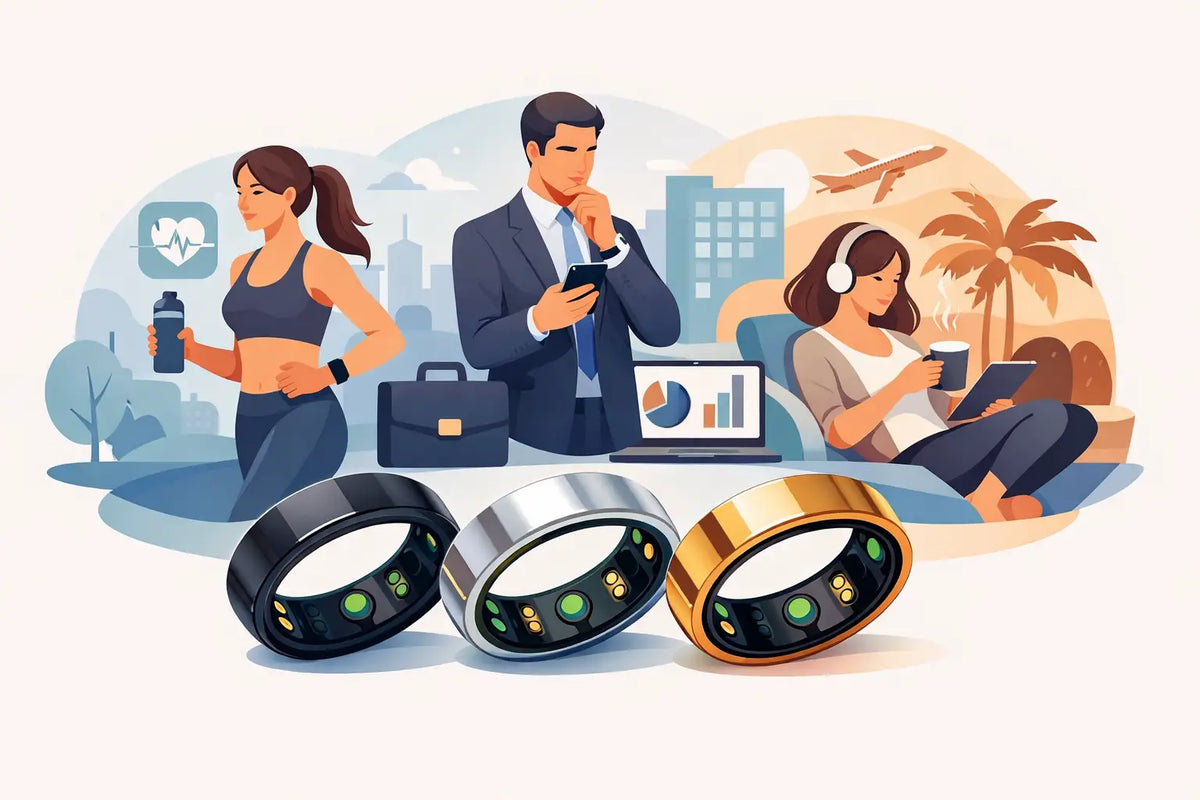
A smart ring brings health data to where it won't get in the way: on your finger. Discreet at the office, elegant at dinner, and comfortable at night. But data alone changes nothing. Only the right interpretation turns measurements into a clear view of sleep, recovery, exercise, and exertion.
What Your Smart Ring Actually Shows
Depending on the model, a smart ring captures various body and movement data. This often includes sleep duration and sleep stages, heart rate, movement patterns, steps, calorie expenditure, as well as indications of stress or recovery. In the app, these values are often combined into easy-to-understand scores.
The crucial point: A score is not a school grade or a medical judgment. It is a guide. A low recovery score does not automatically mean you are sick or that you have to cancel your workout. It can indicate that your body worked harder last night, you ate later, or a particularly busy day is still taking its toll.
Instead of evaluating individual values in isolation, it pays to look at how they interact. Less sleep, a higher nighttime heart rate, and a weaker recovery score together tell more than any single number. That is exactly the strength of a smart ring: It makes patterns visible that would otherwise easily go unnoticed in a hectic everyday life.
Understanding Smart Ring Data in Everyday Life Instead of Chasing Numbers
When you first start with a smart ring, you often check the app several times a day. That is understandable, but not necessary in the long run. Your body is not a project that you need to optimize every hour. A quick check in the morning and a look at the weekly trend is more useful.
Don't just ask yourself: "What is my score?" Ask: "What was different yesterday?" Maybe your workout was later than usual. Maybe you had two glasses of wine, a long evening in front of a screen, or a stressful presentation. Maybe your evening was relaxed, but the bedroom was too warm. The data provides the clue; your everyday life provides the explanation.
A single outlier is usually just a snapshot. Values become relevant when they repeat over several days. If you sleep poorly for three nights in a row, even though your sleep duration remains similar, you may discover a connection with eating late, drinking coffee late, or a new workout routine. This turns tracking from pressure into a personal learning system.
Reading Sleep Scores Correctly
For many, sleep is the most valuable area of a smart ring because it is measured overnight without any additional effort. Nevertheless, it is not about perfectly hitting every sleep stage. No one needs a flawless sleep score to recover better in the long term.
Sleep Duration Is the Beginning, Not the Whole Answer
Seven hours of sleep can feel completely different. What matters is whether these hours occur regularly, how often you wake up, and how rested you feel in the morning. If your ring shows that you are consistently sleeping too little, that is a clear lever. Even 30 minutes more sleep can make a noticeable difference in everyday life.
Also pay attention to your rhythm. Someone who goes to bed at 11 p.m. during the week and not until two in the morning on the weekend throws their body out of sync despite long nights. Smart ring data helps make these shifts visible without having to keep a sleep diary.
Not Every Restless Night Requires a Solution
A bad night before a trip, after a restaurant visit, or during a particularly stressful work phase is normal. Do not try to "fix" it the next morning with extreme measures. It is better to make the day a little more mindful: drink enough, plan some exercise, avoid caffeine too late, and keep the evening calm.
If noticeable sleep problems, severe daytime fatigue, or health complaints persist over a long period, a smart ring does not replace a medical evaluation. However, its data can help describe observations more clearly and keep track of changes.
Activity: Steps Are Only Part of the Story
Many people first evaluate their day by their step count. Yet a day with fewer steps can still be active and valuable: for example, through strength training, yoga, cycling, or an intense workday on your feet. A smart ring helps to view exercise more broadly.
The best activity routine is not the one with the highest numbers, but the one you can maintain long-term. If 10,000 steps motivate you, that is a good goal. If for you it is more like 7,000 regular steps plus two workouts per week, that can be just as useful. Your starting point, your profession, and your personal goal make the difference.
Activity reminders are particularly helpful on long days at the desk. A short walk after lunch, ten minutes of fresh air between two meetings, or a small detour home may seem insignificant. Over weeks, these exact decisions change your activity pattern.
Interpreting Stress and Recovery with More Calmness
Stress data is fascinating because it makes visible something that many only vaguely feel. But the same applies here: The ring measures physical signals, not your thoughts. An increased heart rate or lower recovery can be caused by emotional stress, but also by exercise, heat, alcohol, an infection, or too little sleep.
That is why it is worth not dramatizing a high stress score as a warning signal. See it as an invitation for a quick check-in: Am I tense? Have I eaten and drunk enough? Do I really need a hard workout today? Sometimes the best answer is: Replace the workout with a walk and go to bed earlier.
In the same way, a good recovery score can give you confidence when you feel capable. Use such days consciously—for sports, demanding tasks, or things that give you energy. Data should not override your intuition. It can make it more precise.
Trends Are More Valuable Than Perfect Daily Values
The greatest advantage of a smart ring becomes apparent after two to four weeks of regular wear. Then personal baseline values emerge. You see what your normal resting heart rate looks like, how much sleep duration works for you, and how your body reacts to exercise, travel, or stressful phases.
Do not compare yourself to others. A low resting heart rate is not automatically better, and a certain sleep score is not automatically your goal. What matters is your own development. If you feel fresher in the morning, your sleep consistency increases, and your recovery scores become more stable in the long term, that is progress that counts.
A practical approach: Choose only one habit for two weeks. For example, no coffee after 2 p.m., a 20-minute walk in the evening, or fixed bedtimes. Then observe what changes. This way, you recognize cause and effect much more clearly than if you completely change your diet, exercise, sleep, and daily routine all at once.
Good Data Starts with Wearing It Correctly
For the measurements to remain meaningful, your ring should fit comfortably and securely. It must not pinch, but it should also not constantly rotate or slide loosely down your finger. Especially at night and during exercise, a stable fit is crucial for consistent measurements.
Wear the ring as regularly as possible, even on quiet days. Someone who only uses it during exercise sees movement, but not the connection with sleep and recovery. Clean it gently when necessary and charge it in time so that there are no gaps on important nights.
At Fitorb, a digital ring-sizing tool helps you better estimate the right size before purchase. This provides confidence, because comfort is not just a design question. It also determines whether you will truly enjoy wearing your smart ring every day and every night.
Data Becomes Better Decisions
You do not have to align your life with an app. It is better to start small: Check your sleep and recovery in the morning, plan your exercise according to your energy, and look at recurring patterns at the end of the week. This only takes a few minutes, but it can noticeably change your decisions.
The best smart ring is not a silent controller on your finger. It is an inconspicuous companion that shows you when your body needs more rest and when you are ready to be active. Listen to the data—and always keep your own feeling as the most important measure.

Leave a comment
This site is protected by hCaptcha and the hCaptcha Privacy Policy and Terms of Service apply.