
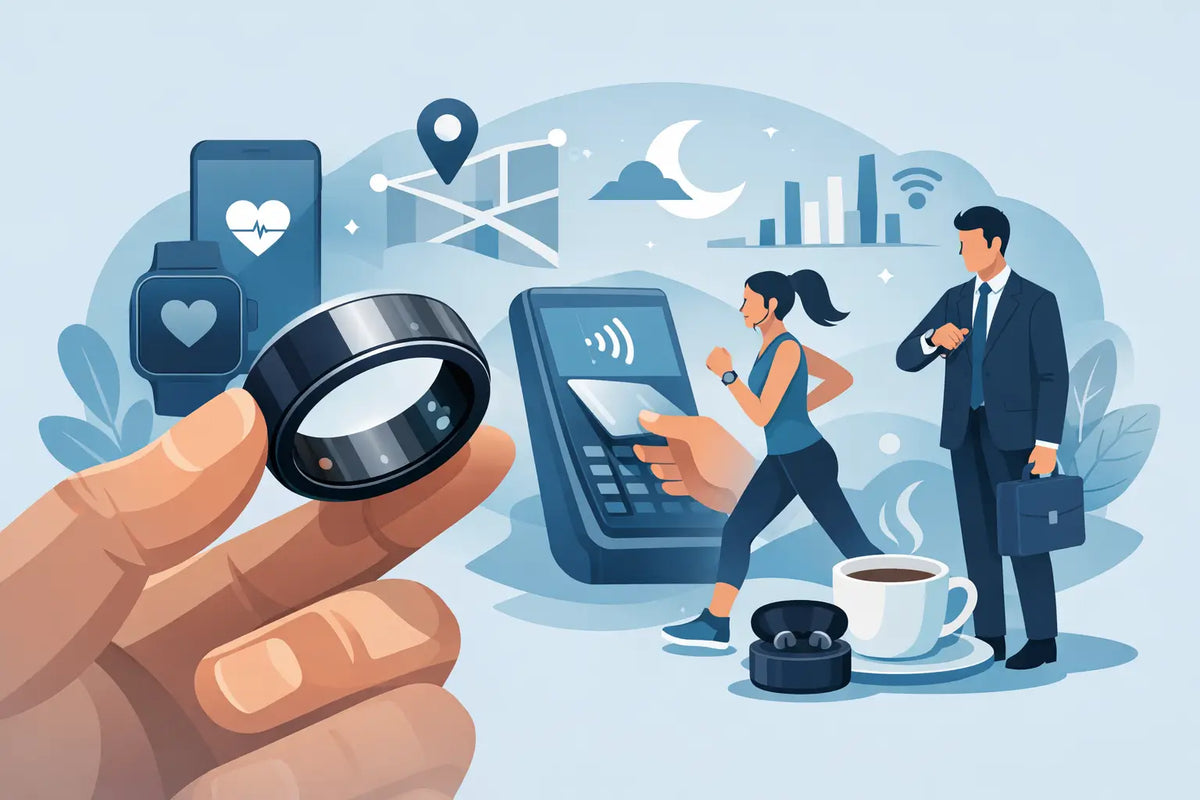
The alarm goes off, but you still feel tired. Was the night too short, too restless, or were you still feeling the effects of a stressful day at work? This is exactly where a ring on your finger can reveal more than just the time. So, when is a smart ring really worth it? If you want to better understand your well-being without constantly wearing a display on your wrist.
A smart ring is particularly well suited to people who do not separate health and style. It discreetly accompanies you through the day, is less intrusive at night than a watch, and turns recurring patterns into tangible data. The key is not to make every number perfect. The added value comes when you recognize trends and derive practical decisions from them.
When is a smart ring particularly worth it?
A smart ring is worth it if you want to know how sleep, movement, exertion, and recovery are connected. Many people notice that they are less productive after a late evening, an intense workout, or a stressful week. Continuously collected data turns this feeling into a clearer picture.
The ring is especially practical for professionals with busy schedules. Anyone who has little time for detailed tracking between meetings, commuting, sports, and family will benefit from a solution that is simply worn. You do not need to start a workout mode or constantly look at a display. The ring collects data in the background while you go about your daily life.
A smart ring is also a strong choice for sleep optimizers. A smartwatch can be disruptive at night due to its size, light, or vibrations. A lightweight ring, by contrast, is much less noticeable. In the morning, you will not only see how long you were in bed, but you can also assess sleep phases, nighttime restlessness, and recovery over time. This development over several days and weeks is often more meaningful than a single night.
Regular exercisers also gain a real advantage. Activity data helps to assess exertion more realistically and to see rest days not as a step backward. If recovery is low, a walk or light mobility training may be more sensible than the next hard workout. A smart ring does not replace professional training planning, but it provides a personal basis for more conscious decisions.
The biggest advantage: data you can wear discreetly
Not everyone wants a smartwatch. Some people find notifications on their wrist distracting, others prefer the look of classic watches, or do not want to wear a visible technical device when going out, at the office, or while sleeping. This is where a smart ring plays to its strengths: It combines health monitoring with a simple accessory.
This is more than a design question. A wearable only provides long-term benefits if it is worn regularly. If it lies in a drawer after a week, no reliable comparison values will be created. A ring that suits your style and feels comfortable in everyday life therefore has a clear advantage. It becomes part of your routine instead of another task.
A model like the Fitorb™ Smart Ring Pro is designed precisely for this everyday life: health data right on your finger, without a bulky display and without the look of a classic fitness tracker. Different style options make it easier to choose a wearable that you will actually want to wear every day.
For whom a smart ring is less worth it
A smart ring is not automatically the best solution for everyone. If you want to see live values on a large display during a workout, use maps, control music, or answer messages, a smartwatch is usually the more suitable choice. A ring focuses on discreet tracking and subsequent analysis, not interaction during sports.
Those who are only looking for a step counter do not necessarily need a smart ring. Its potential is fully realized above all when you consider sleep, recovery, and long-term habits. The data should not lead to additional pressure. Anyone who becomes nervous at every deviation or lets scores dictate their day should consciously keep their distance and use the numbers as a guide, not as a judgment.
It is also important to have realistic expectations: consumer wearables are not medical diagnostic devices. They can provide clues to patterns and help you detect changes early. However, for persistent symptoms, severe sleep problems, or health concerns, the matter should be left to medical professionals.
Which data makes the difference in everyday life?
It is not the length of the data list that matters, but whether you can derive something from it. For a smart ring, sleep, daily activity, heart rate, heart rate variability, body temperature trends, and recovery values are particularly relevant. Together, these measurements provide a picture of how your body reacts to your daily life.
Imagine you sleep for about the same amount of time for five days, but only feel truly fit on two mornings. A look at sleep interruptions, resting heart rate, and recovery values can show that the problem is not the duration of sleep, but the quality. Perhaps the difference is due to eating late, alcohol, a very late workout, or a stressful period at work. The ring does not provide a magical answer, but it makes connections more visible.
When it comes to activity, it is also not just about high numbers. 10,000 steps can be a motivating goal, but they may not be right for everyone every day. A much more helpful question is: How active were you compared to your personal routine, and how well was your body able to handle this exertion? This is exactly what turns tracking into a tool for greater body awareness.
What to look for before buying
The right size is crucial for a smart ring. A ring that is too loose can turn or slip uncomfortably, while a ring that is too tight is uncomfortable and will likely compromise comfort throughout the day. Since fingers can easily swell due to heat, exercise, or the time of day, you should not just check the size briefly once. A digital ring sizing tool or a sizing kit removes a lot of uncertainty from the decision.
Also pay attention to how the data is presented in the app. Good analysis not only shows individual values but also places them in a clear context. You should be able to see at a glance how your sleep was, whether your activity matches your daily goal, and how your recovery is developing. Complicated charts may look technical, but they are of little help if you cannot derive any action from them.
Battery life, material, and suitability for everyday life also matter. The ring should reliably accompany you for several days without being disruptive when washing your hands, working, or sleeping. A high-quality look is not a side issue: If a smart ring matches your clothing, other jewelry, and your everyday life, the likelihood that you will wear it consistently increases.
When buying online, it is worth looking for clear assurances. Free exchange for the wrong ring size, a trial period, and accessible customer support significantly reduce the risk. Especially with a product that must fit so individually, these services are part of a good purchasing decision—not just an extra.
When is a smart ring financially worth it?
The price is worth it when the ring becomes more than a nice gadget. If it helps you go to bed earlier, take breaks more regularly, better manage your workout intensity, or understand why you feel exhausted on certain days, it pays off in habits that are valuable in the long term.
You do not need to track every measurement for this. Often, two or three questions are enough: Am I getting restful sleep? Am I moving enough? How does my body react to stress and exertion? Anyone who wants to answer these questions over a longer period and prefers a discreet wearable will find a smart ring to be a companion that does not loudly demand attention, but provides clarity at the right moment.
The best time, therefore, is not when you want to completely overhaul your health. It is when you are ready to take small patterns seriously—and to shape your everyday life step by step so that you feel better in it.



Leave a comment
This site is protected by hCaptcha and the hCaptcha Privacy Policy and Terms of Service apply.