
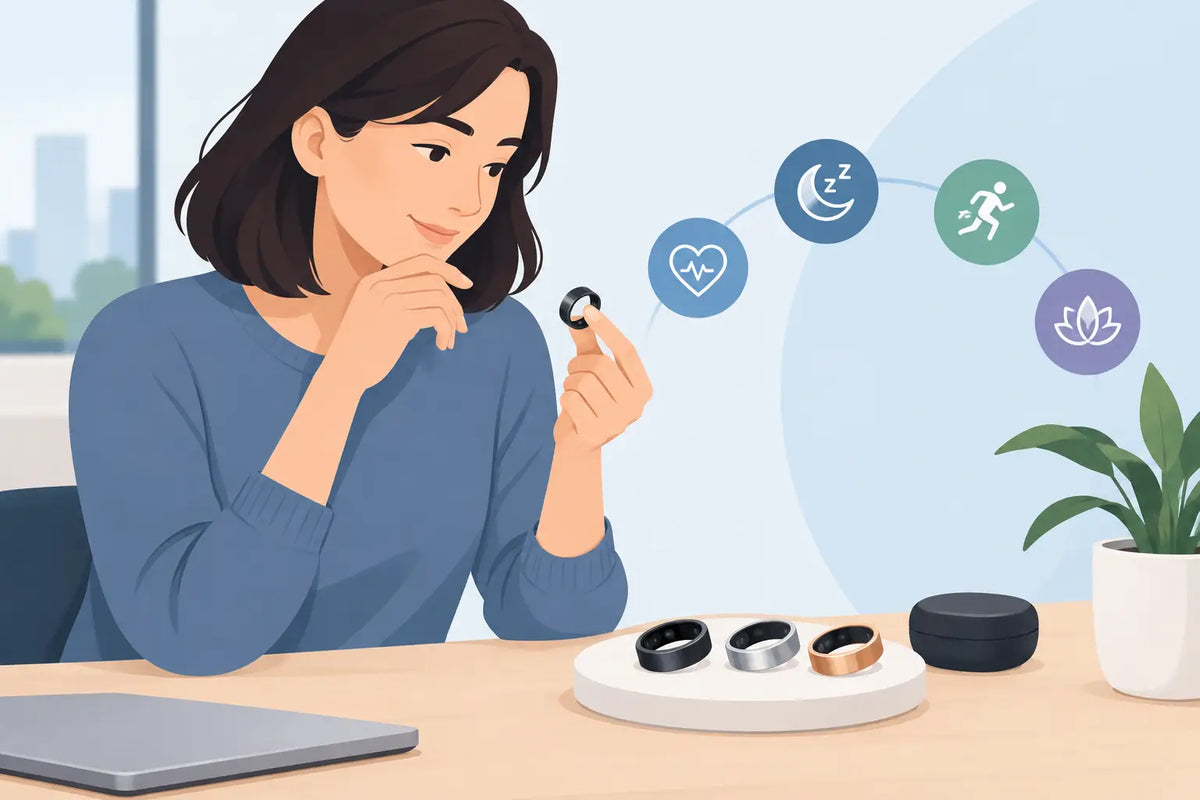
The first morning with a smart ring can be surprisingly revealing: Instead of just knowing that you are tired, you can see how restful your sleep was, when your body actually wound down, and how your daily routine affects your recovery. This smart ring guide for beginners helps you turn this data into a real advantage—without technical jargon, a bulky watch on your wrist, or unnecessary tech stress.
A smart ring is not a medical diagnostic device and is not intended to replace one. Its value lies elsewhere: It reveals patterns that are easily overlooked in everyday life. By better understanding your sleep routine, activity, and recovery, you can make more conscious adjustments to your habits.
How a smart ring makes a difference in everyday life
A smartwatch can do a lot, but it may not feel comfortable for everyone to wear while sleeping. A ring sits discreetly on your finger, suits an office outfit just as well as a workout, and often remains comfortably unobtrusive at night. This makes a big difference if you don’t want to constantly check a display.
Depending on the model, a smart ring tracks metrics such as heart rate, sleep stages, nighttime movement, activity, steps, body temperature trends, and stress and recovery indicators. The accompanying app presents the measurements in an easy-to-understand way. You don’t need to analyze tables: at a glance, you can see whether your body is ready for exertion or whether a quieter day would be more beneficial.
Keep in mind that not every individual metric is crucial. Trends over several days and weeks are far more meaningful. A low recovery score after a short night’s sleep is no cause for concern. If the pattern repeats, however, you get a concrete nudge to make a change.
Smart ring for beginners: These features matter
You don’t need the longest list of sensors to get started. What matters is whether the features suit your personal goals. Do you want to sleep better, become more active, or understand why you feel less energetic on certain days?
Sleep data that remains easy to understand
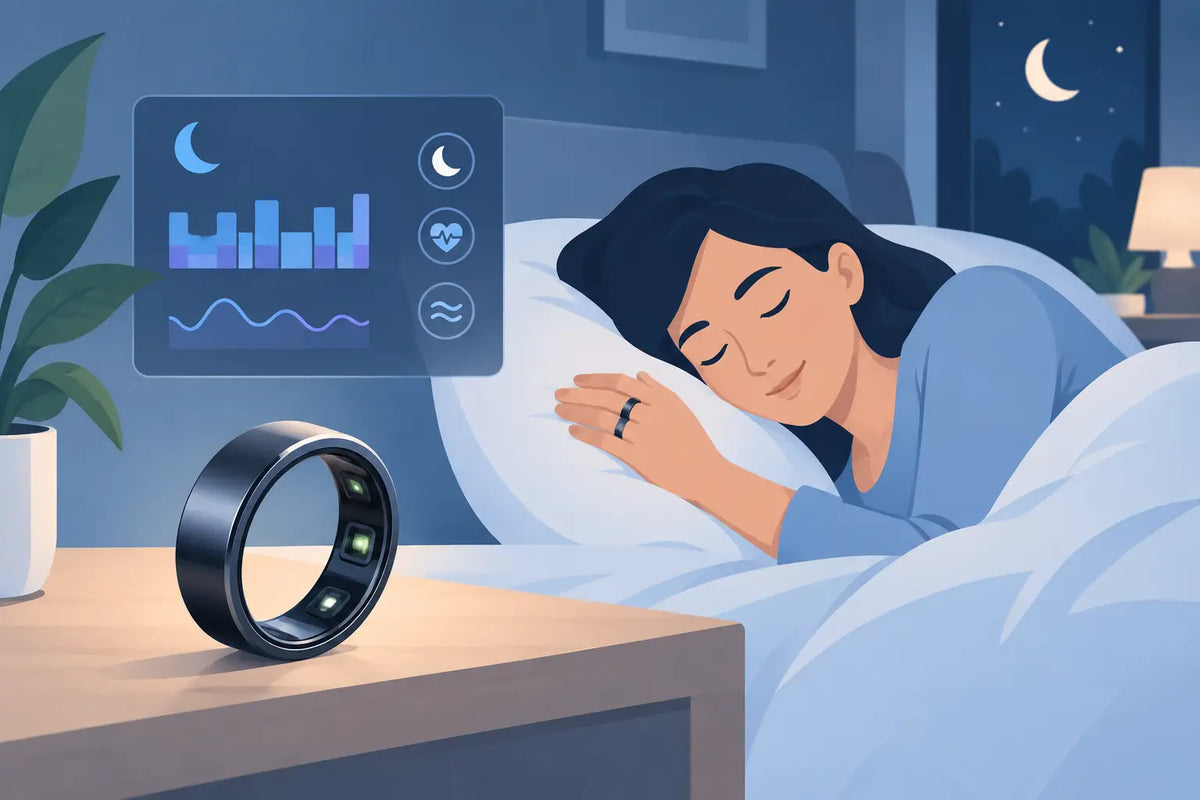
For many, sleep tracking is the most compelling reason to get a smart ring. Good models record sleep duration, time to fall asleep, periods of wakefulness, and sleep patterns. This creates a picture that goes beyond the simple question of how many hours you spent in bed.
This becomes especially helpful when you connect your data with small changes. You may notice that eating late, alcohol, or an hour in front of a screen measurably affects your sleep. You may find that a consistent bedtime is more effective than trying to catch up on the weekend. The ring provides the insights—the decision remains entirely yours.
Activity without a constant display
A smart ring can track movement, steps, and workout phases without your wrist vibrating or you seeing notifications every minute. This is ideal for people who want to stay active but don’t want to wear a watch as a constant companion.
For ambitious runners, cyclists, or strength athletes, a specialized sports watch may still be the better choice for real-time data and workout management. However, if you want to make sense of your daily activity and connect exertion with recovery, a ring offers an elegant solution. It depends on whether you need to see data during your workout or want to understand how your body responded afterward.
Recovery as a daily compass
Perhaps the most valuable benefit of a smart ring is how it connects different signals. Sleep, resting heart rate, activity, and other metrics can be combined to produce a recovery score. This score is not a judgment of your performance or a command. It is a compass.
On a good day, it motivates you to be active. On an exhausted day, it reminds you that a walk, an early bedtime, or a light workout might be the wiser choice. This makes health monitoring uncomplicated and practical for everyday life.
The right ring size determines comfort and data accuracy
A smart ring works best when it fits securely. If it slips constantly, it can be uncomfortable and may also affect measurements. If it pinches, it will end up in a drawer after a few days. Therefore, size is not a minor detail, but one of the most important factors to consider before buying.
Don’t measure your finger just once in the morning. Fingers can change slightly throughout the day due to heat, exercise, or salty food. The ring should slide over the knuckle with some resistance but should not spin or slide loosely back and forth on your finger. Many people wear a smart ring on their index, middle, or ring finger. Which position is best depends on your hand and comfort.
A digital ring-sizing tool or a sizing kit can eliminate much of the uncertainty involved in choosing. It is also practical to choose a provider that offers easy exchanges if the size is wrong. At Fitorb, sizing assistance, free exchanges, and a trial period are all part of the services that make getting started more relaxed.
Which material and design are right for you?
The best smart ring is the one you will actually wear every day. Therefore, pay attention not only to features but also to the finish, color, and profile. A discreet ring can look almost like jewelry in a professional setting. A more distinctive finish is a good choice if you want your wearable to be a conscious part of your style.
For exercise, washing your hands, and everyday life, a durable design is practical. However, it is worth being mindful: rings can be subjected to pressure during weight training and may sometimes get in the way during heavy manual work. In such situations, taking it off is often the better choice—not because the ring needs to be delicate, but because comfort and safety come first.
How to get started with your smart ring
After unboxing, many people want to interpret every metric immediately. It is better to give the ring some time first. Wear it consistently, especially at night, and collect at least seven to fourteen days’ worth of data. Only then will personal patterns become clear enough to draw meaningful conclusions.
Set up only the notifications in the app that are genuinely helpful to you. A reminder about bedtime can be useful. Constant alerts about every minor deviation, however, are more likely to create pressure. Health tracking should provide guidance, not dictate your day.
A simple routine can be helpful: briefly check your sleep and recovery in the morning without overanalyzing every minor fluctuation. Look at trends once a week. Then ask yourself not only whether a metric was good or bad, but what might have influenced it. A late appointment, an intense workout, or a relaxing evening often provide more context than a number alone.
Don’t overlook battery life, the app, and data privacy
A stylish ring is little use if you have to charge it constantly or if the app is difficult to navigate. Before buying, check the battery life under normal use and how charging works. Several days of battery life is particularly convenient in everyday life, as you might otherwise miss sleep data if you forget to charge the device.
Compatibility with your smartphone also matters. The app should clearly show what it measures and present your data in a way that you can use it without prior knowledge. If you already use other health apps, the possibility of synchronization can be a plus. However, this is not essential if you prefer a simple, standalone overview.
Trust is crucial when it comes to health data. Before buying, read which data is stored, which settings you can control yourself, and how the provider handles data privacy. Transparency is more important here than a flashy feature you will never use.
Who benefits most from a smart ring
A smart ring is particularly well suited to you if you want to better understand sleep and recovery, are looking for a discreet alternative to a smartwatch, or want to build healthier routines with less effort. It can also be a helpful prompt for people who sit a lot at work and want to incorporate more conscious activity into their day.
It is less suitable if you want to see pace, maps, or messages on a display during exercise. In that case, a ring is more likely to complement a sports watch than replace it entirely. Likewise, you should not try to replace a medical consultation for specific health concerns with wearable data.
The smartest way to get started is not to optimize every metric. Choose one habit that will genuinely benefit you: winding down a little earlier every evening, getting more steps between appointments, or balancing intense workout days with proper recovery. If your ring helps you make that one decision more easily, it is already carrying far more than just technology on your finger.

Leave a comment
This site is protected by hCaptcha and the hCaptcha Privacy Policy and Terms of Service apply.