
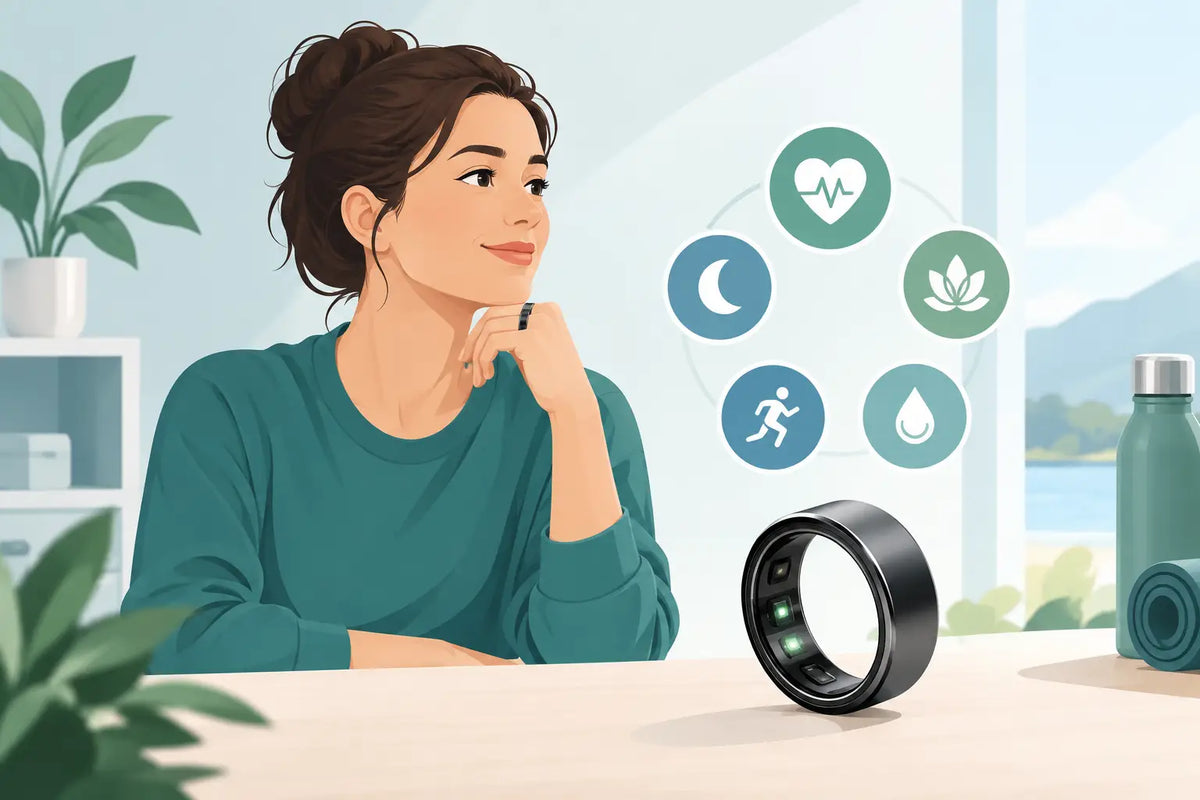
The moment you look at your wrist in the morning and don't want to wear a watch there is often the right moment for a ring. A smart ring for health-conscious beginners provides valuable insights into sleep, activity, and recovery without dominating your style or routine. It is not a complicated technology project. When chosen correctly, it becomes a discreet companion that turns small data patterns into better habits.
Why a smart ring makes sense especially for beginners
Many people want to make their health more conscious, but they fail not due to lack of motivation, but due to implementation. A smartwatch can be practical during exercise, but it quickly feels conspicuous at the office, when going out, or at night. A smart ring sits discreetly on the finger and remains comfortable even when you don't want to think about your data.
That is exactly its advantage: It collects information in the background. You don't have to manually record values, navigate complicated menus, or explain every movement as exercise. In the morning, for example, you can see how restful your night was, whether your recovery was weaker, and how active your day has been so far. This provides orientation instead of pressure.
For beginners, having as many measurements as possible does not matter. What counts is developing a feel for the connections in your own everyday life. Why do you feel exhausted after seven hours of sleep? Why does your energy drop after a stressful day at work? And what difference does a short evening walk make? A smart ring cannot answer these questions definitively, but it makes patterns more visible.
These values really help in everyday life
A good smart ring focuses on data that is easy to understand and practically useful. Sleep analysis is the strongest entry point for many: sleep duration, sleep phases, interruptions, and the regularity of your bedtime together create a much more realistic picture than a mere gut feeling.
Activity data also helps without having to become a daily competition. Steps, movement, and calorie consumption show whether a long day at the office was really as quiet as it felt. Especially those who don't feel like a major fitness tracking system get a relaxed overview with this.
It becomes particularly interesting with recovery. Values such as heart rate, heart rate variability, and body temperature trends can give clues as to how stressed your body currently is. After a short night, evening alcohol, or a strenuous week of training, many users see changes they would otherwise have overlooked. The goal is not to control every fluctuation. The goal is to make better decisions: go to bed earlier today, train a little more gently tomorrow, or plan a real break in the afternoon.
One thing remains important: A ring is a lifestyle and wellness product, not a medical diagnostic device. Individual values can fluctuate, for example due to a loose fit, cold hands, or unusual movements. Therefore, look at trends over several days and weeks, not at a single night.
Smart ring for health-conscious beginners: What matters
For the first smart ring, the technology should above all be uncomplicated. A beautiful design is important, because only a ring you like to wear will provide data in the long term. Pay attention to a slim shape, a color that matches your jewelry and everyday life, and a material that feels comfortable on the skin.
Next comes wearing comfort. A ring must not dig in, but it must also not spin around with every hand movement. Since fingers can swell slightly during the day, the right size is more than a detail. Ideally, measure at different times of the day. Digital ring measuring tools or a size set significantly reduce uncertainty before purchase. If a provider also offers a free exchange for the wrong size, you can order with much more peace of mind.
Battery life is also an everyday topic. Anyone who has to take the ring off regularly to charge it is more likely to forget it—especially at night, when sleep data is being collected. A model with reliable battery life and an uncomplicated charging process is better suited for beginners than a device that constantly demands attention.
Also check the app. Data is only helpful if the presentation is clear. Good apps not only show numbers but also put them into context: How was your sleep quality compared to your usual nights? Has your activity improved? What habit could be behind lower recovery? A clear overview brings more to everyday life than endless charts.
How to start without data pressure
The first two weeks are not a performance test. Wear the ring as regularly as possible and let it get to know your everyday life first. Sleep at your usual times, move as usual, and observe which values repeat. This personal baseline is much more valuable than comparing yourself with someone else's ideal values.
After that, choose exactly one habit you want to improve. Maybe you want to go to bed 30 minutes earlier during the week. Maybe you replace the evening work mode with a walk or plan two short exercise breaks at the office. A concrete plan works better than trying to optimize sleep, nutrition, exercise, and stress all at once.
View your data as feedback, not as a report card. A bad night does not mean you failed. It can be caused by a late appointment, travel, heat, or simply an unsettled day. If a pattern persists over a longer period, you have a reason to adjust your routine or seek professional advice for health complaints.
Ring or smartwatch: What fits better?
The decision depends on how you exercise and how visible technology should be in your life. A smartwatch is great if you need pace, maps, music, or notifications directly on your wrist while running. For intense workouts with a live display, it can be the more suitable choice.
A smart ring plays to its strengths when sleep, recovery, and continuous tracking are the focus. It is less distracting, matches formal clothing, and often stays there at night where a watch would be in the way. Some people even use both: the watch for workout sessions, the ring as an unobtrusive companion for the rest of the day.
For many beginners, however, the ring is the easier start because it does not create a new screen habit. You wear it, live your everyday life, and check the app specifically when you want to understand or change something.
What makes a safe purchase
With wearables, the product is important, but the service is just as important. A 30-day trial period gives you time to try out the wearing experience, app, and routines without rushing. Free shipping, clear return policies, and reachable customer support remove the risks that can quickly arise when buying online.
Also pay attention to whether the provider clearly explains how the size is determined and what happens in the event of a wrong purchase. Especially with the ring, this support is crucial. Fitorb combines the discreet shape of a smart ring with an easy sizing guide, free exchange for the wrong ring size, and a 30-day money-back guarantee. This makes the entry predictable—even if you have never worn a wearable before.
A smart ring does not have to measure your life to change something. It is enough if it gives you a small, clear hint in the right places: a little more movement today, a little more rest today, taking a little better care of yourself today.


Leave a comment
This site is protected by hCaptcha and the hCaptcha Privacy Policy and Terms of Service apply.