
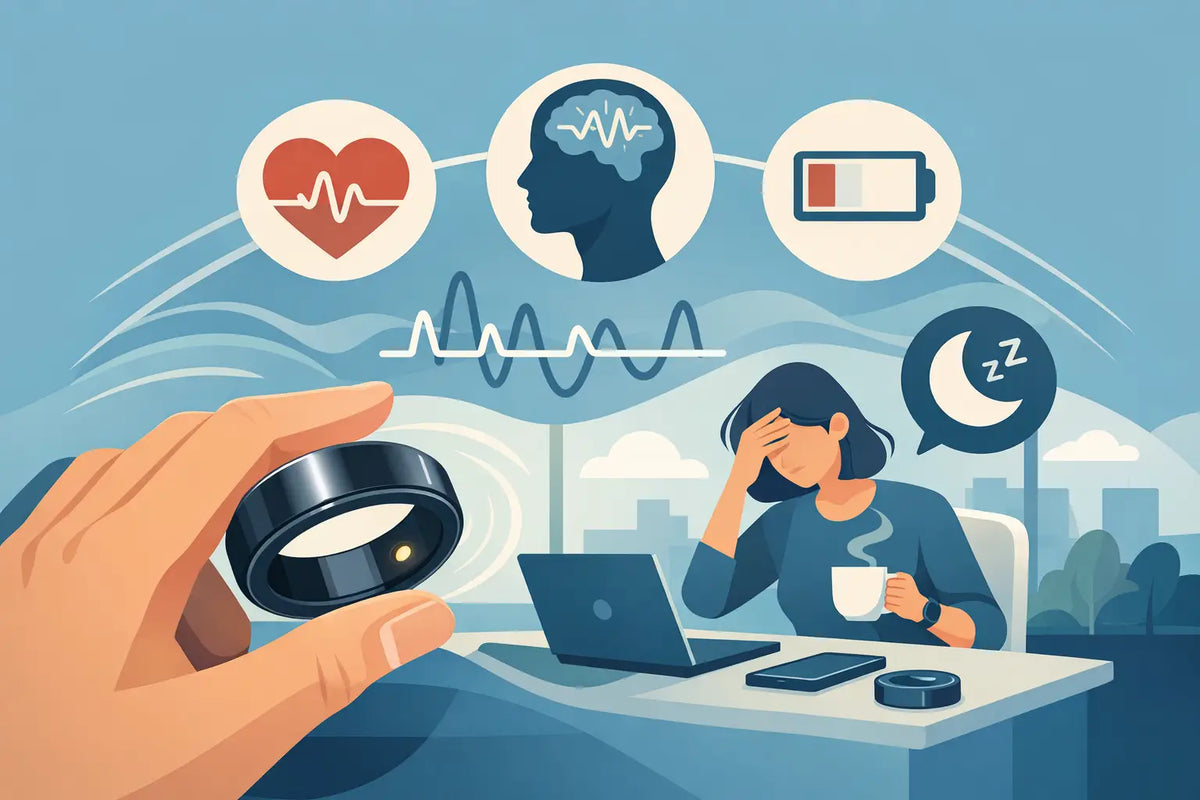
A packed calendar is not always the problem. Often, the strain only becomes apparent in the evening: you are tired but cannot rest, sleep restlessly, and still start the next morning with little energy. A smart ring for stress monitoring makes these patterns visible without you having to look at a display on your wrist all day.
That is exactly its advantage. The ring discreetly accompanies you at work, during exercise, at night in bed, and in the quiet moments in between. It does not help you evaluate every single appointment. Instead, it shows how your body reacts to your daily life—and when rest may not only be pleasant but necessary.
What stress monitoring on the finger really measures
Stress is not a single measurement. Therefore, a smart ring should not be understood as something that can read your thoughts or provide a medical diagnosis. Instead, it collects body data and contextualizes it over time. From this, the app can derive indications of stress and recovery phases.
The combination of several values is particularly meaningful. These usually include heart rate, heart rate variability, sleep quality, movement, and rest periods. Some models also take into account changes in skin temperature. What matters less than a striking value on a single day is your personal trend over several weeks.
Heart rate variability, or HRV for short, describes the small time differences between heartbeats. It can provide indications of how flexibly your nervous system switches between tension and recovery. A lower HRV can occur with high stress, but also after intense training, little sleep, alcohol, or the onset of a cold. Data always needs context.
This makes stress monitoring practical for everyday life: instead of just thinking, “I feel somehow drained right now,” you recognize recurring connections. Perhaps your recovery values drop after late meals. Perhaps you notice that a walk during your lunch break improves your evening. Or you see that a seemingly quiet week still negatively affected your sleep.
Who benefits from a smart ring for stress monitoring
A ring is particularly interesting if you want to better understand your health but do not want to wear a large smartwatch. Professionals benefit from an inconspicuous companion in meetings, while traveling, or when working with concentration. Sleep optimizers receive data that does not end at the desk but is generated exactly where recovery takes place: at night.
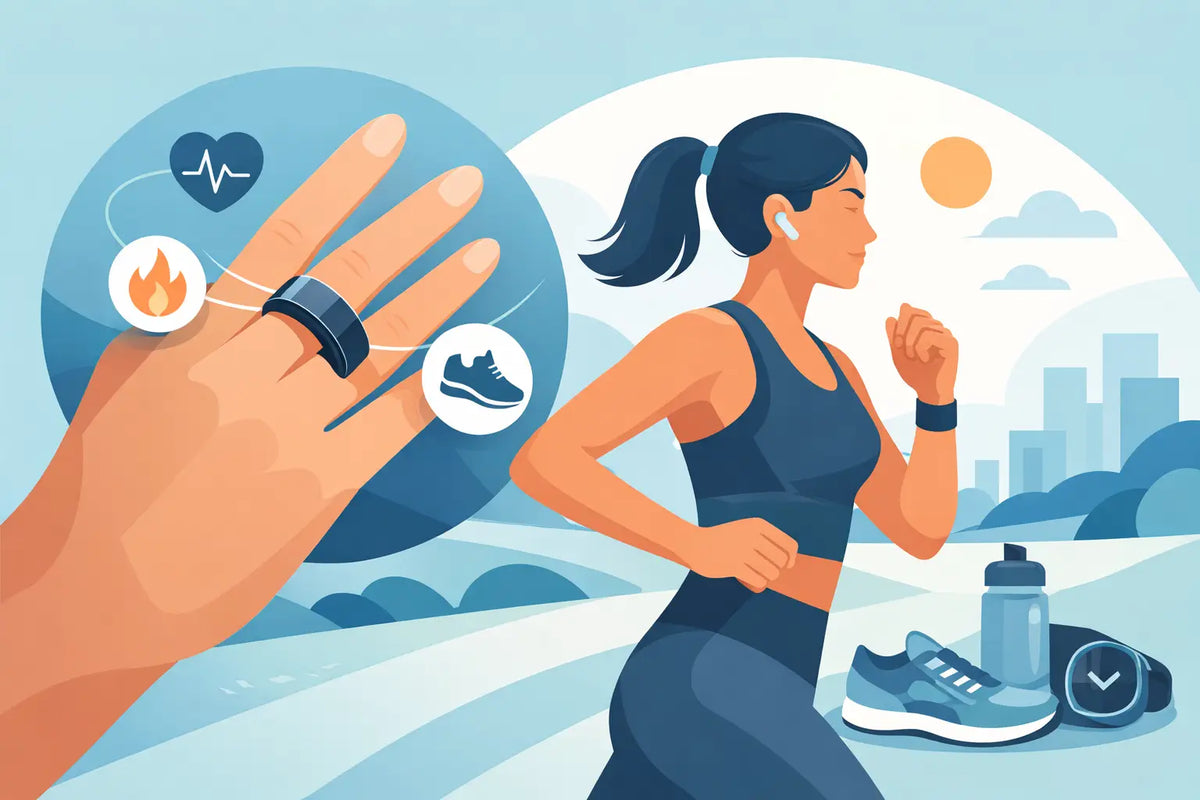
The perspective is also valuable for active people. Training is healthy, but progress happens during recovery. If sleep, resting heart rate, and stress trends do not match up, a lighter training day may make more sense than another intense session. The ring does not replace your own bodily awareness or professional advice. It complements both with a more objective long-term view.
If you are primarily expecting notifications, navigation, or phone functions, a smartwatch may be the better choice. A smart ring sets different priorities: less distraction, more continuous health data, and a design that also suits business outfits or jewelry.
Correctly interpreting the most important signals
A high stress value is not a judgment of your day. Presentations, strength training, pre-travel excitement, and even a strong coffee can trigger short-term physical stress reactions. Stress becomes problematic primarily when recovery is persistently absent.
Therefore, pay attention to trends rather than perfection. Four questions help with interpretation:
- Is your recovery value lower over several days than usual?
- Has your sleep changed, for example due to frequent awakenings or a shorter sleep duration?
- Is your resting heart rate noticeably above your usual level?
- Does your perceived energy match the data in the app?
Why comparing it to your own baseline matters
Two people can have similar values on the same day and feel completely differently. Your age, fitness level, sleep rhythm, cycle, medications, and daily life influence the measurement. Therefore, blanket thresholds are only limited in their usefulness.
A good smart ring learns your personal starting point over time. After the first few days, it is not about achieving the “best” possible value. It is about recognizing changes early. Those who know their normal range can assess deviations much more meaningfully.
How to use your data without additional pressure
The goal of stress monitoring is not to turn health into another to-do list. If you check every number and get upset about every deviation, the opposite effect will quickly occur. Use the data instead as a quick daily check-in.
Look at sleep and recovery in the morning. Then ask yourself: Does today's plan match my energy? After a few weeks, you can also compare certain habits. What happens on days with late screen time? How does your well-being change after an evening walk? Which training intensity is good for you in the long term?
A simple rhythm is helpful: look at the data, recognize patterns, change one thing. Those who simultaneously change their bedtime, diet, training, and work routine will not know later what really helped. Small adjustments are easier to stick to and often show surprisingly clear effects.
What to look for when buying
A smart ring must fit your daily life, otherwise it will remain in the drawer. Comfort takes precedence over a long list of features. The ring should not be disruptive at night, sit comfortably while typing, and be able to be worn reliably even during regular movement.
Also pay attention to an easy-to-understand app. Data is only useful if it provides clear trends, simple interpretations, and concrete indications. An unorganized flood of numbers helps less than an app that clearly brings together sleep, activity, and recovery.
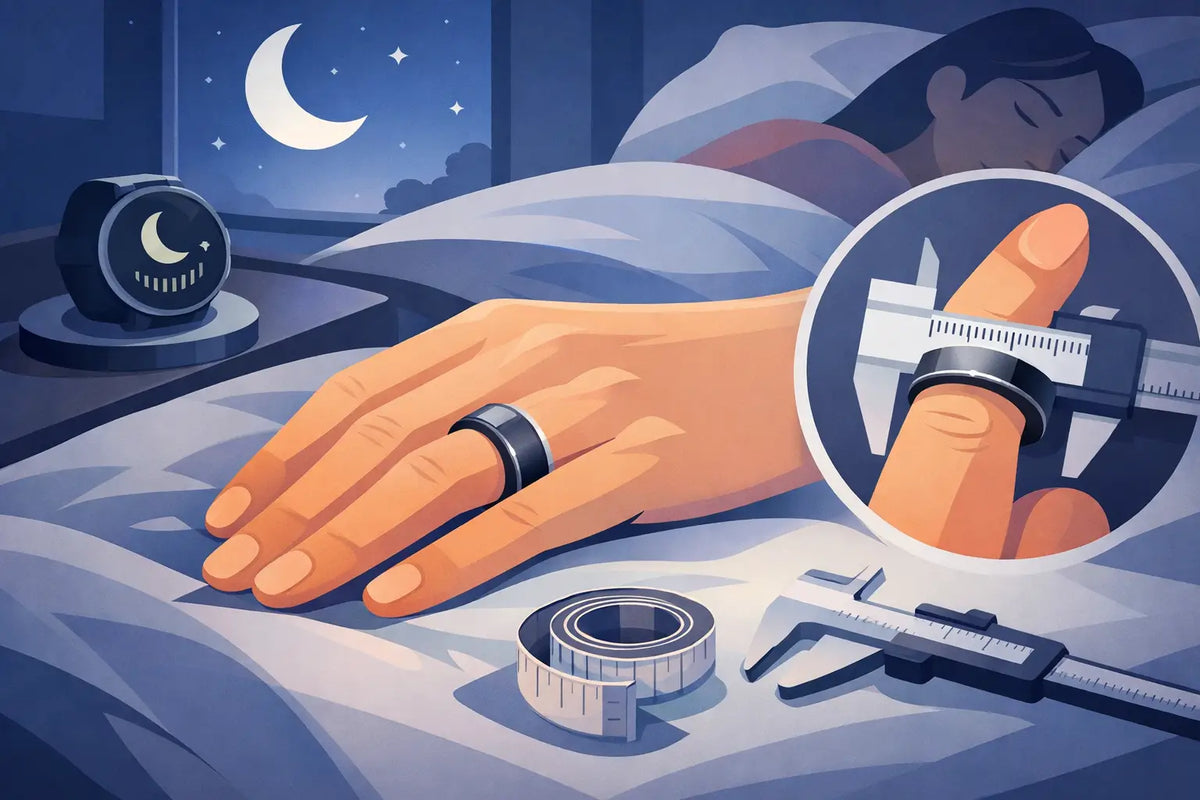
The right size is also crucial. If a ring is too loose, measurement quality may suffer. If it is too tight, you may want to take it off at night or in warmer temperatures. A digital ring sizing tool and a free exchange for the wrong size remove a lot of uncertainty from the purchase. With the Fitorb™ Smart Ring Pro, exactly these practical everyday points are part of the concept: health on your finger, without a bulky wearable and without guessing the size.
The battery life, water resistance, and compatibility with your smartphone should also suit your habits. For stress and sleep trends, continuous wear is more important than spectacular individual measurements. A ring you enjoy wearing provides the data you can actually work with.
Turning data into better decisions
The most valuable insight is often not: “I was stressed today.” You probably already know that. It becomes exciting when you recognize what reliably calms your body down. Perhaps it is a free evening without obligations. Perhaps it is regular bedtimes, a quiet morning, or less intense sessions after bad nights.
A smart ring for stress monitoring does not bring perfect balance at the touch of a button. But it gives your feeling a framework and makes progress visible that easily gets lost in the hectic daily life. Do not wear the ring to monitor yourself, but to listen to yourself earlier.

Leave a comment
This site is protected by hCaptcha and the hCaptcha Privacy Policy and Terms of Service apply.