
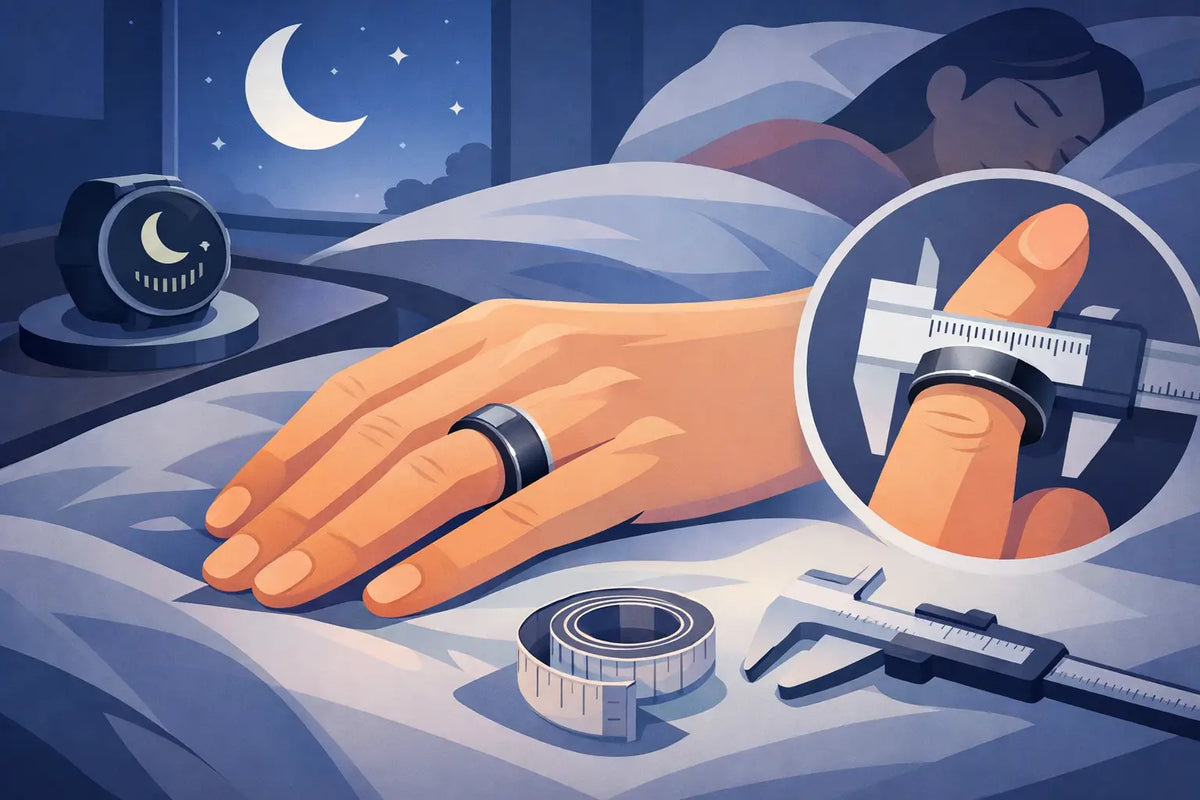
Sleep is the moment when a smart ring can capture particularly valuable insights into your recovery. To ensure the data truly reflects your night, you should wear your smart ring correctly at night: it needs stable skin contact but must never press against your finger. This balance determines whether you forget about it after a few minutes or want to take it off in the morning because of an uncomfortable finger.
A smart ring is deliberately discreet. No glowing display on your wrist, no bulky feeling under the duvet. But its compact design also means: the right size, position, and routine make a noticeable difference. With just a few simple steps, you can create the best foundation for a comfortable night and meaningful sleep data.
Wearing a smart ring correctly at night: The fit makes the difference
Your ring should fit snugly enough for the sensors to rest against your skin, but loosely enough that you can slide it off over your knuckle without effort. As a rule of thumb, the ring should not spin freely or slide back and forth during normal movement. At the same time, you should not feel throbbing pressure, numbness, or deep indentations.
At night, many people's finger circumference changes slightly. Heat under the duvet, salt in dinner, alcohol, exercise, or a long day at work can cause fingers to swell. What fits comfortably in the morning may therefore feel tighter in the evening. Consciously try on your smart ring before going to bed instead of relying solely on how it fit in the morning.
If the ring fits very tightly, the sensors do not automatically provide better data. On the contrary: pressure can disrupt comfort and lead you to take the ring off at night. The goal is consistent, gentle contact.
Which finger is best at night?
Many people wear their smart ring on their index, middle, or ring finger. Which finger is ideal for you depends on the shape of your hand and where the ring fits reliably. The index finger often offers good control over its position. The ring can also sit securely on the middle finger, while the ring finger is particularly discreet and comfortable for many.
The deciding factor is not which finger is theoretically considered the best, but which one allows for consistent skin contact overnight. Do not constantly switch between different fingers if you want to keep your data as comparable as possible. If one finger regularly swells in the evening, another finger may be the more comfortable choice.
Wear the ring on the same hand and finger whenever possible. This makes the routine easier and helps you quickly learn what a good fit feels like for you.
The sensor side belongs on the inside
On most smart rings, there is a visible sensor area or small raised section on the inside. This side should face the inside of your hand, towards your palm. There, the ring can rest securely, and the measurement will be less affected by constant twisting.
Check the orientation just before falling asleep. It takes two seconds but can save you a night in which the ring keeps slipping. If your ring twists slightly even though it fits comfortably, that is not immediately a problem. However, if it regularly rotates around the entire finger, the size may be too large or the chosen finger too narrow.
The skin under the ring also plays a role. Cream, oil, or damp hands can compromise a secure fit. After your evening skincare routine, it is worth letting your hands dry briefly. Then the ring will sit more cleanly and feel more comfortable.
A size for everyday wear is not always the right size for the night
Choosing the right ring size may seem trivial at first glance, but for a wearable, it is a key comfort factor. A ring that fits loosely and stylishly during the day may have too much play at night. Conversely, a ring that is chosen too small can be uncomfortable while sleeping if your fingers swell.
Therefore, check your size at different times of the day. Put the ring on in the morning, late afternoon, and evening. Pay attention to how easily it slides over your knuckle and whether it feels uncomfortable when you make a fist. This small check is much more helpful than making a sizing decision based on a single moment.
If you are between two sizes, you should honestly consider your intended use. If you primarily want to wear your ring at night for sleep and recovery data, a comfortable fit for your evening finger circumference is more important than an ultra-snug fit in the morning. Use a digital ring sizing tool or size guide before ordering. This reduces uncertainty and makes getting started with the ring more relaxed.
If the size still does not fit, an easy exchange is a real advantage. With the Fitorb Smart Ring Pro, this exact peace of mind is part of the concept: you can focus on how it feels to wear, rather than giving up valuable sleep data for fear of having the wrong size.
How to make the smart ring part of your evening routine
The best smart ring is the one you wear every night. A simple routine helps more than complicated optimization. For example, place it next to your toothbrush, on your nightstand, or beside your charging cable. Once brushing your teeth, skincare, and putting on the ring go together, you no longer have to remember to do it.
Before going to sleep, pay attention to three things: the ring is sufficiently charged, the inside is clean and dry, and the fit feels comfortable. Dirt, dust, or residue from hand cream can particularly accumulate inside. A soft, slightly damp cloth is usually enough to clean the contact surface. Then dry the ring thoroughly.
If you wear the ring during the day while exercising or showering, check it particularly carefully in the evening. Moisture between the skin and the ring can feel uncomfortable. A dry contact surface is not only more comfortable but also helps maintain a consistent fit.
What you should avoid at night
A smart ring is meant to accompany your sleep, not disrupt it. Take it off if your finger feels constricted, hurts, tingles, or swells visibly. Sleep tracking is helpful, but comfort and how your body feels take precedence.
Also avoid wearing several snug rings directly next to each other. They can press against each other, twist the smart ring, or interfere with movement. If you normally take off your wedding ring or another piece of jewelry at night, it is often more comfortable to wear the smart ring alone on the chosen finger.
For sensitive skin, a gradual adjustment period is recommended. Wear the ring for a few nights at first and check in the morning how your skin reacts. Slight indentations that disappear quickly are possible with a snug-fitting ring. Persistent redness, pressure marks, or itching, however, are a signal to pause wear, clean the ring, and reassess the fit.
Not every restless night is a measurement problem
Fluctuating sleep data can be unsettling, especially if you actually feel fit in the morning. Before doubting the measurement, check the ring first: Was it charged, clean, correctly oriented, and secure on your finger? If so, do not judge by a single night alone.
Your recovery changes due to late meals, stress, travel, exercise, bedroom temperature, or an unusual daily routine. The real value comes from looking at patterns over time. Several nights and weeks will show you which habits benefit you more than a single morning value.
Comfort is the foundation for better habits
A smart ring does not turn sleep into a to-do list. Instead, it gives you a discreet look at routines that might otherwise easily go unnoticed: How recovered do you feel after a late evening? Does your bedtime change throughout the week? Which days do you start with more energy?
Wear the ring so that it feels like a part of you—secure, light, and without pressure. Then it will stay on your finger during the nights when the most helpful patterns can emerge. Your health on your finger does not begin with perfect control, but with a comfortable routine that you can truly maintain.



Leave a comment
This site is protected by hCaptcha and the hCaptcha Privacy Policy and Terms of Service apply.