
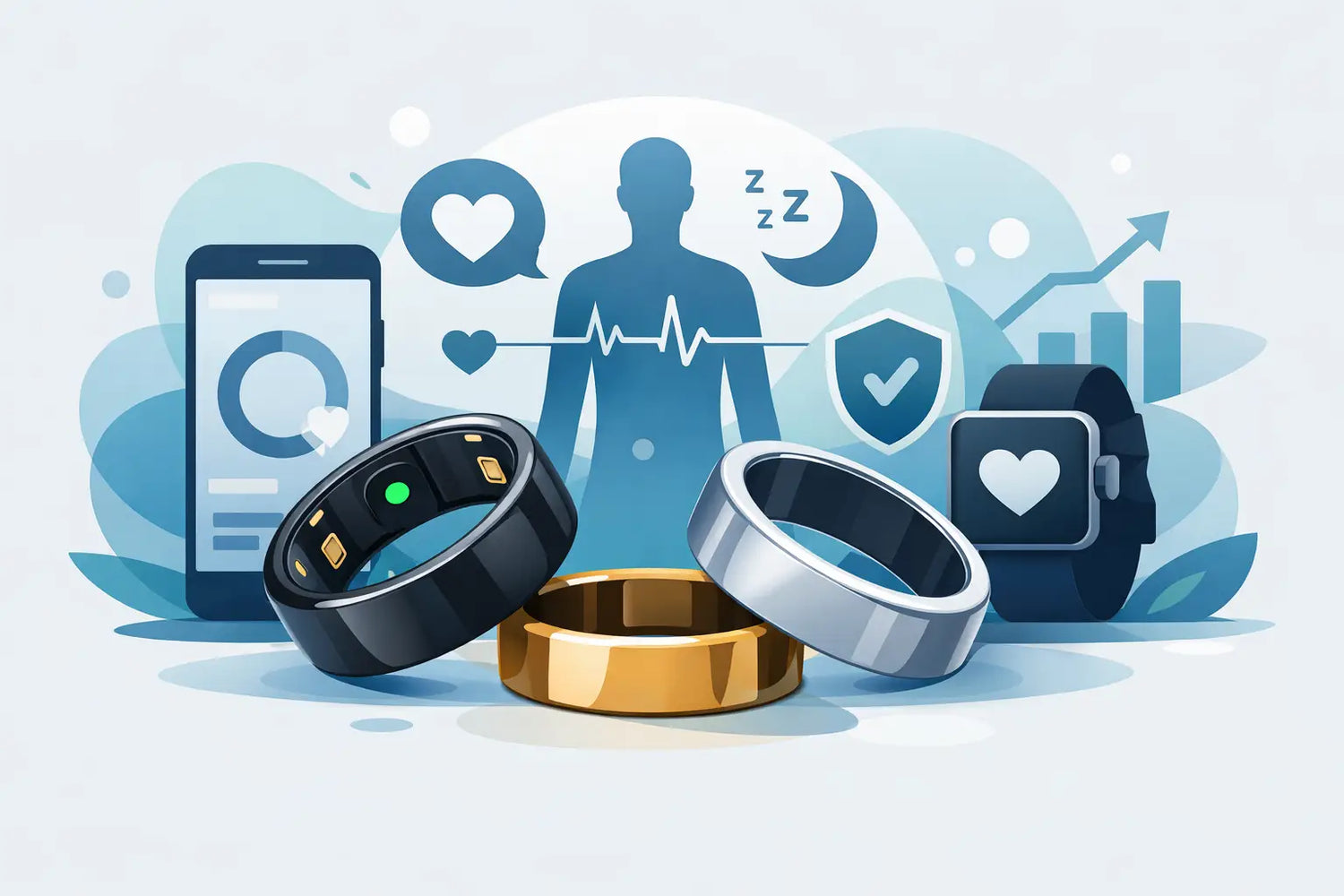
Anyone looking to buy a smart ring is rarely just after another gadget. Usually, they have something specific in mind: sleeping better, gaining a clearer understanding of their daily life, keeping a closer eye on their health data—all without a watch on their wrist that gets in the way at the gym, in the office, or in the evening. That is exactly why a smart ring is the more discreet and stylish solution for many.
However, a good smart ring needs to do more than just look good. It should fit comfortably, measure reliably, and blend so seamlessly into everyday life that you will actually wear it all the time. Only then can data be turned into real insights.
Buying a smart ring means choosing everyday practicality over a gimmick
The biggest mistake when buying is focusing only on individual specs. A stylish finish or a long battery life sounds good, but neither alone determines whether the ring will actually be used. With a wearable, what matters most is how effortlessly it fits into your day.
A smart ring is at its best when it barely gets noticed yet continues to work consistently. It monitors sleep, steps, recovery, and activity without you having to think about it constantly. That is exactly what makes it more attractive to many than traditional fitness trackers or bulky smartwatches. Worn on the finger, it remains discreet, lightweight, and significantly more versatile in style.
For professionals, active people, and anyone who does not want to wear their health visibly on their wrist, this is a real advantage. Data, yes—but make it elegant.
What you should really look for when buying a smart ring
1. Comfort is not an afterthought
If a ring pinches, slips, or feels uncomfortable in everyday life, it will quickly end up in a drawer. This may sound trivial, but it is one of the most important factors of all. Ideally, a smart ring is worn both day and night. Comfort is therefore not a luxury, but a prerequisite.
Make sure the ring is lightweight, neatly finished on the inside, and does not look bulky in everyday life. Especially when sleeping, you will immediately notice whether a wearable is truly comfortable to wear or only looks good in product photos. The shape also matters. Some models look high-quality on the outside but feel thicker than expected when worn.
2. The right size makes all the difference
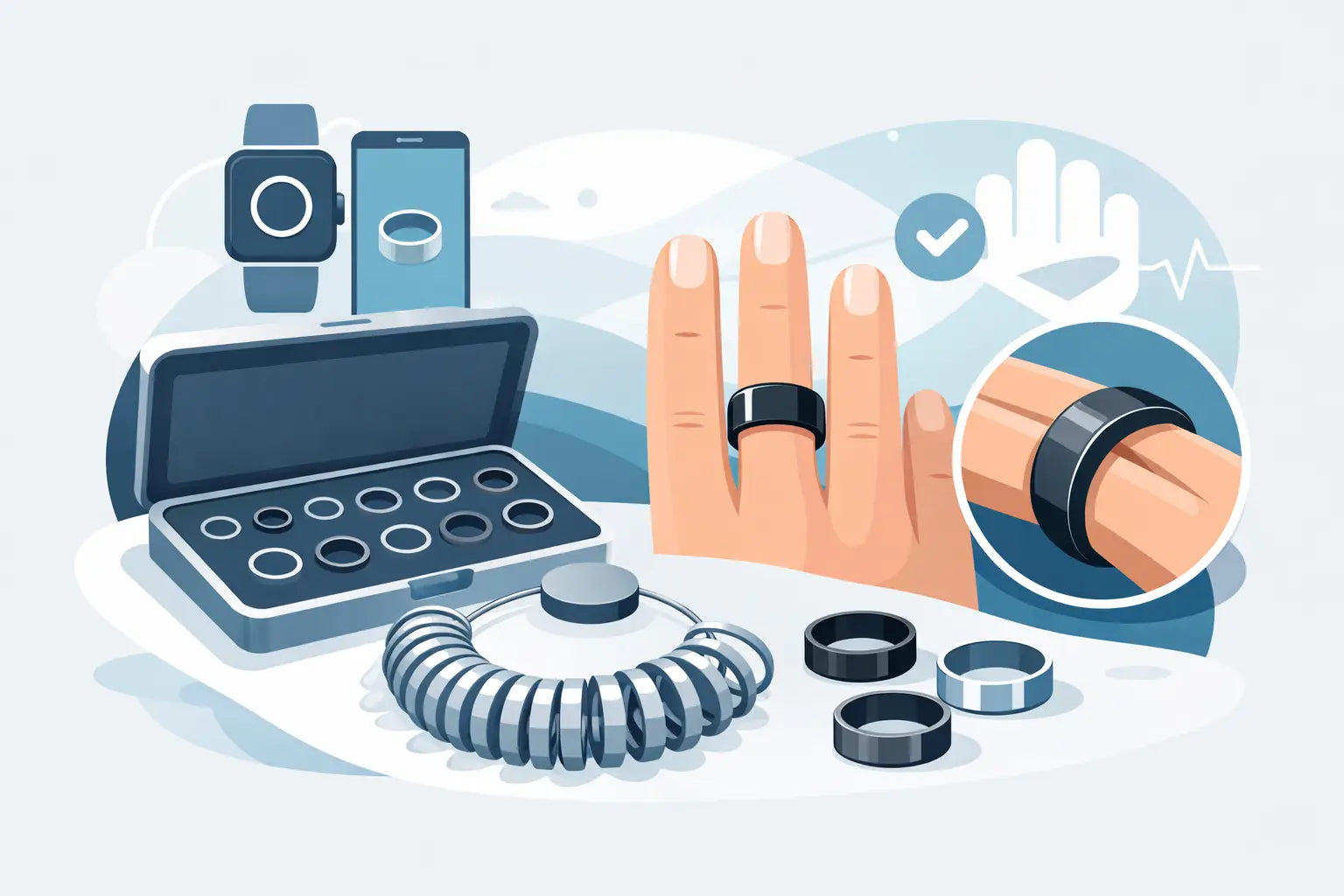
Anyone looking to buy a smart ring often has doubts at this point. Understandably—with a ring, "roughly fits" is simply not good enough. If it is too loose, measurement quality often suffers. If it is too tight, it will quickly become uncomfortable.
That is why a simple, reliable sizing process is a strong selling point. Digital ring-sizing tools or solutions that make selection easier in advance are particularly useful. It is even better if free exchanges are offered for the wrong ring size. This removes exactly the uncertainty that often stops people from ordering.
3. Sleep tracking should be easy to understand
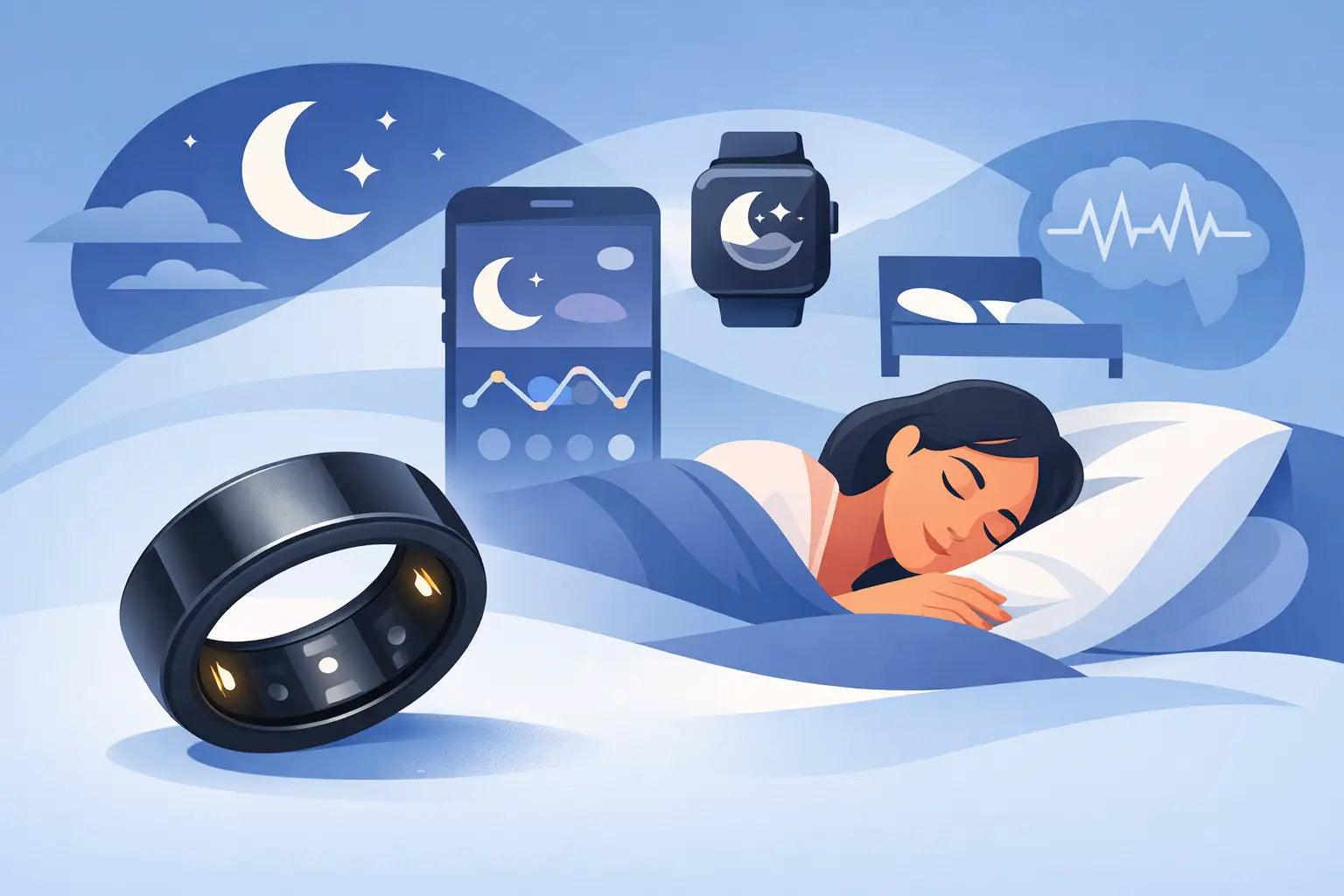
For many, sleep is the main reason for getting a smart ring. This makes sense because the finger is well suited for continuous measurements, and a ring can be significantly more comfortable than a watch at night. However, the key is not just that data is collected, but how clearly it is presented.
If an app only provides numbers without making them easy to understand, it is of little use in everyday life. Good systems show trends, not just snapshots. They help you recognize when recovery was more effective, how routines have an impact, and which habits are more likely to help or harm your sleep.
4. Activity and recovery must be considered together
Many buyers first look at steps, calories, or workout data. This is understandable, but it is too narrow a focus. Anyone who wants to track their health effectively needs both: exertion and recovery. A ring that only counts activity only tells half the story.
A smart ring becomes truly interesting when it reveals how active a day was and how well the body responded to it. This is especially beneficial for people with jobs, workouts, families, and few consistent routines. After all, health is rarely a linear plan. It is more the result of many small decisions.
Buy a smart ring or a smartwatch?
This question is asked almost every time—and the honest answer is: it depends. Anyone who wants to read messages on a display, see calls, or use apps directly is usually better served by a smartwatch. It is more visible, more interactive, and designed more for instant functionality.
On the other hand, anyone looking for discreet health monitoring, less distraction, and a wearable that looks more like jewelry than technology will often choose a smart ring. That is exactly where its strength lies. It does not want to draw more attention; instead, it quietly delivers in the background.
For many, this is the more pleasant form of technology. Less display, less distraction, less "always online"—but still relevant data at your fingertips.
Design is not a luxury, but part of the user experience
A smart ring is worn visibly. That is why design matters more than with many other wearables. If a model is technically impressive but does not match your personal style, you are less likely to wear it all the time.
Colors, finishes, and a high-quality look are therefore not merely a matter of taste. They directly influence how often you will use it. A ring that works just as well in the office as in the gym or at dinner has a clear advantage. It does not have to look like technology to be technically impressive.
This is exactly where the category really shines. It combines sensors with a minimalist, wearable format that integrates more naturally into clothing, accessories, and everyday life.
A good purchase should not feel risky
Buy a smart ring with clear peace of mind
Especially with a product you order online and want to wear every day, trust plays a major role. An attractive price alone is not enough. Buyers want to know that they are not taking an unnecessary risk.
An offer is truly compelling when several barriers are removed at once: free shipping, easy exchanges for the wrong size, a trial period, and a money-back guarantee. This signals not only good service, but also confidence in the product. Anyone who wants to make a smart ring part of their everyday life needs not only good technology, but also a stress-free start.
Customer support is often underestimated. Especially when it comes to questions about sizing, setup, or use, a fast, accessible service makes a noticeable difference. After all, even the best product loses its appeal if the purchasing process seems complicated.
Who benefits most from a smart ring
A smart ring is especially well suited to people who want to manage their health more consciously without turning it into a major technology project. Anyone who wants to understand sleep patterns, better categorize their activity, or simply find an elegant wearable instead of a watch will often find this product category to be the better choice.
It is also interesting for people who have already tried other trackers and were unhappy with the size, appearance, or comfort. It is more streamlined, more discreet, and simply more comfortable in many situations. This applies whether you are in the office, at night, or on the go.
It is less suitable for anyone expecting a traditional smartwatch experience. A ring cannot replace every display function. Instead, it replaces the constant need to look at technology with a calmer, more practical companion for everyday life.
What is often underestimated before buying
Many people look at the battery life, materials, and price—and forget how quickly a purchase can turn into frustration if the basics are not right. A poor app, unclear sizing, or a lack of return options can make even a great product unnecessarily complicated.
That is why it is worth taking a close look at the overall package. Not just the ring itself, but everything that comes with it: How easy is it to find the right size? How secure is the purchase? How straightforward is an exchange? Is there a fair trial period? And does the product feel like a lifestyle choice with real benefits, or like a short-term technology fad?
This is exactly where a smart purchase differs from an impulsive one. Brands like Fitorb therefore focus not only on sensors and design, but also on a purchasing process that actively reduces uncertainty. This is not an extra; it is a real part of the product experience.
Buy a smart ring with the right perspective
In the end, it is not about choosing the ring with the most buzzwords. It is about finding a model that fits your everyday life, feels comfortable, provides easy-to-understand data, and is effortless to use. A smart ring is good when you do not notice it constantly—but you can see its impact.
So if you want to buy a smart ring, do not focus only on the technology. Look for comfort, style, size, everyday practicality, and an offer that makes getting started easy. The best decision is often the one that simply feels right from day one.

Leave a comment
This site is protected by hCaptcha and the hCaptcha Privacy Policy and Terms of Service apply.