
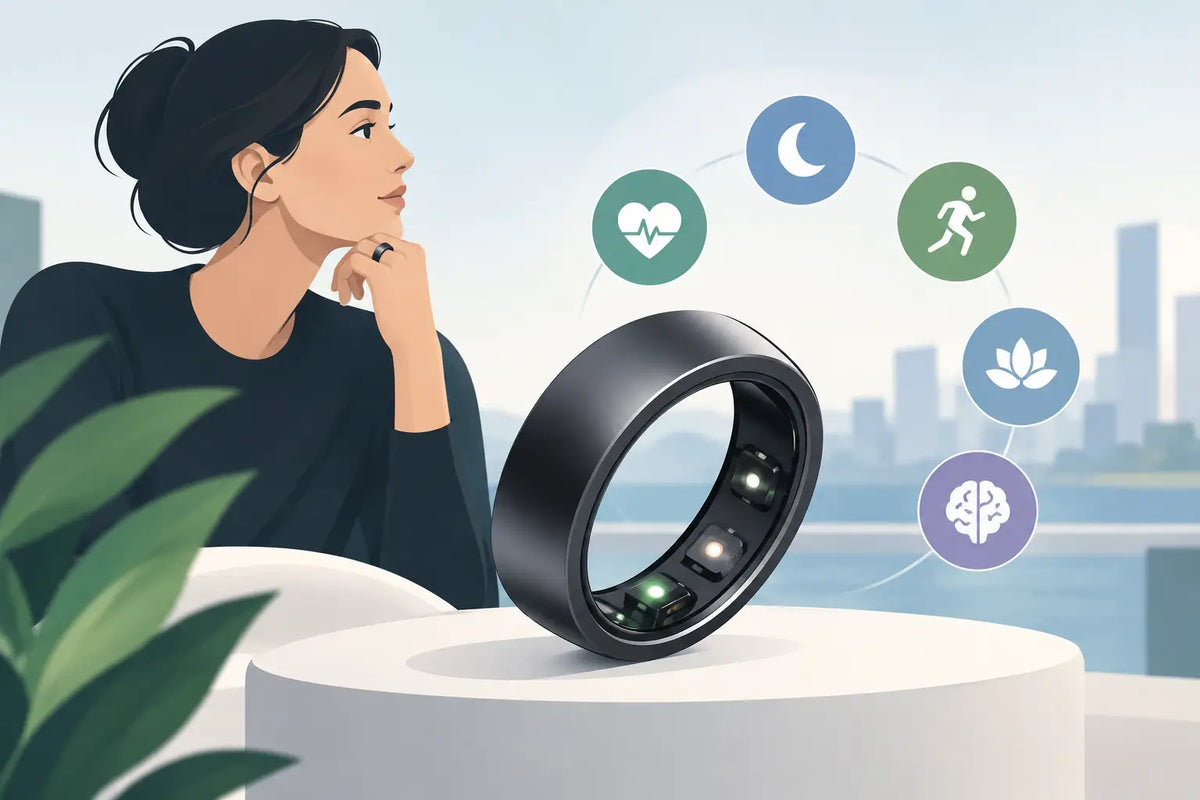
A display on the wrist that lights up constantly is not right for everyone's everyday life. This is exactly where current smart ring trends come in: health data should be available without disrupting your look, sleep, or moments of concentration. The smart ring thus transforms from a tech gadget into a discreet companion for people who want to better understand their well-being.
It is not about monitoring every bodily function non-stop. It is about orientation. How restful was the night really? Does the strain change over the course of the week? And which small habits have a positive effect on energy, activity, and recovery? A good smart ring brings this information where it belongs: effortlessly into your everyday life.
Smart Ring Trends: Health Becomes More Discreet
The biggest change is not in the technology itself, but in how we wear it. Smartwatches remain practical for many during sports and for notifications. But those who do not want a glowing display on their wrist at night or prefer to remain inconspicuous at the office are looking for a more elegant solution.
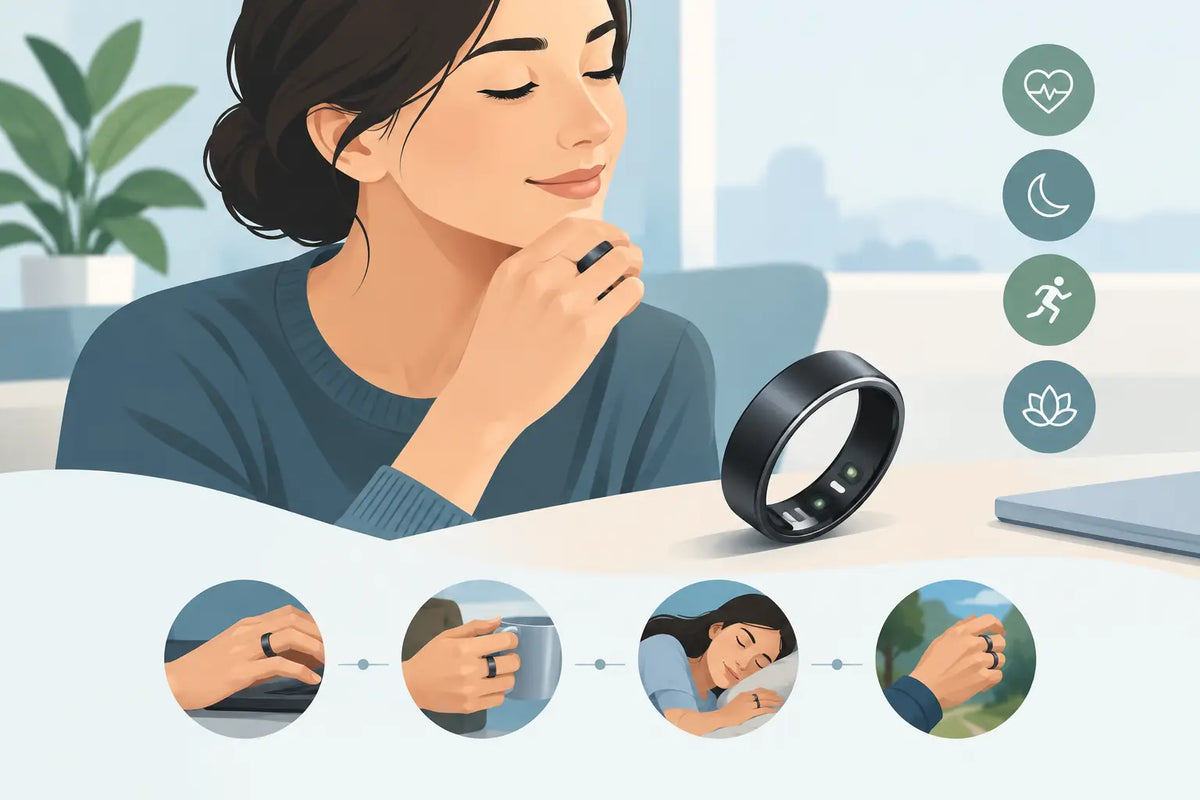
A smart ring combines sensors with a format that is worn like a piece of jewelry. It does not stand out from the outfit, usually disturbs sleep less than a watch, and discreetly accompanies you through meetings, training, and leisure time. This very combination of style and function makes the ring more attractive to many adults than classic fitness trackers.
The trend is also moving towards designs that do not look like sports equipment. Clean shapes, different colors, and high-quality surfaces make the ring an accessory that suits jeans just as well as a business look or evening wear. Health monitoring can be visibly stylish today - or so discreet that only you know what the ring can do.
Sleep Data Becomes the Most Important Reason to Buy
Many people do not buy a smart ring to count steps. They want to understand why they do not wake up rested in the morning despite spending enough hours in bed. Sleep is therefore one of the strongest drivers in the market.
Modern rings capture various signals at night and prepare them in the app in an understandable way. Instead of working through complicated measurements, users receive information on sleep duration, rest phases, regularity, and recovery. This turns a felt guess into a better basis for everyday decisions.
The data does not replace a medical diagnosis. However, it can make patterns visible: for example, very irregular sleep times, a phase of low recovery, or differences between stressful and quieter weeks. Those who look at this development over several days often recognize more than a single bad morning.
The decisive factor is not to make every sleep value perfect. Sleep data is helpful when it leads to realistic adjustments. Perhaps it helps to wind down earlier in the evening, plan intensive training sessions differently, or question caffeine consumption later in the day. The smart ring provides the impulse; the change happens in real life.
Less Screen Time, More Relevant Information
Another trend: wearables do not have to constantly demand attention. While a smartwatch is often associated with messages, apps, and reminders, a ring focuses on data collection in the background. You wear it, live your day, and check in when you really want to know how sleep, activity, and recovery are developing.
This is particularly attractive for professionals who already have many screens in front of them. A ring does not interrupt a conversation and does not draw attention during a meeting. Nevertheless, a personal overview is created through the accompanying app, which does not depend on a single snapshot.
Less distraction does not automatically mean less utility, however. It depends on how clearly the data is presented. Good health data needs context. High activity is not always a sign of a good day if recovery is low at the same time. Conversely, a quiet day can be just right when the body and mind need a break.
The Ring Becomes a Tool for Everyday Routines
The most exciting smart ring trends therefore revolve around habits instead of records. In the past, fitness trackers often focused on the question of how many steps or calories were accumulated. Today, many users are more interested in how resilient they feel and how they can better manage their energy levels over the week.
A smart ring can help to not view activity in isolation. Those who exercise regularly want to recognize whether a session fits into their own recovery. Those who sit a lot can motivate themselves more consciously to move. And those who are currently experiencing particularly demanding weeks can be reminded that regeneration is not a luxury.
This perspective is also more honest than the demand to perform at your best every day. Health data is not an assessment of your discipline. It is a personal feedback system. Sometimes it motivates you to take a walk, sometimes it confirms that a quiet evening is the better decision.
Precision Starts with the Right Ring Size
As small as a smart ring is, its fit is crucial. The sensors must have reliable contact with the skin without the ring pressing, digging in, or interfering with everyday life. The wrong size can impair wearing comfort and quickly take away the joy of the product.
That is why a reliable size determination is now part of the purchasing experience. Those who waver between two sizes should not simply guess. Fingers can easily change depending on temperature, time of day, or activity. A ring that fits perfectly in the morning can feel too tight in the evening. It is useful to check the size in different situations and also to think about sleep.
Brands like Fitorb therefore rely on digital measuring aids and a free exchange for the wrong ring size. This reduces one of the biggest hurdles in online purchasing and gives you the assurance that you can actually wear the ring permanently. Because the best analysis is of little use if the ring lies in the drawer after a few days.
What Really Counts When Buying a Smart Ring
Despite all the enthusiasm for design and data, it is worth taking a sober look at your own expectations. Not everyone needs the same functions. Those who primarily want to better understand their sleep should pay attention to an easy-to-understand sleep analysis and high nighttime comfort. Those who are physically active will place greater weight on activity data and the assessment of recovery.
The app also plays a major role. It should clearly explain what the measurements mean instead of leaving you with numbers alone. A clear presentation saves time and makes it easier to derive concrete routines from data. Also check whether the ring is compatible with your smartphone and whether the design suits your everyday life. A ring you enjoy wearing collects the data that will really be useful in the long term.
Service is also more than an addition. Free shipping, a fair trial period, uncomplicated size exchange, and accessible customer support take the pressure off the decision. Especially with a product that is worn so personally, trust in the purchasing process counts just as much as the technology itself.
The Next Trend Is More Personal, Not More Complicated
Smart rings are not becoming more relevant because they can collect more and more data. They are becoming more relevant because they make health information more practical for everyday life. The goal is not to turn your body into a table. The goal is to get insights that fit better decisions - discreetly, understandably, and without filling your life with yet another screen.
When choosing a smart ring, do not start with the longest feature list. Instead, ask yourself which habit you want to understand better: your sleep, your movement, or your recovery. The right ring is the one you put on in the morning, forget at night, and whose insights help you feel a little more mindful in everyday life.

Leave a comment
This site is protected by hCaptcha and the hCaptcha Privacy Policy and Terms of Service apply.