
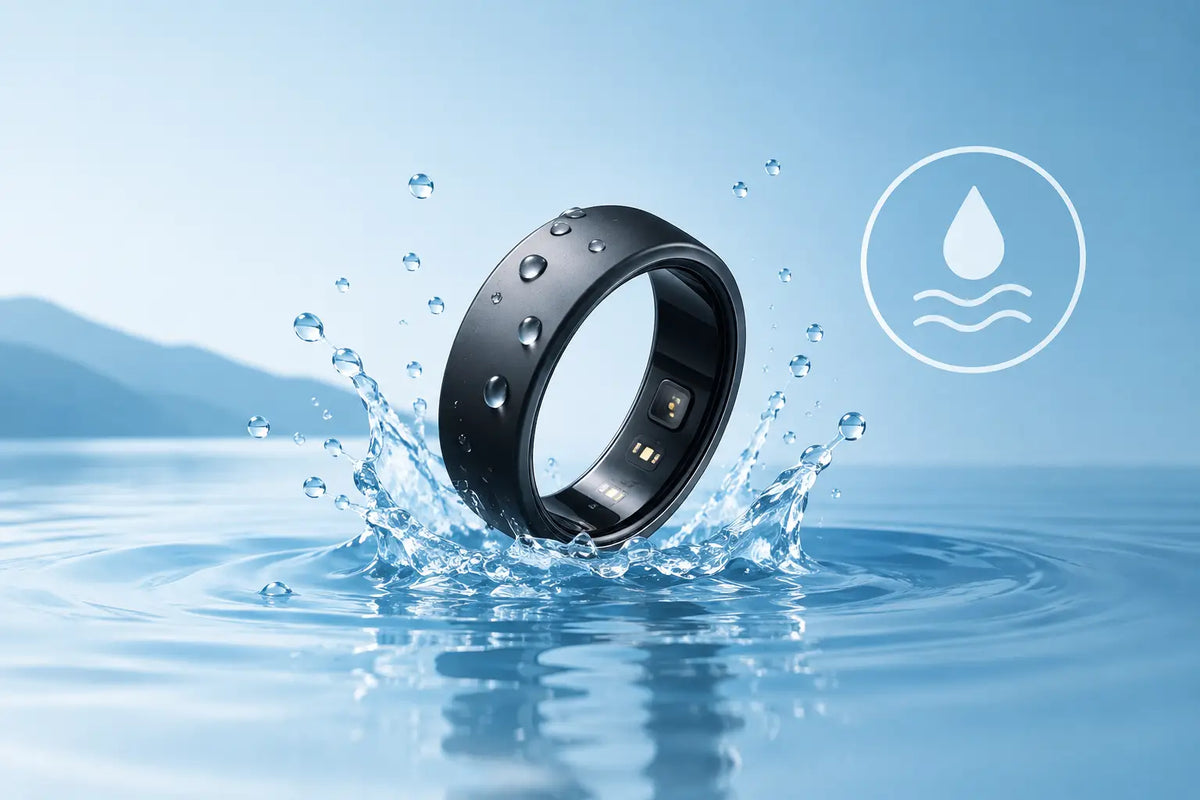
A spilled coffee, a sweat-inducing workout, or a jump into the water: For a ring you wear day and night, moisture is not an exception, but part of everyday life. That is exactly why smart ring water resistance in testing is one of the most important questions before purchasing. Because the answer determines not only whether you can wear your ring while washing your hands, but also whether your sleep, activity, and health data will remain with you without unnecessary interruptions.
Why water resistance is so crucial for smart rings
A smart ring sits directly on your finger. Unlike a watch, it quickly and often comes into contact with water while showering, washing dishes, or applying cream. At the same time, sensitive sensors, a battery, and electronics operate inside in a very confined space. Good sealing protects this technology—but it does not automatically make a ring suitable for every situation.
For a truly practical everyday ring, more than a marketing-friendly label matters. The protection rating must suit your lifestyle: If you mainly want to track sleep and exercise, reliable protection against sweat and occasional water is often sufficient. If you swim regularly, train in triathlons, or spend a lot of time in the sea, you should pay closer attention to the stated ratings.
The crucial point: Water resistance is not a blanket promise. It is always a technical specification with concrete limits.
Smart ring water resistance in testing: How to correctly read IP protection
Many wearables have an IP rating. IP stands for protection against the ingress of foreign objects and water. The two digits that follow each indicate something different. The first number describes protection against dust, the second protection against water.
On a ring with IP68, the 6 stands for complete dust protection. The 8 indicates that the device may be suitable for immersion. However, the manufacturer determines how deep and for how long. Therefore, IP68 does not automatically mean that every ring should be worn without concern during daily swimming training or diving.
For your purchasing decision, the manual or product description is more important than the number alone. It should clearly state whether showering, bathing, or swimming is permitted and what depth or duration applies. If there are no concrete specifications, restraint is the wiser choice.
What ATM means for a smart ring
In addition to IP ratings, wearables often feature ratings such as 3 ATM, 5 ATM, or 10 ATM. ATM refers to the pressure a device can withstand under laboratory conditions. The higher the rating, the better the ring is generally equipped for contact with water.
But the same applies here: The laboratory rating is not a one-to-one reflection of your everyday life. Rapid arm movements in the water, a powerful jet of water, or jumps into the pool create higher pressure in the short term. A ring with 5 ATM provides a strong foundation for swimming and water-based leisure activities for many people, provided the manufacturer expressly approves it. For diving, however, a clear, dedicated specification is required.
Shower, pool, or sea: Where the differences lie
Not every type of water affects a smart ring in the same way. Pure tap water is usually much less critical than hot shower water, chlorinated pool water, or salt water. Heat can put greater strain on seals and materials over time. Chlorine and salt leave residues that you should not let dry on the ring.
When washing your hands or in the rain, you can generally wear a correspondingly certified smart ring without worry. When showering, it depends on the manufacturer's approval. Particularly hot water, soap, shampoo, and body oils are a combination you should not underestimate. Even if water does not directly penetrate, residues can cloud sensor surfaces and impair comfort.
Swimming is possible with a ring approved for it, but a little care is required afterward. Rinse it with clear, lukewarm water and dry it with a soft, lint-free cloth. This takes only a few seconds and helps keep the surface clean.
This routine is particularly useful in the sea. Salt likes to settle in fine crevices. After a day at the beach, you should therefore not only rinse the ring but also let it dry completely before placing it on the charger.
The practical test begins before the first contact with water
Water resistance is not a feature that should suddenly be tested after an accident. A good test begins with choosing a ring that suits your everyday life and taking the manufacturer's instructions seriously.
First, look for a clearly understandable protection rating. Statements such as "waterproof" without an IP or ATM rating are too vague if you want to wear the ring in the water. Also check whether the approval applies to your specific activity. Swimming in a pool is different from a sauna, diving, or spending an extended period in a hot tub.
Fit also plays a role. A ring that is too loose can be lost while swimming, while a ring that is too tight can feel uncomfortable when warm and your fingers are swollen. Use a ring-sizing tool or a size guide before purchasing. Especially if you want to wear your ring at night, during sports, and in the water, the right size is both a matter of comfort and a safety factor.
Warning signs you should take seriously
If a smart ring is visibly damaged, you should no longer deliberately expose it to water. Deep scratches, deformations, loose elements, or unusual charging behavior can indicate that the protection is no longer reliable. It is also worth taking a closer look after a hard impact on tiles, metal, or stone.
If moisture collects under a visible coating, the sensors react unusually, or the ring no longer charges after contact with water, take it off. Carefully dry the exterior and follow the manufacturer's service instructions. Never charge a potentially damp device immediately.
How to keep your smart ring water-resistant for a long time
Water protection works best when the ring is not unnecessarily stressed. Remove it for activities that are not intended in the product approval. Depending on the model, these include saunas, steam rooms, hot springs, diving, or water sports involving high impact forces.
Chemicals also deserve attention. Cleaning agents, solvents, heavily perfumed personal care products, and sunscreen can accumulate on the material. Apply cream, let it absorb briefly, and then wipe the ring if necessary. Clear water and a soft cloth are usually sufficient for cleaning—aggressive agents are not better care.
The charging routine is also crucial. A clean, dry ring not only protects the electronics but also ensures that the sensors maintain reliable contact with the skin. This keeps data on sleep, recovery, and daily activity meaningful.
What you should really check before purchasing
A stylish smart ring should not become an accessory you have to take off before every shower. Therefore, check the water approval as carefully as the design, battery life, and app features. A verifiable IP or ATM rating, concrete usage instructions, and straightforward service if you have questions provide more assurance than grand promises.
A model like the Fitorb Smart Ring Pro is particularly well suited to people who want to discreetly integrate health monitoring into their everyday lives. However, the respective official product approval always remains decisive: Only wear the ring in the water where it is permitted.
Your health on your finger works best when technology does not get in the way. Therefore, choose a ring whose water protection suits your habits—then your data will stay where it belongs: with you, even if your day gets wet.


Leave a comment
This site is protected by hCaptcha and the hCaptcha Privacy Policy and Terms of Service apply.